
What Is a Steam Shower — and Is It Worth It?
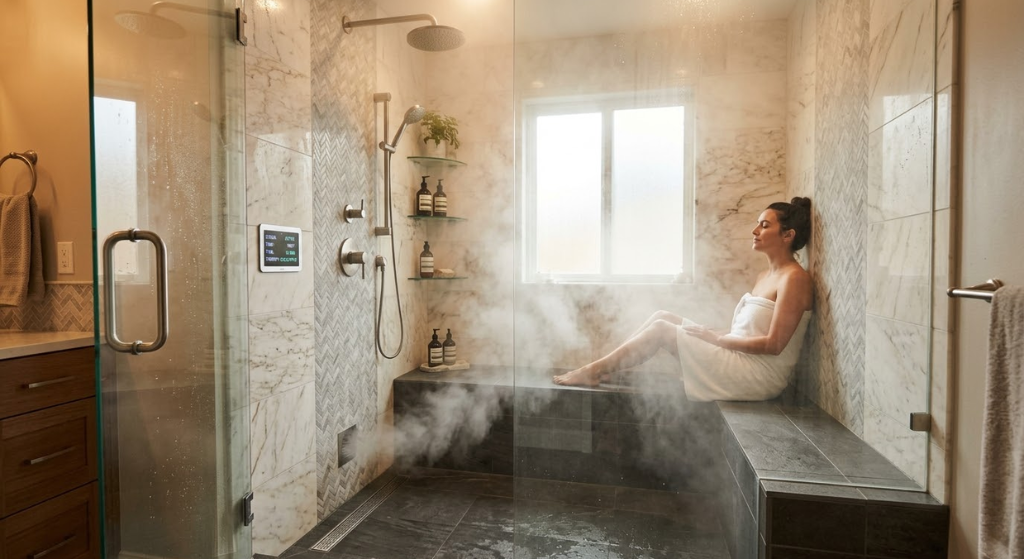
A steam shower is a fully enclosed shower space connected to a dedicated electric steam generator that converts water into continuous water vapor, filling the enclosure with therapeutic moist heat at temperatures typically between 100°F and 118°F (38–48°C). Unlike a regular shower — which delivers liquid water at a fixed temperature — a steam shower envelops the entire body in a humid, heat-saturated environment that mimics the experience of a professional spa steam room in the comfort of your own home.
The market on Amazon spans the full range: from budget-friendly 3–6 kW starter kits under $300 all the way to professional-grade 15 kW systems from premium brands like Mr. Steam, ThermaSol, and Kohler that can exceed $5,000 before installation. The single most important thing to understand before buying is that price is not the primary variable — correct sizing for your specific enclosure is. A $250 unit sized correctly for your shower will outperform a $1,500 unit that’s too small for the space.
This guide covers everything: how to calculate the right generator size for your bathroom, the differences between every major brand sold on Amazon, what the Amazon bestseller list actually represents, what features genuinely matter versus marketing fluff, and a full installation and cost breakdown so you know exactly what you’re committing to.
The Most Important Number: Your Enclosure’s Cubic Footage
Before reading anything else in this guide, measure your shower’s interior Length × Width × Height in feet. Multiply those three numbers. That’s your base cubic footage. Every generator purchase decision flows from this number. If you don’t have this number, you cannot buy the right generator — regardless of budget, brand preference, or feature wishlist.
Health and Wellness Benefits: Why People Buy Steam Showers
The steam shower market has grown substantially in recent years as homeowners increasingly invest in home wellness infrastructure. The health benefits are well-supported and span multiple body systems — making a steam shower one of the most versatile wellness investments available in the home improvement category.
Muscle Recovery
Moist heat penetrates muscle tissue more deeply than dry heat. Regular steam sessions reduce delayed-onset muscle soreness (DOMS), increase range of motion, and accelerate recovery after exercise. Particularly valuable for athletes and physically active homeowners who use the shower as a daily recovery tool.
Respiratory Relief
Steam therapy opens bronchial passages and moisturizes mucous membranes, providing relief from chronic sinus congestion, allergies, asthma symptoms, and upper respiratory inflammation. The humid environment delivers effects similar to clinical steam inhalation treatments continuously over a 15–20 minute session.
Skin Health
Sustained steam exposure opens pores, increases skin circulation, and improves hydration at the dermal level. Regular users report improved skin texture, reduced acne severity, and improved product absorption. The moist heat provides deep cleansing that water temperature alone cannot replicate.
Stress Reduction
Steam therapy activates the parasympathetic nervous system — the body’s rest-and-digest mode — measurably reducing cortisol levels and heart rate. A 15–20 minute steam session produces relaxation comparable to meditation for many users and dramatically improves sleep quality when used in the evening.
Circulation
Alternating between steam heat and the transition back to room temperature causes repeated vasodilation and vasoconstriction cycles, effectively “exercising” the blood vessel walls. This mechanism improves circulation, reduces blood pressure over time, and supports cardiovascular health in regular users.
Property Value
In homes priced above $500K, a properly installed steam shower adds an estimated $5,000–$15,000 to resale value and is increasingly listed as a premium amenity in real estate listings. It is one of the few bathroom upgrades that functions as both a daily wellness tool and a property investment.
Types of Steam Showers: What Amazon Sells
The Amazon steam shower category contains two fundamentally different product types that are often confused with each other. Understanding the distinction prevents an expensive mistake.
| Type | What It Is | Price Range | Best For | Installation |
|---|---|---|---|---|
| Steam Generator (Generator Only) | The electric unit that produces steam — connects to your existing shower enclosure via a pipe to a steamhead | $200 – $5,000+ | Adding steam to an existing shower you’ve already waterproofed and tiled | Requires licensed electrician + plumber |
| Complete Steam Shower Kit | Generator + control panel + steamhead + mounting hardware + cable, often in one box | $250 – $3,000 | New steam shower builds — everything ships together, guaranteed compatibility | Same electrical/plumbing requirement |
| Prefab Steam Shower Unit | A complete prefabricated enclosure with generator built in — walls, door, controls, steamhead, sometimes bench | $800 – $4,000 | Bathroom remodels where you want a complete, self-contained unit without custom tilework | Simpler installation but less custom design flexibility |
The Prefab vs Custom Generator Trap
Many first-time buyers purchase a prefabricated steam shower enclosure from Amazon, not realizing it requires a custom-built, vapor-tight shower surround to install properly in most existing bathrooms. The enclosure itself replaces tile walls but still requires a licensed electrician for the 240V circuit and a plumber for the water supply line and condensation drain. Budget for $500–$1,200 in professional labor regardless of which product type you choose.
Water Quality and Hardness: The Hidden Factor That Determines Generator Lifespan
Water quality is the single most overlooked variable in steam shower generator performance and longevity — yet it has more impact on how long your generator lasts than any feature, brand, or price point. The vast majority of premature generator failures traced to a root cause point directly to mineral scale buildup from hard water, making water quality assessment an essential step before purchasing any steam generator.
Understanding Water Hardness
Water hardness measures the concentration of dissolved calcium and magnesium minerals in your water supply, typically expressed in grains per gallon (GPG) or parts per million (PPM). Water below 3.5 GPG (60 PPM) is classified as soft; 3.5–7.0 GPG is moderately hard; 7.0–10.5 GPG is hard; and anything above 10.5 GPG is considered very hard. According to USGS data, approximately 85% of American homes receive water classified as moderately hard or harder, meaning the majority of steam generator buyers are operating in conditions that accelerate mineral buildup.
When hard water is heated to steam-producing temperatures, the dissolved calcium and magnesium precipitate out of solution as calcium carbonate (limescale) and magnesium hydroxide — white, chalky deposits that accumulate on heating elements, tank walls, and internal plumbing. A single heating cycle in very hard water deposits a microscopic layer of scale; hundreds of cycles over weeks and months build that layer into a thick insulating crust that dramatically reduces heating efficiency, restricts water flow, and eventually causes heating element burnout.
The Scale Damage Cascade
The damage from scale buildup follows a predictable and destructive cascade. First, scale insulates the heating element from the surrounding water, forcing the element to reach significantly higher surface temperatures to transfer the same amount of heat energy into the water. This elevated surface temperature accelerates element degradation and increases electricity consumption — the generator draws more power to produce the same steam output. Second, the restricted water flow from scale-clogged passages creates localized hot spots where water flashes to steam against the element surface rather than heating evenly, producing thermal stress cycling that cracks and destroys the element prematurely. Third, the accumulated scale provides a rough, porous surface where bacteria colonize, producing unpleasant odors in the steam output and potentially creating hygiene concerns in an environment intended for wellness use.
Water Treatment Solutions
Whole-House Water Softener
The most comprehensive solution — a salt-based ion exchange softener installed at your home’s main water entry point removes calcium and magnesium from every water source in the house, protecting not just the steam generator but all plumbing fixtures, water heaters, and appliances. Typical cost: $1,500–$3,500 installed. The ongoing salt cost is approximately $5–$10 per month. For homes with hard water above 7 GPG, a whole-house softener pays for itself in reduced plumbing maintenance and extended appliance life within 3–5 years — and transforms steam generator longevity from 5–8 years to 15–25 years.
Point-of-Use Inline Filter
A dedicated inline water filter installed on the cold water supply line feeding the steam generator — a sediment and carbon filter removes particulates and chlorine, while a scale-inhibiting filter template-assisted crystallization (TAC) media converts dissolved minerals into microscopic crystals that don’t adhere to surfaces. Typical cost: $30–$120 for the filter housing and cartridge, with $20–$60 replacement cartridges every 6–12 months. This is the minimum recommended water treatment for any steam generator in areas with moderate or harder water. It won’t eliminate all scale, but it reduces accumulation by 60–80% compared to untreated water.
Reverse Osmosis (RO) Pre-Treatment
For the most complete water purification — a reverse osmosis system removes 95–99% of all dissolved minerals, chlorine, sediment, and contaminants from the water supply before it reaches the generator. The downside is that RO systems produce wastewater (typically 3–4 gallons wasted per gallon of purified water) and require periodic membrane replacement. Cost: $200–$500 for a point-of-use RO system. This level of treatment is usually overkill for a steam generator alone but makes sense if you’re already installing an RO system for drinking water and can tap a line to the generator.
Manual Descaling Maintenance
If you choose not to install any water treatment system, manual descaling becomes a mandatory recurring maintenance task rather than an optional one. Run a white vinegar or commercial descaling solution through the generator tank every 1–3 months depending on water hardness — follow the manufacturer’s specific descaling procedure. In very hard water areas without treatment, manual descaling may be needed every 2–4 weeks during heavy use periods. This is the lowest upfront cost approach but demands the highest ongoing time commitment and still results in significantly shorter generator life compared to treated water installations.
How to Test Your Water Hardness
Water hardness test strips are available for $5–$15 at any home improvement store and provide an instant reading. Alternatively, contact your municipal water supplier — most publish annual water quality reports that include hardness measurements. If you’re on well water, a comprehensive water test ($20–$100 at a certified lab) is recommended before installing any steam generator, as well water may contain iron, sulfur, or other minerals that create additional scaling and odor issues beyond standard calcium hardness.
Steam Generator Sizing: The Most Critical Decision You’ll Make
Undersizing a steam generator is the single most common and costly mistake buyers make. An underpowered unit will never properly steam your enclosure — it will produce inadequate steam that dissipates quickly, fail to reach therapeutic temperatures, run continuously at 100% output (dramatically shortening its life), and leave you with an expensive, disappointing shower that barely functions. Oversizing wastes money on hardware and electricity but is far less problematic than undersizing.
Step 1: Calculate Base Cubic Footage
Measure your shower enclosure’s interior dimensions in feet: Length × Width × Height. For example, a 4-foot-wide, 5-foot-long shower with an 8-foot ceiling = 4 × 5 × 8 = 160 cubic feet. This is your base number. Do not deduct for benches or other intrusions — they represent heat-absorbing surface area, not empty space to ignore.
Step 2: Apply the Adjusted Cubic Footage (ACF) Formula
Raw cubic footage is not the final number — your wall and ceiling materials dramatically affect how much steam a generator must produce to fill the space with adequate heat and humidity. Porous materials like stone absorb heat energy before the air reaches temperature; reflective materials like glass lose heat rapidly.
Material Correction Factors
Worked Example
4 × 5 × 8 ft marble-walled shower with one exterior wall:
Base: 160 cu ft × 2.0 (marble) = 320, then + 25% for exterior wall = 400 ACF. At the industry standard of 1 kW per 45–50 cu ft, this shower needs approximately a 8–9 kW generator — not the 3–4 kW a buyer might guess from a “medium-sized shower.” This is precisely why skipping the ACF calculation leads to undersized, underperforming systems.
Always Round Up One Size Tier
The industry-standard advice from every major manufacturer: once you calculate your ACF requirement, round up to the next available generator size — never round down. The performance penalty for slight oversizing is negligible (marginally faster steam-up time, fractionally higher electricity use). The penalty for undersizing is a generator that never reaches temperature, runs at maximum load every session, and fails prematurely.
Steam Generator kW Reference Chart
| Generator Size | Max ACF (Tile) | Max ACF (Stone) | Electrical Need | Startup Time | Best For |
|---|---|---|---|---|---|
| 3 kW | ~135 cu ft | ~68 cu ft | 240V / 15A | 3–8 min | Small tile showers, personal spa spaces |
| 4.5 kW | ~200 cu ft | ~100 cu ft | 240V / 20A | 3–7 min | Compact master bath showers |
| 6 kW | ~270 cu ft | ~135 cu ft | 240V / 30A | 3–6 min | Standard tiled master bath (most common size) |
| 7.5 kW | ~335 cu ft | ~168 cu ft | 240V / 40A | 3–6 min | Larger master bath or stone-accented tile showers |
| 9 kW | ~400 cu ft | ~200 cu ft | 240V / 40A | 2–5 min | Large custom enclosures, full stone tile |
| 10 kW | ~450 cu ft | ~225 cu ft | 240V / 50A | 2–5 min | Oversized residential, heavy stone walls |
| 12 kW | ~540 cu ft | ~270 cu ft | 240V / 60A | 2–4 min | Spa-style home installations, couples |
| 15 kW | ~675 cu ft | ~338 cu ft | 240V / 60A | 2–4 min | Large custom residential, light commercial |
Key Features to Look For When Buying on Amazon
The steam shower generator market is crowded with products that look similar in listing photos but vary enormously in quality, longevity, and user experience. These are the features that separate genuinely good purchases from expensive disappointments.
Auto-Drain / Auto-Flush
Most important longevity feature. After each session, the generator should automatically drain residual water from the tank. Standing water mineralizes, corrodes the heating element, and produces odors. Auto-drain (gravity) or auto-flush (pressurized cleaning cycle) systems dramatically extend service life, especially in hard-water areas. Non-negotiable for any unit you plan to use more than occasionally.
Digital Control Quality
The control panel is your interface for every session. Entry-level units use basic LED timers. Mid-range adds temperature presets and multiple user profiles. Premium systems offer Wi-Fi and Bluetooth control, in-shower touchscreens, and smart home integration. The minimum acceptable control for regular use is digital temperature display + programmable session length.
Tank Material
Stainless steel tanks resist corrosion from the constant heat-water-mineral cycle of steam generation. Cheaper units use aluminum or plastic-lined tanks that corrode or degrade within 2–5 years of regular use. Any generator you plan to use daily should have a stainless steel tank — look for this specification explicitly in the product listing.
FastStart / Quick Steam Technology
Premium generators (ThermaSol’s FastStart, Mr. Steam’s Express Steam) begin producing usable steam in 60–90 seconds because they pre-heat water continuously at a low level. Budget units take 8–15 minutes. For daily use, 10+ minutes of standing outside a cold shower waiting for steam to build is a significant quality-of-life difference.
Aromatherapy Port
A dedicated aromatherapy injector mixes essential oils directly into the steam stream at the steamhead, providing a consistent, diffused aromatic experience. Mounting oil diffusers on the shower floor or wall is a functional but messier alternative. Essential oils like eucalyptus and peppermint meaningfully enhance the therapeutic respiratory benefits of steam sessions.
Pipe Run Distance
The generator must be installed outside the steam enclosure — typically in a nearby cabinet, utility closet, or basement. Most generators specify a maximum pipe run of 25 feet between generator and steamhead. ThermaSol’s systems allow up to 50 feet. Know your bathroom layout before buying — a generator rated for a 25-foot run that needs to connect to a steamhead 35 feet away will deliver steam at reduced pressure and temperature.
Top Steam Shower Brands Available on Amazon: Full Comparison
| Brand | Price Tier | Startup Time | Auto-Drain | Smart Control | Warranty (Gen) | Best For |
|---|---|---|---|---|---|---|
| ThermaSol | Premium ($2,500+) | 60 sec | PowerFlush | Wi-Fi + BT | Lifetime | Serious wellness investment, smart integration |
| Mr. Steam | Premium ($1,200–$3,500) | 2–3 min | AutoFlush | App + Alexa | Lifetime | Customization, accessory ecosystem |
| Delta SimpleSteam | Mid ($900–$2,500) | 3–5 min | Auto Drain | Digital | Lifetime | First-time buyers, value-performance balance |
| Kohler | Premium ($1,500–$3,000) | 3–4 min | Auto Drain | DTV+ / App | 3-year | Kohler-integrated bathrooms |
| SteamSpa | Mid ($400–$1,200) | 4–8 min | Auto Drain | Touch + BT | 1-year | Mid-budget buyers wanting kit convenience |
| VEVOR | Budget ($180–$400) | 8–15 min | Auto Drain | Basic LCD | 1-year | Budget-first buyers, infrequent use |
| CGOLDENWALL | Budget ($200–$500) | 8–15 min | Auto Drain | Basic LCD | 1-year | Commercial light-duty, budget residential |
| Amerec | Mid-Premium ($900–$2,000) | 3–5 min | AutoDrain | Digital | Lifetime | Reliable mid-tier, installer favourite |
Brand Deep Dive: What Sets Each Manufacturer Apart
The brand comparison table above shows the specifications at a glance, but understanding the engineering philosophy, product line architecture, and real-world service experience behind each manufacturer helps you choose not just the right generator size but the right ecosystem for your specific situation. Each brand occupies a distinct position in the market — and the best choice depends on your budget, use frequency, technical comfort level, and how long you plan to stay in your home.
ThermaSol: The Premium Innovation Leader
ThermaSol has occupied the premium residential steam generator market for over six decades and consistently leads the industry in technological innovation. Their flagship Pro Series generators feature FastStart technology — a proprietary system that keeps a small volume of water pre-heated at all times, enabling the generator to begin producing usable steam within 60 seconds of activation. For daily users, this startup speed difference (60 seconds versus 8–15 minutes for budget generators) represents a fundamental change in how usable the steam shower becomes as a daily routine rather than a planned event.
The PowerFlush system is ThermaSol’s answer to mineral buildup — a pressurized automatic cleaning cycle that forces water through the tank and heating element after every session, removing loose mineral deposits before they harden into scale. When combined with the micro-digital control system and the optional Smart Wi-Fi module that enables remote preheating from a smartphone, ThermaSol offers the most technologically complete residential steam system available. The trade-off is price: ThermaSol generators start above $2,500 and a complete system with digital controls and accessories can exceed $4,000 before installation. The lifetime generator warranty and exceptional customer service reputation justify the premium for buyers who view the steam shower as a long-term daily wellness investment rather than an occasional luxury.
Mr. Steam: The Customization Champion
Mr. Steam occupies the space just below ThermaSol in price while offering the broadest accessory ecosystem in the residential steam market. The eSeries MS generator line — available from 4.5 kW through 15 kW — uses a commercial-grade stainless steel tank construction and the AutoFlush system, which automatically drains and flushes the tank two hours after each session. The SteamLinx Wi-Fi module enables smartphone control and Amazon Alexa voice integration, allowing hands-free steam session initiation from outside the bathroom.
What distinguishes Mr. Steam is the depth of their accessory ecosystem: the iSteam3 touchscreen control (with Bluetooth audio streaming, chromotherapy control, and programmable user profiles), the AromaSteam aromatherapy injection system, the ChromaSteam color-therapy LED system, and the MusicTherapy waterproof speaker system are all designed as a coordinated, installable-together package. For buyers who want to start with a basic generator and progressively upgrade the steam shower experience over months or years, Mr. Steam’s modular approach makes this practical without replacing the generator itself. The lifetime warranty and strong professional installer network add long-term confidence.
Delta SimpleSteam: The Smart Value Play
Delta’s entry into the steam generator market through its parent company Masco’s acquisition of Steamist brought proven generator technology under one of the most recognized names in American bathroom fixtures. The SimpleSteam line uses Steamist’s commercial-proven heating chamber design with Delta’s consumer-friendly design language and distribution network. The result is a generator that performs at near-premium levels — reliable steam output, effective auto-drain, clean digital controls — at a mid-range price point, backed by Delta’s lifetime generator warranty.
The complete kit approach (generator + square control panel + square steam head + 35-foot cable in matched finishes) eliminates the compatibility guesswork that plagues component-by-component assembly. Available in matte black, brushed nickel, and chrome, the SimpleSteam system coordinates with Delta’s extensive faucet and fixture line, making it the natural choice for bathrooms already featuring Delta hardware. Steam-up time of 3–5 minutes is competitive with generators costing twice as much. For first-time steam shower buyers who want a reliable, well-supported system without the complexity of assembling components from multiple manufacturers, Delta SimpleSteam is the strongest value proposition in the market.
Kohler: The Ecosystem Integrator
Kohler’s steam generators are designed primarily for homeowners already invested in the Kohler bathroom ecosystem — those using Kohler faucets, shower systems, or the DTV+ digital shower interface. The Invigoration series generators integrate directly with Kohler’s DTV+ system, allowing steam control through the same interface that manages water temperature, shower heads, and body sprays. For homeowners who want a single, unified digital interface controlling every water experience in the shower, Kohler’s approach eliminates the need for a separate steam control panel.
The trade-off is a shorter warranty (3-year versus lifetime from Mr. Steam, ThermaSol, and Delta) and a higher price for equivalent power output. Kohler generators are also larger physically than many competitors, which can complicate installation in tight utility spaces. Where Kohler excels is in the seamless design integration — if your bathroom is already a Kohler space, adding a Kohler steam generator maintains the visual and functional consistency that makes a bathroom feel designed rather than assembled. The auto-drain system works reliably, and Kohler’s nationwide service network provides accessible support if issues arise.
SteamSpa: The Mid-Market Kit Specialist
SteamSpa has built a strong Amazon presence by offering complete steam shower kits at price points that make the mid-range accessible to budget-conscious buyers. The Sentry, Royal, and Versailles series bundle generators with touchscreen controls, steamheads, and chromotherapy lighting at prices that premium brands charge for the generator alone. The 12 kW and 14.5 kW models, in particular, offer the highest power output per dollar of any brand sold on Amazon — making SteamSpa the default recommendation for large enclosures where a premium-brand 12 kW generator would cost $2,500 or more.
The compromise is primarily in warranty length (1-year standard) and long-term parts availability — SteamSpa doesn’t maintain the same multi-decade parts inventory that established premium brands do. For buyers who prioritize features and power per dollar over decades of service life, SteamSpa delivers genuine value. The Bluetooth and WiFi controls on upper-end models work reliably, the chromotherapy system adds a real spa dimension, and the auto-drain function prevents the most common maintenance issues. SteamSpa is an excellent choice for secondary homes, vacation properties, or buyers who expect to remodel again within 5–10 years.
VEVOR: The Budget Gateway
VEVOR occupies the Amazon budget tier with steam generators that deliver functional steam output at price points accessible to virtually any homeowner. The stainless steel tank construction, auto-drain system, and basic LCD controller check the essential functional boxes — and at $200–$400 for generators up to 9 kW, VEVOR makes home steam therapy genuinely accessible. For buyers who want to experience steam therapy without a $1,000+ commitment, VEVOR provides a legitimate entry point.
The trade-offs are honest and measurable: startup times of 8–15 minutes (roughly 3–5× longer than premium brands), 1-year warranty coverage, variable quality control (buy through verified Amazon Prime listings for best results), and a basic controller that lacks the programming flexibility of mid-range and premium systems. VEVOR generators are best suited for buyers who use steam 2–3 times per week rather than daily, and who are comfortable with the possibility of replacing the generator within 3–7 years rather than expecting 15+ years of service. For this use case — occasional to moderate use at the lowest possible entry cost — VEVOR delivers genuine value that no other brand matches at the price point.
Amerec: The Installer’s Choice
Amerec occupies a quiet but respected position in the residential steam generator market — less visible on Amazon than VEVOR or SteamSpa, but consistently recommended by professional installers and plumbing contractors. The AK series generators feature commercial-grade construction, reliable auto-drain systems, and straightforward digital controls that prioritize function over features. The lifetime generator warranty matches the premium brands, and Amerec’s parts availability and technical support are oriented toward professional service rather than DIY troubleshooting.
For buyers who are working with a plumber or contractor on a bathroom renovation and want a generator that the installer trusts and can service easily, Amerec is often the professional’s recommendation even when it’s not the homeowner’s first choice from online research. The price point — $900–$2,000 depending on size — positions Amerec between the budget tier and the premium brands, making it a strong value for buyers who prioritize reliability and serviceability over smart home features and flashy controls.
Best Steam Shower Generators on Amazon: Our Top Picks
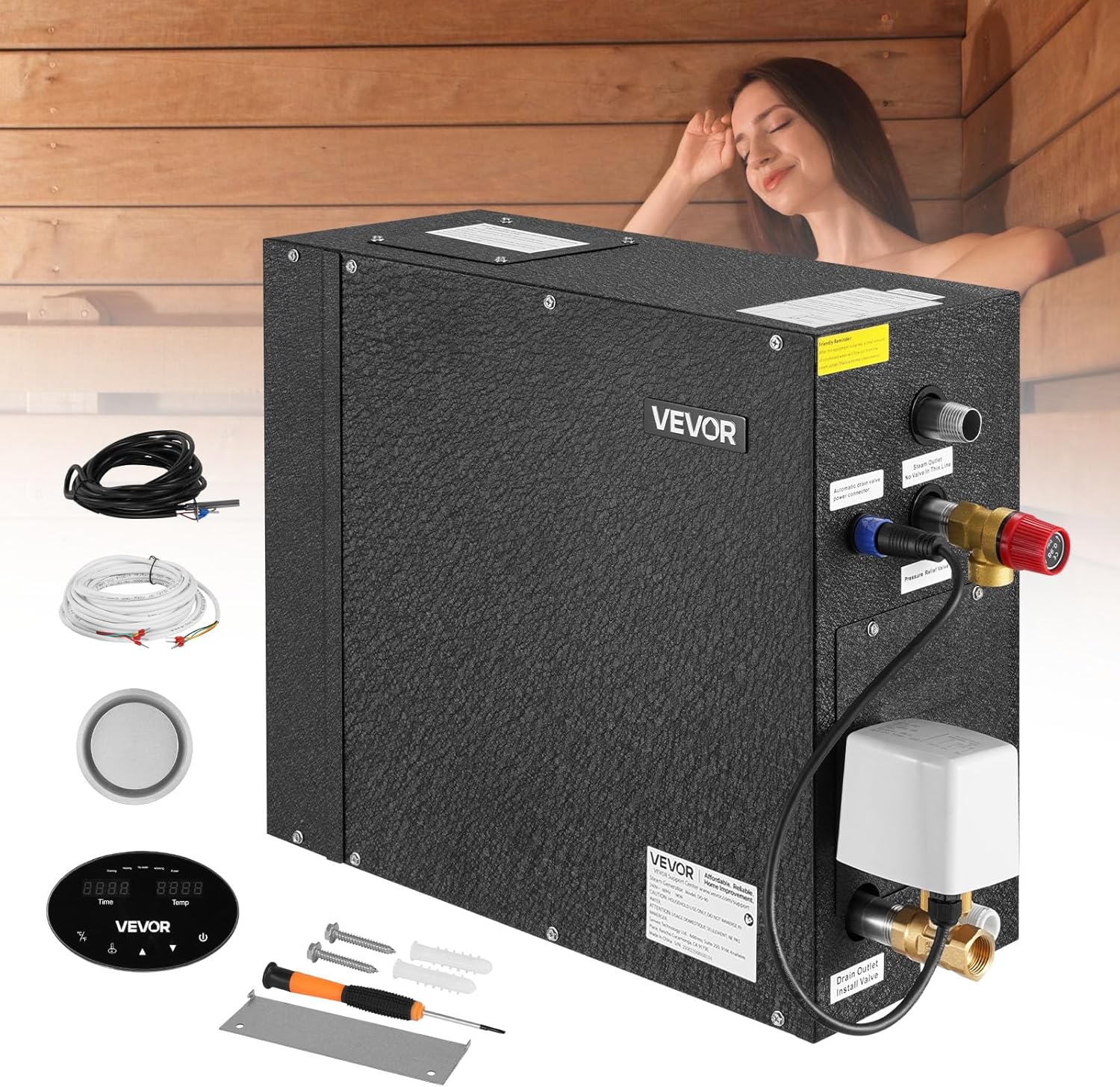
VEVOR 9 kW Steam Generator — Best Value Under $400
VEVOR has carved out the dominant position in the Amazon budget steam generator segment for good reason: their 9 kW unit delivers respectable steam output for standard tile-walled showers at a price point that makes home steam therapy genuinely accessible. The stainless steel construction, auto-drain system, and LCD waterproof controller check the boxes that matter for functional daily use. The 9 kW configuration gives comfortable headroom for showers up to approximately 350–400 cubic feet of tile-walled space — covering the majority of standard master bath shower enclosures.
The trade-offs versus premium brands are real but honest: startup time is 8–12 minutes (versus 1–3 minutes for premium brands), the controller lacks Wi-Fi or app connectivity, and the 1-year warranty reflects a shorter expected service life than premium generators designed for decades of use. VEVOR’s quality control has been variable — buying through an Amazon Prime-fulfilled listing with review verification is advisable. For buyers who want steam therapy several times per week rather than daily, this unit represents extraordinary value.
Pros
- Exceptional value per kW
- Stainless steel tank construction
- Includes auto-drain system
- Overheat, dry-run, and overpressure protection
- Complete kit available (generator + head + control)
Cons
- 8–12 minute startup time
- Only 1-year warranty
- No smart home or app connectivity
- Variable quality control — verify seller
- Basic controller experience
SteamSpa Sentry Series 7.5 kW — Best Balance of Features and Price
SteamSpa occupies the genuinely competitive middle ground on Amazon — a step above the budget tier in both build quality and user experience, without crossing into the $1,500+ premium category. The Sentry Series 7.5 kW ships as a complete kit (generator, touchscreen control, steamhead, mounting hardware) with a designed-together aesthetic that makes installation straightforward and the finished result polished.
The touchscreen controller is a meaningful upgrade from budget LCD units — it supports multiple user presets, temperature programming, and Bluetooth connectivity on upper Sentry models. The auto-drain system functions reliably, and the stainless steel tank construction suggests a service life well beyond the 1-year warranty period. SteamSpa’s ACU QuickStart technology cuts steam-up time to 4–6 minutes for the 7.5 kW unit — not premium speed, but a comfortable improvement on budget units. Brushed nickel, chrome, and matte black finishes available, making it easy to match existing bathroom hardware.
Pros
- Complete kit — guaranteed component compatibility
- Touchscreen with Bluetooth (upper models)
- Multiple finish options
- Better startup time than budget tier
- Reliable auto-drain
Cons
- 1-year warranty (short for the price tier)
- No lifetime coverage like premium brands
- No Wi-Fi or smart home integration
- 7.5 kW may require upsizing for stone enclosures

Mr. Steam MS Series 9 kW — Best for Serious Daily Use
Mr. Steam’s eSeries MS generators represent the professional-grade residential standard — built for daily use over decades, not periodic spa sessions. The stainless steel tank construction, AutoFlush system (which automatically clears the tank 2 hours after each session, dramatically reducing mineral buildup), and the SteamLinx app providing remote smartphone control with Amazon Alexa integration collectively make this the most complete residential steam experience available on Amazon at a non-luxury price point.
The lifetime generator warranty is not a marketing afterthought — Mr. Steam backs it with genuine customer service that consistently receives positive reviews for warranty resolution. The 9 kW output handles standard tile enclosures up to 400 cubic feet comfortably, and the system’s compatibility with Mr. Steam’s extensive accessory ecosystem (chromotherapy lighting, aromatherapy injectors, iSteam digital controls) allows progressive upgrades over time. Steam-up time of 2–4 minutes is a practical improvement over mid-range units for daily use.
Pros
- Lifetime warranty on generator
- AutoFlush self-cleaning system
- SteamLinx app with Alexa integration
- Extensive accessory ecosystem
- 2–4 minute startup time
- Robust customer service
Cons
- Premium price requires committed budget
- Best controls sold separately (additional cost)
- Professional installation required and essential

Delta SimpleSteam 7.5 kW Complete Kit — Best for First-Time Buyers
Delta’s SimpleSteam lineup, built on Steamist’s proven generator technology after Delta parent company Masco acquired Steamist in 2021, represents the most thoughtfully packaged steam shower system in its price range. The complete kit includes a generator, a digital square control panel, a square steam head, and 35 feet of connection cable — all in matched finishes, all guaranteed to work together, all with Delta’s lifetime generator warranty. For a first-time steam shower installer, the single-box convenience and the peace of mind from a major brand’s warranty support is worth the premium over comparable component-by-component setups.
Available in Matte Black, Brushed Nickel, and Chrome, making it easy to coordinate with Delta’s extensive faucet and fixture line. The digital control is clean and intuitive — a straightforward temperature/time interface with presets that doesn’t overwhelm first-time users. Steam-up time of 3–5 minutes is competitive for the price tier.

SteamSpa 12 kW with Bluetooth & Chroma — Best for Oversized Showers
For custom walk-in steam showers larger than 400 cubic feet of tile-walled space — or any stone-walled enclosure above 200 cubic feet — the 12 kW category is the appropriate starting point. SteamSpa’s 12 kW Royal/Versailles series distinguishes itself at this power tier by including chromotherapy LED lighting, Bluetooth and WiFi controls, and a complete spa-grade accessory package at a price point that premium brands cannot match for equivalent output.
The inclusion of chromotherapy (color-light therapy) adds a genuine wellness dimension to the steam session beyond the thermal component. The WiFi control allows remote preheat scheduling — a feature that matters significantly for a generator with a 3–5 minute warmup time. For couples who share a large steam shower, the 12 kW output ensures consistent steam delivery even with the increased heat absorption from two bodies in the enclosure.

Full Comparison: Our Top Amazon Steam Generator Picks
| Product | kW | Price | Startup | Auto-Drain | Smart | Warranty | Rating |
|---|---|---|---|---|---|---|---|
| VEVOR 9 kW | 9 kW | $200–$380 | 8–12 min | Yes | Basic LCD | 1 year | ★★★☆☆ |
| SteamSpa Sentry 7.5 kW | 7.5 kW | $500–$900 | 4–6 min | Yes | Touch + BT | 1 year | ★★★★☆ |
| Delta SimpleSteam 7.5 kW Kit | 7.5 kW | $900–$1,500 | 3–5 min | Yes | Digital | Lifetime | ★★★★☆ |
| Mr. Steam MS 9 kW | 9 kW | $1,200–$1,800 | 2–4 min | AutoFlush | App + Alexa | Lifetime | ★★★★★ |
| SteamSpa 12 kW + Chroma | 12 kW | $1,000–$1,800 | 3–5 min | Yes | WiFi + BT | 1 year | ★★★★☆ |
Electrical Requirements: What You Need Before Buying
Every residential steam generator sold on Amazon requires a dedicated 240V electrical circuit — the same voltage your electric dryer or range uses. This is non-negotiable and cannot be worked around with adapters or shared circuits. The circuit must be installed by a licensed electrician and must include a GFCI (Ground Fault Circuit Interrupter) breaker per NEC electrical code requirements for all bathroom/wet area electrical installations.
| Generator Size | Circuit Voltage | Breaker Size | Wire Gauge |
|---|---|---|---|
| 3–4.5 kW | 240V | 20–30A GFCI | 10 AWG |
| 6–7.5 kW | 240V | 30–40A GFCI | 8 AWG |
| 9–10 kW | 240V | 40–50A GFCI | 6 AWG |
| 12–15 kW | 240V | 60A GFCI | 4 AWG |
Panel Capacity Check Is Essential Before Purchasing
Before ordering any steam generator, have a licensed electrician verify your electrical panel has available capacity for the required circuit. Many homes built before 1990 have 100-amp panels that may have limited remaining capacity. Adding a 50A steam generator circuit to an already-loaded 100A panel can require a panel upgrade costing $1,500–$3,000 — a cost that should factor into your total steam shower budget before you buy the generator.
Installation Cost Guide: Full Budget Breakdown
Steam shower installation costs range from roughly $500 to over $3,000 in professional labor, depending on your bathroom’s existing infrastructure, the generator’s location relative to the shower, and whether any enclosure modifications are required.
| Cost Component | Typical Range | Notes |
|---|---|---|
| Generator + Kit (Amazon) | $200 – $3,000+ | Varies by brand and kW — your Amazon purchase |
| Licensed Electrician | $350 – $800 | 240V dedicated circuit run from panel to generator location |
| Plumber (water supply + drain) | $200 – $500 | Cold water supply line and condensation drain for generator |
| Steam pipe to steamhead | $100 – $300 | Typically included in kit, but run distance affects cost |
| Enclosure waterproofing (if new) | $500 – $2,000 | Only if building new enclosure from scratch |
| Permits (varies by jurisdiction) | $75 – $300 | Electrical and sometimes plumbing permits required |
| Total (existing sealed shower) | $1,050 – $4,900 | Adding generator to an already-tiled, sealed shower |
| Total (new steam shower build) | $4,000 – $12,000+ | Generator + full enclosure construction + installation |
Operating costs are lower than most buyers expect. A 7.5 kW generator uses approximately 2.5 kWh per 20-minute session. At the US average electricity rate of $0.17/kWh, that’s roughly $0.43 per session. At 4 sessions per week, expect $7–$10/month in electricity costs for the steam generator specifically — a trivial ongoing cost relative to the installation investment.
Enclosure Requirements: What Your Shower Needs Before Adding Steam
A steam generator connected to an inadequate shower enclosure is an expensive mistake — and one that damages your home. Steam is water vapor that migrates into every gap and crack under pressure. An enclosure that works perfectly for a regular shower will leak steam into walls, ceilings, and structural elements if it isn’t vapor-tight.
- Fully enclosed with a vapor-tight door The shower door must reach the ceiling and seal completely around all edges. Steam escapes through any gap. A door with a top gap for ventilation (fine for regular showers) is completely unsuitable for steam — the vapor will fill the bathroom, not your shower. All joints and door seals must be rated for steam applications.
- Sloped ceiling — minimum 2 inches per running foot A flat shower ceiling collects condensation that drips directly onto bathers — a genuine safety hazard in a steam environment. The ceiling must slope toward one wall at a minimum gradient of 1–2 inches per running foot so condensation runs away from the center of the space.
- Non-porous wall and ceiling surfaces Steam penetrates porous materials. Natural stone must be properly sealed. Cement board or similar backer is required behind tile. Drywall — even moisture-resistant — is not acceptable as a steam shower backer material; it will saturate and fail over time.
- Proper waterproofing membrane The walls and ceiling need a waterproofing membrane (RedGard, Schluter KERDI, or equivalent) applied over the backer board before tile installation. This is not optional for steam applications. Regular shower waterproofing methods are insufficient for the sustained vapor pressure of steam.
- Steam head positioned correctly The steamhead should be positioned 6–12 inches above the floor on a side wall, angled away from bathers. Placing it at head height risks directing hot steam directly onto skin. Placing it near the floor allows the cold floor tile to condense steam before it diffuses properly.
- Sensor placement The temperature sensor that controls the generator’s output should be mounted at a height where bathers experience the steam — approximately seated or upper-body level. Mounting at ceiling height (where steam is hottest) results in the generator cycling off prematurely; mounting at floor level results in overcooling the steam environment.
Residential vs Commercial Steam Generators: Understanding the Differences
While the steam generators sold on Amazon are overwhelmingly designed for residential use, the market does include units marketed for light commercial applications — and understanding where the boundary between residential and commercial actually falls prevents both over-buying (paying for commercial capacity you’ll never use) and under-buying (installing a residential unit in a setting that demands commercial duty cycles).
What Makes a Generator “Commercial-Grade”
Commercial steam generators differ from residential units in several fundamental ways. First, commercial generators are rated for continuous or near-continuous operation — they’re designed to run for 8–12 hours per day, 7 days per week, in environments like hotel spas, fitness centers, and therapeutic clinics. Residential generators are designed for 1–3 sessions per day, 15–30 minutes each. Running a residential generator at commercial duty cycles will destroy it within months — the heating element, tank, and control systems are not engineered for that thermal stress.
Second, commercial generators use heavier-gauge wiring, industrial-grade heating elements, and commercial plumbing connections that match institutional water supply systems. The electrical requirements for commercial generators often exceed what a residential panel can provide — 3-phase 208V or 480V power is common in commercial units, versus the 240V single-phase power available in residential panels. Third, commercial installations typically require building code compliance beyond standard residential electrical permits — including ADA accessibility considerations, emergency shutoff systems, and health department approval for public-use steam rooms.
When You Need a Commercial-Grade Generator
If you’re installing a steam room in any facility that serves the public — a fitness center, spa, hotel, apartment complex amenity space, or therapeutic clinic — you need a commercial-grade generator regardless of the room’s physical size. The duty cycle, code compliance requirements, and liability considerations make residential generators inappropriate for commercial settings. Brands like Mr. Steam (the S-Series commercial line), Amerec (the Commercial Series), and Steamist (the SM series) offer purpose-built commercial generators with the appropriate duty ratings, UL commercial listing, and service network for commercial applications.
For a private home with a large custom steam room used by multiple family members, a high-output residential generator (12–15 kW) is typically adequate even for daily multi-session use. The key distinction is whether the general public has access to the steam room — if they do, it’s commercial regardless of size. Homeowners building exceptionally large residential steam rooms (above 600 cubic feet) should consult directly with the manufacturer’s technical support to ensure the selected residential model can handle the sustained high-output operation required for very large enclosed spaces.
Light Commercial Use on Amazon
Some Amazon listings — particularly from brands like CGOLDENWALL and VEVOR — describe their generators as suitable for “commercial” or “light commercial” use. In most cases, these are residential-grade generators with slightly higher power output marketed to small commercial applications like single-room beauty salons or small fitness studios. They can handle moderate commercial duty cycles (a few hours per day rather than all-day operation) but should not be installed in high-traffic commercial facilities without explicit manufacturer confirmation of commercial duty rating and relevant building code compliance certifications.
Insurance and Liability Considerations
If you’re installing a steam generator in any commercial or semi-commercial setting — including rental properties, Airbnb units, or shared community amenities — verify with your insurance provider that the specific product and installation method are covered. Many commercial insurance policies require UL-listed commercial equipment and licensed professional installation with permits for any steam or sauna equipment. Using a residential-grade generator in a commercial setting may void both the manufacturer warranty and your liability coverage.
Aromatherapy and Chromotherapy: Enhancing the Steam Experience
While the thermal benefits of steam therapy alone justify the investment for most buyers, two complementary wellness modalities — aromatherapy (essential oil therapy) and chromotherapy (color light therapy) — transform the steam shower from a heat-delivery system into a multi-sensory wellness environment. Both are available as accessories for most mid-range and premium steam generators, and some brands (notably SteamSpa and Mr. Steam) bundle chromotherapy with their higher-end kits.
Aromatherapy: Essential Oils in the Steam Stream
Aromatherapy in a steam shower works through a dedicated injection system that mixes essential oils directly into the steam stream at the steamhead, producing a fine, consistent aromatic mist that fills the enclosure uniformly. This is fundamentally different from placing drops of oil on the shower floor (which produces an initial burst of scent that dissipates quickly and creates a slippery, hard-to-clean residue on tile surfaces) or using external diffusers (which add aroma to the room air rather than the steam itself).
| Essential Oil | Primary Benefit | Steam Temperature | Session Type |
|---|---|---|---|
| Eucalyptus | Opens sinuses and bronchial passages; anti-inflammatory for respiratory tract | 105–112°F | Morning energizer, cold/flu recovery |
| Peppermint | Mental clarity, headache relief, cooling sensation despite heat | 100–108°F | Post-workout, afternoon focus |
| Lavender | Deep relaxation, anxiety reduction, sleep preparation | 100–108°F | Evening wind-down, stress recovery |
| Tea Tree | Antibacterial, antifungal; skin purification, immune support | 105–115°F | Weekly deep-cleanse session |
| Citrus (Lemon/Orange) | Mood elevation, energizing, immune-boosting properties | 100–110°F | Morning motivation, seasonal wellness |
| Ylang Ylang | Blood pressure reduction, emotional balance, skin nourishment | 100–105°F | Romantic/relaxation sessions |
| Rosemary | Circulation enhancement, muscle pain relief, cognitive stimulation | 105–112°F | Recovery sessions, mental fatigue |
| Chamomile | Deep calm, anti-inflammatory, digestive comfort | 100–105°F | Pre-sleep, gentle recovery |
How to Use Essential Oils Safely in a Steam Shower
Essential oils are highly concentrated plant extracts that require proper handling in the steam environment. First, always use the generator manufacturer’s recommended aromatherapy injection system rather than applying oils directly to hot surfaces, the steamhead, or the water reservoir — direct application can damage seals, corrode metal components, and create fire risk at the extremely hot heating element surface. Second, start with 3–5 drops per session and increase gradually — the enclosed, humid environment of a steam shower amplifies aromatic intensity significantly compared to open-air diffusion. Third, use only 100% pure essential oils from reputable suppliers — synthetic fragrance oils may contain chemicals that produce toxic byproducts when heated to steam temperatures and can leave oily residues that damage generator internals.
Chromotherapy: The Science of Color Light Therapy
Chromotherapy — also called color light therapy — uses specific wavelengths of visible light to produce measurable physiological and psychological effects. In a steam shower, chromotherapy typically consists of waterproof LED fixtures installed in the ceiling or upper walls that can cycle through colors or be set to a specific color. While chromotherapy is sometimes dismissed as purely placebo, a growing body of research supports specific color wavelengths producing distinct biological effects:
Blue Light (450–495 nm)
Calming and anti-anxiety. Blue light exposure reduces heart rate and blood pressure, promotes melatonin production for sleep preparation, and has demonstrated anti-inflammatory effects in clinical studies. Ideal for evening steam sessions designed for sleep preparation and stress recovery. The most commonly recommended chromotherapy color for general relaxation use.
Red Light (620–750 nm)
Energizing and circulation-stimulating. Red light penetrates tissue more deeply than other visible wavelengths, stimulating cellular energy production (ATP), increasing blood flow, and promoting collagen production in the skin. Ideal for morning sessions and post-workout recovery. Used therapeutically for wound healing and joint pain relief in clinical settings.
Green Light (495–570 nm)
Balancing and anxiety-reducing. Green light is associated with emotional equilibrium and has demonstrated pain-reducing effects in migraine studies. It’s the most neutral color for shared steam sessions where occupants may have different color preferences, and it produces the least physiological disruption if used for extended periods.
Warm White / Amber
The most practical everyday setting — warm white light creates a comfortable, spa-like atmosphere without the therapeutic specificity of individual colors. Many users find that warm white is the setting they use 80% of the time, reserving specific colors for intentional therapeutic sessions. If your chromotherapy system only offers one comfortable white setting, it’s still a worthwhile upgrade over standard bathroom lighting.
Noise and Vibration: What to Expect from Steam Generators
Steam generators produce noise during operation — understanding the type, volume, and management of this noise prevents unpleasant surprises after installation. The noise characteristics of a steam generator differ significantly from brand to brand and model to model, and the generator’s physical location relative to the shower enclosure and living spaces makes a meaningful difference in whether the noise becomes a nuisance or remains unnoticeable.
Sources of Generator Noise
A steam generator produces noise from three primary sources. The first is water boiling — the heating element brings water to a rolling boil inside the tank, producing a rumbling or percolating sound that varies in intensity with the element’s power output and the water level in the tank. This is the most consistent noise and typically the loudest, ranging from a quiet simmer (barely audible through a wall) to a pronounced bubbling (clearly audible in an adjacent room) depending on the generator’s kW rating and tank design. Budget generators with less refined tank baffling tend to be louder than premium models that use internal sound dampening.
The second noise source is water flow — the incoming cold water supply feeding the generator produces a rushing or hissing sound, particularly during the initial fill cycle when the tank is cold and the water pressure differential is highest. This noise is comparable to a toilet filling or a faucet running at moderate flow and typically diminishes once the tank reaches operating temperature. The third source is the steam delivery itself — steam moving through the pipe to the steamhead produces a quiet hissing or whispering sound that is audible inside the shower enclosure but typically inaudible from outside. This sound is generally considered pleasant and ambient rather than intrusive.
Noise Levels by Brand Tier
| Brand/Tier | Typical Noise Level | Comparable Sound | Installation Consideration |
|---|---|---|---|
| ThermaSol (Premium) | 40–50 dB | Quiet library, soft background hum | Can be installed in adjacent closet with minimal sound transfer |
| Mr. Steam (Premium) | 45–55 dB | Refrigerator hum, moderate rainfall | Noticeable in same room; inaudible through one wall |
| Delta / Amerec (Mid) | 50–60 dB | Normal conversation, dishwasher running | Best installed in utility closet, basement, or garage wall |
| SteamSpa (Mid) | 55–65 dB | Shower running, kitchen exhaust fan | Avoid installing in wall cavities adjacent to bedrooms |
| VEVOR / CGOLDENWALL (Budget) | 60–70 dB | Vacuum cleaner at distance, busy restaurant | Install in garage, basement, or exterior utility area when possible |
Noise Reduction Strategies
If your generator must be installed in a location where noise transfer to living spaces is a concern, several strategies reduce audible impact. First, install the generator on a vibration-absorbing rubber mat — this reduces structure-borne vibration that transmits through walls and floors. Most hardware stores carry appliance vibration pads for $10–$20. Second, use flexible water supply hoses rather than rigid copper pipe connections for the final 2–3 feet to the generator — flexible connections absorb vibration that rigid connections transmit directly into wall framing. Third, if the generator is installed in a shared wall cavity, fill the cavity with insulation (mineral wool or fiberglass batts) to absorb airborne sound. Fourth, ensure the generator is securely mounted to prevent rattling against adjacent surfaces — a loose mounting bracket amplifies vibration rather than dampening it.
Best Generator Location for Noise Management
The ideal generator location balances noise isolation, pipe run distance, and maintenance accessibility. A basement directly below the bathroom offers excellent noise isolation (sound dissipates upward through the floor assembly) with a short vertical pipe run and easy access for maintenance. An adjacent utility closet is the second-best option — add insulation to the shared wall for sound absorption. Avoid installing in attic spaces above living areas (heat rises, amplifying operational noise) or in wall cavities shared with bedrooms (even quiet generators produce audible hum during nighttime sessions when ambient noise is minimal).
Smart Home Integration: Connecting Your Steam Shower to Your Digital Life
The evolution of steam shower controls from simple dial timers to Wi-Fi-connected smart systems represents one of the most meaningful quality-of-life improvements in the residential steam market. For daily users, the ability to start a steam session from a smartphone while still in bed, schedule automatic preheating before the morning alarm, or integrate the steam shower into a broader smart home routine (lights dim, music starts, shower preheats) transforms the steam shower from a manually-initiated luxury into an automated daily wellness ritual.
Smart Control Levels by Brand
ThermaSol Smart Wi-Fi
ThermaSol’s Smart Wi-Fi module connects the generator to your home’s wireless network, enabling control through the ThermaSol mobile app (iOS and Android). Features include remote on/off, temperature adjustment, session timer, scheduling for automatic preheat at specific times of day, and usage history tracking. The app interface is clean and responsive — comparable to a smart thermostat experience. Integration with third-party smart home platforms (Google Home, Apple HomeKit) is limited but improving with firmware updates.
Mr. Steam SteamLinx + Alexa
Mr. Steam’s SteamLinx module provides smartphone control and notably includes Amazon Alexa voice integration — “Alexa, turn on the steam shower” becomes a hands-free command from any Alexa-enabled device. The app supports temperature presets, scheduling, and session tracking. For households already using the Alexa ecosystem, this integration is the most seamless voice-control experience available in the residential steam market. Google Home integration is not currently supported.
Kohler DTV+ Integration
Kohler’s approach is unique — rather than a standalone steam app, the steam generator connects to the Kohler DTV+ digital shower interface, which controls all shower functions (water temperature, spray patterns, steam) through a single in-shower touchscreen and the Kohler Konnect app. For homeowners building a fully Kohler-integrated bathroom, this provides the most unified control experience. The DTV+ system requires professional programming and is the most expensive smart control option, but it delivers a truly seamless multi-function shower experience.
SteamSpa Bluetooth + WiFi
SteamSpa’s upper-tier models (Royal, Versailles series) include both Bluetooth and WiFi connectivity. The Bluetooth connection works for in-range control from the bathroom (useful for adjusting settings while in the shower), while WiFi enables remote preheat scheduling from anywhere in the home. The SteamSpa app is functional but less polished than ThermaSol’s or Mr. Steam’s offerings — it handles the core functions reliably but lacks the usage analytics and scheduling sophistication of premium brand apps.
Smart Home Routine Integration
The real power of smart steam controls emerges when integrated into broader smart home routines. Through platforms like Amazon Alexa Routines, Google Home Routines, or Apple HomeKit Automations, a steam shower trigger can initiate a coordinated sequence: bathroom lights dim to a preset warm color, a Bluetooth speaker begins playing a relaxation playlist, the steam generator preheats to the preferred temperature, and the exhaust fan activates at the end of the session to clear residual moisture. For users with smart home infrastructure already in place, this automation transforms the steam shower experience from a series of manual steps into a single voice command or scheduled event.
Wi-Fi Signal in Bathrooms
Bathrooms are notoriously poor environments for wireless signal propagation — tile walls, metal fixtures, and water pipes all absorb or reflect Wi-Fi signals. Before relying on Wi-Fi-based steam controls, verify your bathroom receives a stable Wi-Fi signal by testing your phone’s connection in the intended control panel location. If the signal is weak, a Wi-Fi range extender ($20–$40) installed in the hallway outside the bathroom typically resolves the issue. The generator itself, installed outside the enclosure in a closet or utility space, usually receives a stronger signal than the in-shower control panel.
Climate and Regional Considerations: Performance Across Different Environments
Your geographic location and local climate affect steam shower performance, operating costs, and maintenance requirements in ways that aren’t immediately obvious. While a steam shower functions in any climate — from the humid Gulf Coast to the arid Mountain West to the frigid Northern Plains — the specific considerations for optimal performance vary significantly by region.
Cold Climates: Maximum Benefit, Maximum Envelope Demands
Cold-climate homeowners (northern US states, mountain regions, and any area with prolonged winter temperatures below freezing) experience the most dramatic benefit differential between a steam shower and a regular shower. The transition from a warm bed to a cold bathroom is one of the most universally disliked aspects of winter mornings — a steam-shower preheated via smartphone scheduling eliminates this entirely, filling the bathroom with warm, humid air before the bather steps in. The enclosure also acts as a localized heating element for the bathroom itself, reducing overall heating costs marginally during winter months.
The critical cold-climate consideration is the steam generator’s supply water temperature. In regions where municipal water supply temperatures drop below 45°F during winter, the generator must work significantly harder to bring cold water to steam temperature — increasing startup time by 30–60% and electricity consumption by 15–25% compared to summer operation. This effect is most pronounced with undersized generators, which may struggle to maintain steam output during the coldest months. Cold-climate buyers should consider adding 1–2 kW of generator capacity beyond the calculated ACF requirement to compensate for winter water temperature drops. Additionally, any supply piping running through unheated spaces (crawlspaces, exterior walls, garages) must be insulated to prevent freezing — a frozen supply line can crack and cause significant water damage.
Hot Humid Climates: Managing Excess Moisture
In the Gulf Coast, Southeast, and other regions with high ambient humidity, the primary challenge shifts from heating capacity to moisture management. The steam shower adds significant humidity to the bathroom, and in an already-humid environment, this moisture takes longer to dissipate after the session ends. Adequate bathroom ventilation becomes even more critical — an exhaust fan rated at 1 CFM per square foot of bathroom area (minimum 80 CFM, preferably 100+ CFM for larger bathrooms) should run during and for 20–30 minutes after every steam session. In high-humidity climates, consider a humidity-sensing exhaust fan that automatically activates when room humidity exceeds a set threshold — this prevents the post-steam moisture from migrating into wall cavities and promoting mold growth in the already-damp structure.
Dry Arid Climates: Maximum Comfort, Minimum Moisture Risk
Arid-climate homeowners (Southwest US, Mountain West, high desert regions) benefit from the therapeutic humidity that a steam shower adds to their naturally dry environment. The moist heat provides respiratory and skin hydration benefits that are particularly valued in regions where ambient humidity routinely drops below 20%. The structural moisture risk is lowest in arid climates — the dry ambient air absorbs post-steam moisture quickly, and the risk of mold growth in wall cavities is minimal compared to humid regions. Operating costs are slightly lower in arid climates because the supply water temperature is typically warmer (ground temperature is higher in warm regions), reducing the energy needed to convert water to steam.
Hard Water Regions: The Geographic Overlap
Water hardness varies dramatically by region, and the areas with the hardest water in the US — the Southwest, Texas, the Great Plains, and parts of the Midwest — overlap significantly with regions where steam shower use is most popular. Phoenix, Las Vegas, San Antonio, and Oklahoma City all have water hardness levels above 15 GPG (classified as “very hard”), meaning steam generators in these regions require aggressive water treatment to maintain reasonable service life. If you live in a hard-water region, the inline filter or water softener recommendations in the Water Quality section above are not optional advice — they’re essential requirements for any steam generator investment to reach its intended lifespan.
Complete Kit vs Separate Components: Which Approach Is Right for You
One of the first decisions a steam shower buyer faces — after determining the correct generator size — is whether to purchase a complete kit (generator, control, steamhead, and cable all in one box from one manufacturer) or assemble a system from individual components, potentially mixing brands. Both approaches have genuine advantages, and the right choice depends on your technical comfort level, design preferences, and budget flexibility.
The Complete Kit Advantage
A complete steam shower kit — like the Delta SimpleSteam, SteamSpa Sentry, or Mr. Steam’s eSeries bundles — provides guaranteed component compatibility, a unified design aesthetic (matched finishes across all visible components), and a single point of warranty support. If the control panel doesn’t communicate properly with the generator, it’s the manufacturer’s problem to solve, not yours. For first-time installers, this eliminates the most common source of installation frustration: discovering that the control cable you purchased is incompatible with the generator’s communication protocol, or that the steamhead’s connection thread doesn’t match the generator’s outlet fitting.
Kits also simplify the purchasing process — one Amazon order, one delivery, one set of installation instructions, one customer support number. The total cost of a kit is typically 10–20% less than purchasing the same brand’s components individually, because the manufacturer bundles them at a slight discount. For buyers who want a reliable, well-supported steam shower without becoming an expert on steam system component compatibility, a complete kit is the straightforward choice.
The Separate Components Advantage
Assembling a steam system from individual components offers three advantages that kits cannot match. First, customization — you can select a premium generator from one brand (say, Mr. Steam for its lifetime warranty and AutoFlush) with a control panel from another brand (say, a specific ThermaSol touchscreen for its design aesthetic) or use a steamhead finish that perfectly matches your bathroom’s existing fixtures even if no kit offers that exact combination. Second, incremental purchasing — you can buy the generator now (the most expensive component) and add accessories like chromotherapy, aromatherapy, and upgraded controls over time as budget allows, rather than paying for everything upfront in a kit. Third, targeted upgrades — if your generator is still functioning perfectly but you want to upgrade to a smart control system, replacing just the control panel is cheaper and simpler than replacing the entire kit.
When Components Must Match Brands
Not all steam system components are interchangeable across brands. Control panels are typically proprietary — a Mr. Steam control will not communicate with a ThermaSol generator, and vice versa. Steamheads, however, use fairly standardized 1/2-inch NPT connections and are often interchangeable. Water supply fittings are universal. If you’re mixing brands, verify control-to-generator compatibility with both manufacturers before purchasing — a control panel that can’t communicate with your generator is an expensive paperweight.
Steam Therapy Protocols: Getting Maximum Wellness Benefit
Installing a steam generator is the hardware investment — understanding how to use it therapeutically is what converts that investment into genuine wellness outcomes. While there’s no single “correct” way to use a steam shower, research and clinical practice have established protocols for specific therapeutic goals that maximize benefit while ensuring safety.
General Wellness Protocol
For general health maintenance and stress reduction, the standard protocol is a 15–20 minute steam session at 105–112°F (40–44°C), 3–5 times per week. Enter the shower already warm if possible (a brief warm-water rinse before activating steam reduces the thermal shock of entering a cold enclosure) and hydrate with 8–16 ounces of water before the session. Sit or recline if your enclosure has a bench — the seated position allows deeper relaxation and more even steam exposure than standing. After the session, allow a 2–3 minute cool-down period in the enclosure before exiting — this gradual temperature transition is more comfortable and allows the cardiovascular system to normalize before the postural change of standing and walking.
Targeted Protocols for Specific Body Systems
| Therapeutic Goal | Temperature | Duration | Frequency | Key Notes |
|---|---|---|---|---|
| Post-Workout Recovery | 108–115°F | 15–20 min | After each workout | Enter within 30 min of exercise for maximum DOMS reduction. Hydrate with electrolytes before and after. |
| Respiratory Relief | 105–110°F | 10–15 min | As needed during congestion | Add eucalyptus or peppermint oil to the steam. Breathe deeply and slowly through the nose. Best results in seated position with head slightly elevated. |
| Sleep Preparation | 100–106°F | 15–20 min | 30–60 min before bed | Lower temperature than daytime sessions. Add lavender aromatherapy. The subsequent body temperature drop after exiting triggers natural sleepiness. |
| Skin Health | 108–115°F | 12–18 min | 3–4x per week | Higher temperature for deeper pore opening. Follow with gentle exfoliation and moisturizer while pores are still open for maximum product absorption. |
| Stress / Anxiety Relief | 100–108°F | 20–25 min | Daily as needed | Lower temperature for longer sessions. Combine with slow breathing exercises or guided meditation via waterproof speaker. Green or blue chromotherapy recommended. |
| Joint Pain / Arthritis | 105–112°F | 15–20 min | Daily or every other day | Gentle range-of-motion exercises during the session while joints are warm. Consistency matters more than session length for chronic pain management. |
Safety Guidelines
Steam therapy is safe for most healthy adults, but several important precautions apply. First, limit sessions to 25 minutes maximum — longer sessions increase the risk of dehydration, dizziness, and heat exhaustion without proportionally increasing therapeutic benefit. Second, hydrate before and after every session — the high humidity environment suppresses the body’s natural thirst mechanism, making dehydration easy to miss. Third, avoid steam therapy if you have uncontrolled high blood pressure, are pregnant, have a fever, or have consumed alcohol within the preceding 2 hours — the cardiovascular effects of steam (increased heart rate, vasodilation) compound the effects of these conditions and can produce dangerous drops in blood pressure. Fourth, if you feel lightheaded, nauseous, or uncomfortable at any point during a session, exit immediately — there is no benefit to enduring discomfort in a steam environment.
Maintenance Guide: How to Keep Your Steam Generator Running for 15+ Years
The two primary enemies of steam generator longevity are mineral scale buildup (from hard water) and inadequate drainage of residual water after sessions. Both are almost entirely preventable with proper maintenance — the difference between a generator lasting 5 years and one lasting 20 years is almost entirely maintenance-dependent.
After Every Session
Allow the auto-drain cycle to complete fully before cutting power. Wipe down the shower enclosure walls to prevent mineral spot buildup on tile surfaces. Leave the door slightly open for 15–20 minutes to allow moisture to escape and surfaces to dry.
Weekly
Clean the steam enclosure with a non-abrasive, mildew-resistant cleaner. Pay particular attention to door seals and the area around the steamhead where mineral deposits accumulate first. Check door seals for any deterioration — a failing seal reduces steam efficiency and allows moisture to escape.
Monthly
For generators without automatic flush cycles, manually run the manufacturer’s flush procedure. Clean the steamhead orifice with a soft brush and descaling solution — mineral deposits at the steamhead reduce steam output noticeably. For aromatherapy systems, clean the reservoir to prevent oil residue buildup.
Annually
Professional descaling of the generator tank (particularly important in hard-water areas). Inspect all pipe connections for mineral buildup at joints. Check heating element resistance if your unit supports it. Replace door seals if any compressed sections are visible. In hard-water areas, consider a whole-house or point-of-use water softener — this single intervention can triple generator service life.
Troubleshooting Guide: Common Steam Generator Problems and Solutions
Even well-maintained steam generators occasionally develop issues. Understanding the most common problems and their causes helps you diagnose whether a fix is simple and DIY-friendly or requires professional service — and whether the symptom indicates a minor inconvenience or a developing failure that needs immediate attention.
| Symptom | Likely Cause | DIY Fix? | Urgency |
|---|---|---|---|
| Weak or no steam output | Mineral scale on heating element; clogged steamhead; undersized generator for enclosure | Descale generator and clean steamhead (DIY). Undersizing requires replacement. | Moderate — address within 1–2 weeks |
| Generator runs but never reaches temperature | Failed heating element (one of multiple elements burned out); low water pressure; scale insulation on element | Check water supply valve fully open (DIY). Element replacement requires professional service. | Moderate — generator is functional but underperforming |
| Odor in steam output | Bacterial growth in stagnant water; mineral deposits in tank; mold in enclosure or steam line | Flush and descale generator (DIY). Clean steamhead. Inspect enclosure for mold. | Moderate — hygiene concern, address promptly |
| Water leaking from generator | Failed tank seal; corroded tank (aluminum/plastic tanks in hard water); loose connection fitting | Tighten fittings (DIY). Tank or seal failure requires professional diagnosis and likely replacement. | High — water damage risk, address immediately |
| Control panel unresponsive | Loose cable connection; moisture in control housing; control board failure | Check cable connections (DIY). Moisture drying may resolve transient issues. | Moderate — generator may still operate manually |
| Generator cycles on and off rapidly | Scale on element causing thermal cycling; failing thermostat sensor; low water level | Descale generator (DIY). Sensor or thermostat issues require professional diagnosis. | Moderate — indicates developing issue, don’t ignore |
| Steam escaping from enclosure | Deteriorated door seals; gap at ceiling/door junction; door not reaching ceiling | Replace door seals (DIY). Structural gaps require enclosure modification. | Low — cosmetic/efficiency issue, address when convenient |
| GFCI breaker tripping | Moisture in electrical connections; ground fault in heating element; wiring issue | No — requires licensed electrician diagnosis. Do not reset repeatedly without finding cause. | High — potential electrical safety hazard |
When to Call a Professional
Any electrical issue (GFCI tripping, burning smell, sparking, control board failure) requires a licensed electrician — do not attempt DIY electrical repairs on a 240V steam generator circuit. Water leaks from the generator body (not just loose fittings) indicate internal tank failure and require professional assessment. Any issue that recurs after a proper descaling and maintenance cycle suggests a component failure rather than a maintenance problem and warrants professional diagnosis.
Replacement and Disposal: When It’s Time for a New Generator
Even the best-maintained steam generator eventually reaches end of life. Knowing when to repair versus replace — and how to dispose of the old unit responsibly — prevents both premature replacement (wasting a generator with years of remaining life) and extended use of a failing unit (which can waste electricity, produce poor steam quality, and create safety risks).
Repair vs Replace Decision Framework
The repair-versus-replace decision comes down to three variables: the generator’s age, the cost of the repair, and the generator’s remaining warranty coverage. As a general rule, a generator less than 5 years old with a single component failure (heating element, control board, sensor) is almost always worth repairing — the repair cost ($150–$500 for parts and labor) is significantly less than a new generator, and the remaining tank and plumbing components likely have years of service life left. A generator older than 10 years with a failing heating element or corroded tank is typically more cost-effective to replace entirely — the repair cost approaches 50–70% of a new generator, and other components (control board, wiring, seals) are likely approaching their end of life as well.
Signs Your Generator Needs Replacement
Consistent Underperformance After Descaling
If a properly descaled, clean generator still fails to produce adequate steam for your enclosure, the heating element has likely degraded permanently. On older generators (8+ years), element degradation is progressive and irreversible — the element becomes less efficient with each year of use as the resistive material slowly erodes, even with perfect water treatment and maintenance.
Visible Tank Corrosion or Leaking
Any visible rust, corrosion, or moisture on the generator’s exterior indicates internal tank failure. On stainless steel tanks, this is rare but can occur at weld joints after many years. On aluminum or plastic-lined tanks (common in budget generators), corrosion is more likely and progresses faster — particularly in hard water conditions. A corroded tank cannot be repaired; it requires full generator replacement.
Repeated Component Failures
If your generator has needed two or more major component replacements within a 2-year period (element, control board, pressure switch, solenoid valve), the remaining components are likely reaching their service life limit as well. Continuing to replace individual parts in a generator with systemic age-related degradation is usually more expensive over a 2–3 year period than replacing the entire unit with a new, warranted generator.
Parts No Longer Available
Older generators from brands that have discontinued models or exited the market may face parts availability issues. If the manufacturer no longer produces replacement heating elements, control boards, or sensors for your model, the generator becomes unrepairable at the next component failure — even if the tank and plumbing are still sound. This is the strongest argument for purchasing from established brands with long parts availability commitments.
Disposing of an Old Steam Generator
Steam generators contain stainless steel, copper wiring, electronic components, and heating elements — all recyclable materials. Before disposing of an old generator, disconnect it from the electrical circuit (with the breaker off), disconnect the water supply, and drain any residual water from the tank. The generator can be taken to any metal recycling facility — the stainless steel tank has meaningful scrap value ($5–$20 depending on weight and local scrap prices). Electronic components (control boards, sensors) should be disposed of as e-waste at your local e-waste recycling facility rather than in standard trash, as they contain small amounts of heavy metals that shouldn’t enter the landfill stream.
Must-Have Accessories for Your Steam Shower
Aromatherapy Injector
A dedicated aromatherapy reservoir connected to the steamhead infuses essential oils directly into the steam stream. Eucalyptus for respiratory benefits, lavender for relaxation, peppermint for invigoration. Adds $50–$200 depending on brand. The experience difference from a plain steam session is dramatic and immediately noticeable.
Chromotherapy Lighting
LED color-therapy lights installed in the steam enclosure add a genuine wellness dimension to sessions — different colors produce measurably different physiological and psychological responses. Blue wavelengths are calming; red wavelengths are energizing; green wavelengths reduce anxiety. Available as add-ons for most mid-range and premium systems.
Built-in or Teak Bench
Seated steam therapy allows longer sessions at lower heat settings — particularly effective for respiratory benefits and deep relaxation. A teak bench resists moisture-related warping and bacteria growth that defeats most other wood species in the steam environment. Non-negotiable for anyone using steam therapeutically for muscle recovery or respiratory conditions.
Digital Temperature Sensor
An in-shower temperature sensor mounted at the correct height (seated body level) allows the generator to maintain precise, consistent temperature rather than cycling on raw time intervals. Without a sensor, temperature consistency depends on ambient conditions — the session on a cold winter morning feels very different from the same programmed time on a warm summer day.
Bluetooth Shower Speaker
Waterproof Bluetooth speakers rated for steam environments (IP67 minimum) allow music, guided meditation, or ambient sound during sessions. The enclosed, amplified acoustic environment of a steam shower produces significantly better sound than any open bathroom space. Pair with premium generators that offer built-in speaker integration or as a standalone add-on.
Water Softener / Filter
If your home has hard water (most US homes do), a water softener connected upstream of the steam generator eliminates the primary cause of scale buildup and premature heating element failure. A point-of-use inline water filter specifically for the generator’s supply line costs $30–$80 and can extend generator service life by years in areas with calcium-heavy water.
The 7 Biggest Steam Shower Buying Mistakes on Amazon
- Buying based on price alone without sizing the generator correctly. A $200 3 kW unit in a 300 cubic foot shower will never produce adequate steam. Calculate your ACF first, then shop by price within the correct kW tier.
- Forgetting to account for wall material in sizing. A marble-walled shower needs roughly double the kW of a tile-walled shower of identical dimensions. Skipping this calculation is the most common reason new steam showers underperform.
- Not budgeting for installation before purchasing the generator. The generator purchase is 40–60% of the total project cost. Buying a $400 unit and then discovering $800 in installation costs is a common and entirely preventable surprise.
- Ordering a generator without confirming the electrical panel has capacity. Adding a 50A circuit to an already-stressed 100A panel can force a panel upgrade that costs more than the generator itself.
- Installing steam in an enclosure that isn’t vapor-tight. Steam escaped from the enclosure damages walls, promotes mold growth in ceiling joists, and voids the generator warranty. Proper vapor sealing is not optional.
- Placing the generator outside the manufacturer’s maximum pipe run distance. Most generators are rated for 25 feet between generator and steamhead. Exceeding this results in steam condensing in the pipe before reaching the shower — dramatically reduced steam output.
- Skipping auto-drain or auto-flush. In hard water areas, a generator without any self-draining capability will scale up within months of regular use, reducing output and failing prematurely. The additional cost of an auto-drain model is always worth it for regular users.
Frequently Asked Questions
Calculate your shower’s cubic footage (Length × Width × Height). Apply a material multiplier: standard tile × 1.0, marble/stone × 1.5–2.0, glass walls add 10–25% per glass surface, exterior walls add 25%. Divide the resulting Adjusted Cubic Footage by 45–50 to get minimum kW. Always round up to the next available generator size.
Adding a generator to an existing, properly sealed shower enclosure typically costs $500–$1,500 in professional installation (electrician + plumber) on top of the generator purchase price. Building a complete new steam shower from scratch — including enclosure construction and tiling — ranges from $4,000 to $12,000+ depending on size, materials, and market.
All residential steam generators require a dedicated 240V circuit with a GFCI breaker. Circuit amperage depends on generator size: 6 kW needs 30A, 9 kW needs 40–50A, 12–15 kW needs 60A. All installations must comply with local NEC code requirements and be performed by a licensed electrician.
Most manufacturers specify a maximum pipe run of 25 feet between the generator and the steamhead. ThermaSol’s systems allow up to 50 feet. Exceeding the specified run distance causes steam to condense in the pipe before reaching the enclosure, dramatically reducing output. Plan your generator location before purchasing.
The 240V electrical circuit requires a licensed electrician by law in virtually all US jurisdictions — this component cannot be DIY’d legally or safely. The plumbing (water supply line and drain) can be DIY’d by experienced homeowners in some jurisdictions, but is typically handled by a plumber alongside the electrical work. Budget $500–$1,200 for professional installation labor regardless of how simple the generator connection appears.
A steam shower uses moist heat — water vapor at 100–118°F (38–48°C) at near 100% humidity. A sauna uses dry heat — typically 160–200°F (71–93°C) at 10–20% humidity. Steam is more accessible for respiratory benefits and skin hydration; sauna produces more intense cardiovascular and detoxification effects. Both have documented health benefits; steam showers are more practical to integrate into daily showering routines.
A 7.5 kW generator used for 20-minute sessions four times per week consumes approximately 10 kWh per week. At the US average electricity rate of $0.17/kWh, that’s roughly $7–$10 per month. Water consumption is minimal — approximately 2 gallons per 20-minute session. Total monthly operating cost is typically $8–$15 for regular residential use.
Auto-drain systems automatically remove residual water from the generator tank after each session. Without drainage, the residual water mineralizes (especially in hard water areas), building scale deposits on the heating element that reduce efficiency and cause premature failure. Generators without auto-drain require manual draining after every session — an inconvenience that leads to neglect and early failure in most households. Auto-drain is effectively non-optional for regular users.
Yes, if your existing shower meets the requirements: fully enclosed with a vapor-tight door that reaches the ceiling, non-porous tiled surfaces, adequate ceiling slope (at least 1 inch per running foot), and access for the generator’s water supply line and electrical connection within 25 feet. Many existing custom tile showers can be steam-converted for the cost of the generator and installation labor alone — no enclosure reconstruction needed.
For daily use over many years, Mr. Steam (lifetime warranty, AutoFlush, app control) and ThermaSol (PowerFlush, FastStart, 60-second startup) are the benchmark residential brands. Both are built for professional daily use and backed with lifetime generator warranties. For daily use at a more accessible price, the Delta SimpleSteam lineup (Steamist-based technology, lifetime warranty) offers premium-adjacent reliability at mid-range prices.
Yes — a minimum slope of 1–2 inches per running foot is required for steam shower ceilings. A flat ceiling collects condensation that drips directly onto bathers, creating both discomfort and a safety hazard (hot water droplets on skin). The slope directs condensation toward one wall where it runs down harmlessly. This is one of the most commonly missed requirements in DIY steam shower conversions and the most frequent source of post-installation complaints.
With proper maintenance and water treatment, premium stainless steel generators (Mr. Steam, ThermaSol, Delta, Amerec) last 15–25 years of daily use. Budget generators (VEVOR, CGOLDENWALL) with aluminum or mixed-metal tanks typically last 3–8 years. The single biggest factor determining lifespan is water quality — a well-maintained generator on soft water can outlast a neglected generator on hard water by 3–4×. Auto-drain and auto-flush systems add years to service life by preventing mineral accumulation between sessions.
Consult your physician before using a steam shower if you have uncontrolled high blood pressure, heart disease, are pregnant, have a fever or active infection, have open wounds, or take medications that affect blood pressure or heart rate. The heat and humidity of steam therapy cause vasodilation (blood vessel widening) and increased heart rate, which can interact dangerously with certain cardiovascular conditions. Never use a steam shower after consuming alcohol, as the combined vasodilation effect can cause severe blood pressure drops and loss of consciousness.
A residential steam generator consumes approximately 1–3 gallons of water per 20-minute session, depending on the generator’s kW rating and the enclosure size. This is dramatically less than a standard shower (which uses 2–5 gallons per minute, or 40–100 gallons for a 20-minute shower). The water cost of steam therapy is negligible — even in areas with high water rates, the per-session water cost is typically under $0.05.
For general wellness, 15–20 minutes at 105–112°F is the standard recommendation supported by most manufacturers and wellness practitioners. Beginners should start with 10–12 minute sessions and gradually increase duration over 2–3 weeks as the body acclimates to the heat stress. Sessions longer than 25 minutes provide diminishing returns and increasing dehydration risk. For targeted therapy (respiratory relief, muscle recovery), shorter 10–15 minute sessions at slightly higher temperatures may be more effective than longer, cooler sessions.
If your water hardness exceeds 7 GPG (120 PPM) — which describes most US homes — a water treatment solution is strongly recommended. Below 3.5 GPG (soft water), no treatment is needed. Between 3.5–7 GPG (moderate), a point-of-use inline filter ($30–$80) provides adequate protection. Above 7 GPG, a whole-house softener ($1,500–$3,500 installed) or at minimum a point-of-use TAC filter is recommended. In areas above 15 GPG (parts of Texas, Arizona, the Great Plains), any steam generator without water treatment will experience significantly accelerated scale buildup and premature failure.
Final Verdict: How to Buy the Right Steam Shower on Amazon
The steam shower category rewards careful planning and punishes impulse purchasing. The right generator — correctly sized, properly installed, and well-maintained — transforms daily showering into a genuine home spa experience that adds wellness value, property value, and daily comfort for decades. The wrong generator (undersized, poorly installed, inadequate enclosure) produces a frustrating, expensive disappointment.
Start with your ACF calculation. Size up, never down. Budget honestly for installation ($500–$1,200 minimum). Choose a brand with auto-drain, stainless steel construction, and warranty coverage that matches your expected use frequency. For daily use: Mr. Steam or Delta SimpleSteam. For budget-first: VEVOR 9 kW. For large spaces: SteamSpa 12 kW. For the best possible experience: ThermaSol Pro Series.
Buy right once — and step into your own spa every morning.
Shop All Steam Shower Generators on Amazon →