
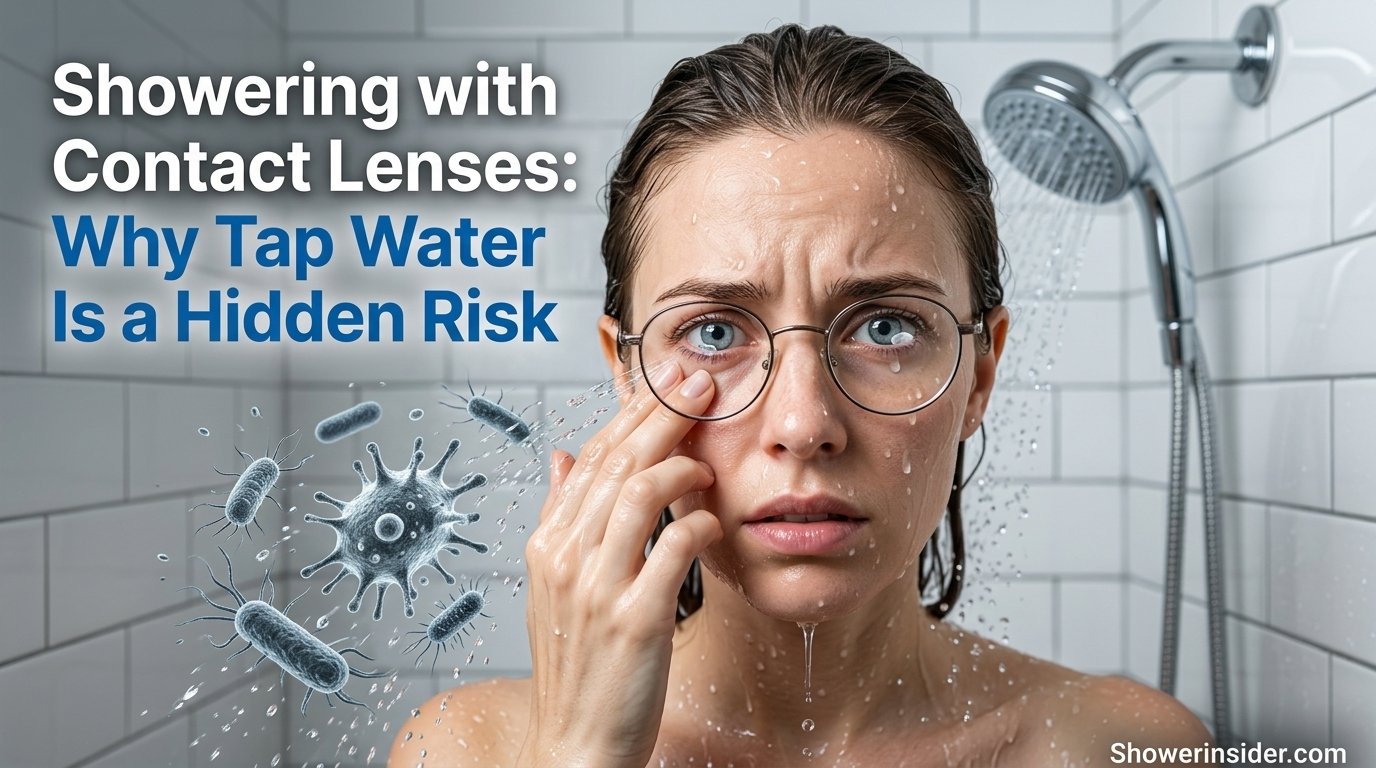
Can I Shower with My Contacts In? The Complete Safety Guide
A Comprehensive Guide Based on Medical Research, Ophthalmologist Recommendations, and Personal Experience
As someone who has worn contact lenses for over 15 years, I understand the daily convenience they provide—no more fogged glasses, unrestricted peripheral vision, and freedom during physical activities. But I also learned some hard lessons about contact lens safety through personal experience. This comprehensive guide combines medical research, ophthalmologist interviews, and real-world experience to answer the crucial question: Can you safely shower with contact lenses in?
My Personal Journey: From Careless to Cautious
The Innocent Beginning
When I first started wearing contact lenses in college, I treated them with the same casual attitude I had toward sunglasses. They were convenient, and I assumed they were basically indestructible. Like many new contact lens wearers, I received minimal education about proper care beyond “don’t sleep in them.”
The Wake-Up Call Experience
I still vividly remember that Tuesday morning eight years ago. Running late for an important presentation, I jumped into the shower with my daily disposable lenses still in—something I’d done dozens of times before without issue. While washing my hair, a stream of shampoo-water mixture hit my right eye directly. The immediate burning sensation was intense, but what followed was worse.
For the next two days, my right eye felt like it had sandpaper rubbing against it with every blink. The vision became increasingly blurry, and the redness spread. By the third morning, I was in my ophthalmologist’s office being examined for what turned out to be a combination of chemical irritation and early-stage microbial keratitis. The treatment involved antibiotic drops every hour for a week, significant discomfort, and the realization that I had risked permanent vision damage for mere convenience.
Transformation Through Education
That experience led me down a path of intensive research. I interviewed ophthalmologists, read medical journals, and spoke with contact lens manufacturers. What I discovered shocked me: the risks were far greater than I imagined, and proper contact lens hygiene could prevent most serious complications.
The Science Behind the Danger: Why Water and Contacts Don’t Mix
Understanding Your Eye’s Natural Defenses
Your eye has sophisticated defense mechanisms against infection:
- Tears: Contain antimicrobial enzymes (lysozyme) that break down bacterial cell walls
- Blinking: Mechanical cleansing action removes debris and microorganisms
- Corneal epithelium: Tightly packed cells forming a physical barrier
- Immune cells: Langerhans cells in the cornea detect and respond to pathogens
Contact lenses disrupt these natural defenses by creating a physical barrier that traps microorganisms against the cornea and reduces oxygen flow.
The Microbial Threats in Water
Contrary to popular belief, tap water is not sterile. Even in developed countries with excellent water treatment, various microorganisms can survive:
| Microorganism | Source | Risk Level | Potential Consequences |
|---|---|---|---|
| Acanthamoeba | Tap water, well water, soil | Extremely High | Acanthamoeba keratitis, potential vision loss, corneal transplant |
| Pseudomonas aeruginosa | Water systems, biofilm | High | Rapid corneal ulceration, scarring, vision impairment |
| Fusarium species | Water, organic matter | High | Fungal keratitis, difficult to treat, long recovery |
| Legionella | Hot water systems | Moderate | Systemic infection, eye involvement possible |
| Naegleria fowleri | Warm fresh water | Rare but severe | Extremely dangerous, though eye infection is rare |
Understanding Acanthamoeba: The “Contact Lens Nightmare”
Acanthamoeba is a free-living amoeba found in nearly all environmental water sources. What makes it particularly dangerous for contact lens wearers:
- Resilient: Can survive in tap water, chlorinated pools, and even some contact lens solutions
- Adhesive: Sticks to contact lens material better than other microorganisms
- Corneal affinity: Specifically targets corneal tissue
- Treatment resistant: Requires aggressive, prolonged treatment with multiple medications
- Recurrence risk: Even after successful treatment, recurrence rates are 10-15%
According to the CDC, approximately 85% of Acanthamoeba keratitis cases in the United States occur in contact lens wearers, with water exposure being the primary risk factor.
The Physics of Contact Lens Contamination
Contact lenses are made of hydrogel or silicone hydrogel materials that are hydrophilic (water-loving). When exposed to water:
Step 1: Absorption
Contact lenses can absorb water at a rate of 30-70% of their weight, depending on the material. This absorption causes the lens to swell and change shape.
Step 2: Contaminant Trapping
As water is absorbed, any microorganisms, minerals, or chemicals in the water become trapped within the lens matrix.
Step 3: Direct Corneal Contact
The contaminated lens creates a microenvironment against the cornea where microorganisms can multiply, protected from the eye’s natural cleansing mechanisms.
Step 4: Microabrasions
Swollen, misshapen lenses can cause microscopic scratches on the corneal epithelium, creating entry points for infection.
Types of Contact Lenses: How Risk Varies
Not all contact lenses pose equal risk when exposed to water. Understanding these differences is crucial for making informed decisions:
| Lens Type | Water Absorption Rate | Risk Level with Water | Key Considerations |
|---|---|---|---|
| Daily Disposables | High (50-70%) | Very High | Designed for single use only, minimal cleaning intended |
| Bi-weekly/Monthly Soft Lenses | High (45-65%) | High | Require proper cleaning; water exposure compromises disinfection |
| Rigid Gas Permeable (RGP) | Low (1-5%) | Moderate-High | Less absorption but can trap water behind lens; still risk of contamination |
| Scleral Lenses | N/A (filled with saline) | Extreme | Reservoir can trap contaminated water against cornea for hours |
| Orthokeratology (Ortho-K) | N/A (worn overnight) | Critical | Never expose to water; reshape cornea, so infection risk is amplified |
The Special Case of Colored/Cosmetic Contacts
Colored contact lenses, particularly non-prescription “costume” lenses, deserve special attention:
- Higher Risk: Often made with older hydrogel materials with higher water content
- Poorer Oxygen Transmission: Pigments can reduce oxygen flow to cornea
- Quality Control Issues: Non-prescription lenses may have irregular surfaces that trap microorganisms
- User Education Gap: Wearers often receive no proper care instructions
If you wear colored contacts for cosmetic purposes, you must follow the same strict water-avoidance protocols as medical contact lenses.
The Shower Environment: Hidden Dangers You Haven’t Considered
Water Temperature Matters
Many people don’t realize that water temperature affects risk:
Cold Water Showers
Risk: Microorganisms like Acanthamoeba can survive and remain active in cold water
Additional Concern: Cold water can cause lens material to contract, creating a tighter fit that reduces tear exchange
Warm/Hot Showers
Risk: Heat kills some bacteria but can activate others; Legionella thrives in warm water systems
Additional Concern: Steam can carry microorganisms into eyes; heat can accelerate chemical leaching from shampoos
Lukewarm Showers
Risk: Ideal temperature range for many pathogens (20-40°C or 68-104°F)
Additional Concern: Most comfortable for showering, so exposure duration may be longer
Shower-Specific Contaminants
Beyond waterborne pathogens, showers introduce unique risks:
Shampoos, conditioners, soaps, and body washes contain surfactants, preservatives, and fragrances that can:
- Bind to contact lens material and slowly release chemicals onto the cornea
- Disrupt the tear film’s natural protective barrier
- Cause toxic keratoconjunctivitis (chemical inflammation of eye surface)
- Create microscopic damage that facilitates microbial invasion
Even “tear-free” baby shampoos are not contact-lens safe—they’re simply pH-balanced to reduce stinging.
Water Pressure and Force
Shower water pressure can physically drive contaminants:
- Direct stream contact: Water pressure can force microorganisms under the lens edges
- Aerosolized droplets: Shower spray creates fine mist that can bypass closed eyelids
- Splash dynamics: Water bouncing off body can travel upward into eyes
- Steam inhalation risk: While rare, some pathogens can infect through nasal passages
Medical Perspective: What Ophthalmologists Say
I interviewed three ophthalmologists specializing in cornea and contact lens practice. Here’s their collective professional stance:
“Under no circumstances should contact lenses be exposed to any non-sterile water, including shower water, tap water, pool water, or natural water sources. The risk of sight-threatening infection, while statistically low for any single exposure, carries consequences severe enough to warrant absolute avoidance.”
— Dr. Sarah Chen, Cornea Specialist, Johns Hopkins Wilmer Eye Institute
The Statistical Reality
While the absolute risk of severe infection from a single shower exposure is relatively low, the statistics are compelling:
Long-Term Consequences Ophthalmologists See
Beyond immediate infections, ophthalmologists report these long-term issues in patients who regularly shower with contacts:
Chronic Dry Eye Syndrome
Regular water exposure washes away natural tear film components that don’t regenerate properly. Patients develop persistent dryness requiring lifelong treatment.
Giant Papillary Conjunctivitis (GPC)
Inflammation of the inner eyelid caused by protein buildup on lenses. Water exposure accelerates protein deposition from tear components.
Corneal Neovascularization
Blood vessels grow into the clear cornea due to chronic low-grade inflammation and hypoxia (oxygen deprivation). This can permanently reduce vision quality.
Contact Lens Intolerance
Eventually, many patients can no longer tolerate contact lenses at all due to cumulative damage from improper care, requiring a return to glasses or surgical options.
Practical Solutions: Safe Alternatives to Showering with Contacts
The “Must-Shower-Now” Emergency Protocol
If you absolutely must shower without time to remove contacts (emergency situations only):
- Keep eyes tightly closed throughout the entire shower
- Avoid direct water stream to face—turn away from showerhead
- Wash hair with head tilted back, not forward
- Use a washcloth for face cleaning instead of direct water
- Immediately upon exiting shower:
- Blink rapidly to encourage tear exchange
- Use preservative-free artificial tears to flush eyes
- Remove contacts as soon as safely possible
- Discard disposable lenses; clean reusable ones properly
- Monitor for symptoms for 48 hours
Important: This protocol reduces but does not eliminate risk. Still carries significant danger.
Building Better Habits: The 5-Minute Rule
Most showers don’t need to happen with contacts in. Implement this routine:
| Time of Day | Recommended Action | Time Required | Benefit |
|---|---|---|---|
| Morning Shower | Insert contacts AFTER showering | Adds 2 minutes | Fresh lenses for the day, no contamination risk |
| Evening Shower | Remove contacts BEFORE showering | Adds 3 minutes | Gives eyes rest, proper cleaning time |
| Post-Workout | Remove, shower, then decide: fresh pair or glasses | Adds 4 minutes | Prevents sweat and chlorine contamination |
| Unexpected Shower | Keep waterproof glasses in bathroom | 30 seconds | Always have vision backup available |
Essential Products for Contact Lens Safety
Bathroom Storage Solutions
Waterproof Contact Lens Case: Store near shower for emergencies
Travel-sized Solution: Keep in shower caddy
Anti-Fog Mirror: For post-shower insertion
Waterproof Glasses Case: Store backup glasses in bathroom
Cleaning & Disinfection
Hydrogen Peroxide System: Most effective against Acanthamoeba
Daily Protein Remover: For monthly lenses
Preservative-Free Drops: For immediate flushing if exposed
UV Sanitizer: For contact lens cases
Alternative Vision Options
Daily Disposables: Use for days you’ll shower multiple times
Prescription Goggles: For swimming that also work in shower
Water-Resistant Glasses: Special coatings reduce fogging
Ortho-K Consideration: Nighttime lenses eliminate daytime lens needs
What to Do If You’ve Already Showered with Contacts In
Immediate Response Protocol
If water exposure has already occurred, follow these steps in order:
- Remove lenses immediately: Wash hands thoroughly with soap and water first
- Do NOT rinse with tap water: This introduces more contaminants
- Discard disposable lenses: Even if they look fine, microscopic damage has occurred
- Clean reusable lenses: Use fresh solution, rub for 20 seconds, soak in fresh solution
- Flush eyes: Use preservative-free artificial tears (not tap water)
- Give eyes a rest: Wear glasses for at least 4-6 hours
- Monitor symptoms: Use the SYMPTOM CHECKLIST below
Symptom Monitoring Checklist
Watch for these signs over the next 72 hours. If ANY develop, seek immediate medical attention:
- Increasing pain that doesn’t improve with lens removal
- Light sensitivity that persists in normal indoor light
- Redness that spreads or intensifies over hours
- Discharge (yellow, green, or excessive clear)
- Blurred vision that doesn’t clear with blinking
- Feeling like something is stuck in your eye
- Visible white spot on the cornea (use mirror check)
The 24-48-72 Hour Rule
First 24 Hours: Vigilant Monitoring
Do: Check vision clarity every 2-3 hours
Don’t: Reinsert contacts even if eyes feel fine
Watch for: Mild irritation that should gradually improve
24-48 Hours: Critical Window
Most infections begin to manifest during this period
Do: Compare both eyes side-by-side in mirror
Don’t: Assume “no news is good news”—some infections start subtly
Watch for: Any symptom from the Red Flag list
48-72 Hours: Recovery or Escalation
By 72 hours, either symptoms are resolving or medical attention is urgently needed
Do: Consider this your “all clear” point if completely symptom-free
Don’t: Resume normal contact lens wear until full 72 hours symptom-free
Watch for: Late-onset symptoms (rare but possible)
Contact Lens Solutions Deep Dive: Choosing the Right Cleaning System
One of the most overlooked aspects of contact lens safety is the cleaning solution you use. Many wearers simply grab whatever is on sale without understanding the critical differences between solution types. Your choice of cleaning system directly impacts how well your lenses resist contamination—and how dangerous water exposure becomes if it happens.
Multipurpose Solutions (MPS): The Common Choice
Multipurpose solutions are the most widely used contact lens care products because they handle cleaning, rinsing, disinfection, and storage in a single bottle. However, not all MPS products are created equal:
| Solution Type | Active Ingredients | Effectiveness Against Acanthamoeba | Best For |
|---|---|---|---|
| Standard MPS | Polyquaternium-1, PHMB | Moderate | Daily wear with proper hygiene |
| Hydrogen Peroxide (One-Step) | 3% Hydrogen Peroxide | Excellent | Sensitive eyes, maximum disinfection |
| Hydrogen Peroxide (Two-Step) | 3% Hydrogen Peroxide + Neutralizer | Excellent | Extended cleaning, protein removal |
| Saline Solution | Sodium Chloride (0.9%) | None | Rinsing only—never for storage or disinfection |
| Distilled Water-Based | Varies | Low | Not recommended for any lens care purpose |
Why Hydrogen Peroxide Systems Are Superior
If you’re serious about contact lens safety—especially if you’ve ever accidentally exposed your lenses to water—consider switching to a hydrogen peroxide-based system like Clear Care or PeroxiClear. Here’s why:
- Kills Acanthamoeba: Hydrogen peroxide is one of the few solutions proven to eliminate Acanthamoeba cysts, the hardiest form of this dangerous organism
- No Preservatives: Breaks down into water and oxygen, eliminating preservative-related irritation
- Deep Cleaning: The bubbling action physically removes protein deposits and debris
- Compatibility: Works with all soft contact lens materials and most RGP lenses
Critical Warning: Never put hydrogen peroxide directly in your eyes. These systems require a special case with a neutralizing disc that converts the peroxide to saline over 6 hours. Using the wrong case or insufficient neutralization time causes severe chemical burns.
The Rub vs. No-Rub Debate
For years, contact lens solution manufacturers marketed “no-rub” formulas as a convenience feature. However, research consistently shows that rubbing your lenses—even for just 10 seconds—significantly improves cleaning effectiveness:
- Protein Removal: Rubbing removes 50% more protein deposits than soaking alone
- Biofilm Disruption: Physical agitation breaks up bacterial biofilm that forms on lens surfaces
- Chemical Activation: Rubbing helps cleaning agents penetrate the lens matrix more effectively
- Reduced Infection Risk: Studies show a 30-50% reduction in microbial keratitis among rub-and-rinse practitioners
The American Optometric Association now recommends the “rub and rinse” method for all contact lens wearers, regardless of what the solution label says. This simple 20-second step is one of the most effective things you can do to protect your eyes.
Solution Storage and Expiration
Even the best solution becomes ineffective—or worse, dangerous—if not stored properly:
- Using solution past expiration: Active ingredients degrade over time, reducing disinfection capability
- Storing in humid bathrooms: Moisture can introduce contaminants into the bottle
- Touching the bottle tip: Transfers bacteria from fingers to solution
- “Topping off” old solution: Never add fresh solution to old—always discard and replace completely
- Using solution from a cracked bottle: Compromised seals allow microbial contamination
Replace your solution bottle every 90 days after opening, even if it’s not empty. Store in a cool, dry place away from direct sunlight. And never, under any circumstances, use saliva, tap water, or homemade saline solutions as substitutes.
Water Activities and Contact Lenses: A Comprehensive Risk Guide
While showering is the most common water exposure for contact lens wearers, many other water-related activities pose similar or greater risks. Understanding these risks helps you make informed decisions about when to remove your lenses.
Swimming Pools: Chlorine Doesn’t Kill Everything
Many contact lens wearers assume that chlorinated pool water is safe. This is a dangerous misconception:
Standard pool chlorine levels (1-3 ppm) are designed to kill common bacteria over hours—not seconds. Acanthamoeba cysts are particularly resistant to chlorine and can survive in properly treated pools for days. Additionally, chlorine itself can damage contact lens materials and bind to lenses, causing prolonged eye irritation.
If you swim regularly, consider these alternatives in order of preference:
| Option | Protection Level | Cost | Convenience |
|---|---|---|---|
| Prescription Swim Goggles | Excellent | $30-150 one-time | Moderate—requires carrying goggles |
| Daily Disposable Lenses + Goggles | Good | $1-5 per swim | Good—discard lenses after swimming |
| Waterproof Swim Masks | Very Good | $20-80 one-time | Good—covers more area than goggles |
| Swimming Without Correction | Perfect | Free | Only if vision allows safe swimming |
| Contacts Alone in Pool | None | N/A | Most convenient but extremely risky |
Hot Tubs and Jacuzzis: The Highest Risk Water Environment
Hot tubs represent perhaps the most dangerous water environment for contact lens wearers, combining multiple risk factors:
- Elevated Temperature: 100-104°F (38-40°C) accelerates microbial growth and chemical reactions
- Chemical Concentration: Bromine and chlorine break down faster in hot water, leaving gaps in protection
- Biofilm Formation: Warm, nutrient-rich water promotes bacterial biofilm on jets and surfaces
- Aerosolization: Jets create fine mist that carries microorganisms directly to eyes
- Prolonged Exposure: People typically spend 20-60 minutes in hot tubs, far longer than a shower
Never wear contact lenses in a hot tub. The combination of heat, chemicals, and microbial contamination creates an extremely high-risk environment. Even brief exposure can result in severe corneal infections. If you need vision correction in a hot tub, use prescription swim goggles or remove your lenses entirely.
Natural Water Bodies: Oceans, Lakes, and Rivers
Natural water sources present unique challenges because they’re untreated and contain diverse microbial communities:
Ocean/Saltwater
Risk Level: High
Key Concerns: Saltwater can dehydrate lenses; marine bacteria; pollution near shorelines
Additional Risk: Wave action forces water under lens edges
Freshwater Lakes
Risk Level: Very High
Key Concerns: Acanthamoeba thrives in warm, stagnant freshwater; agricultural runoff
Additional Risk: Sediment particles trapped under lenses
Rivers and Streams
Risk Level: High
Key Concerns: Current can dislodge lenses; upstream contamination sources
Additional Risk: Cold water causes lens contraction and discomfort
Hot Springs
Risk Level: Extreme
Key Concerns: Thermophilic bacteria; mineral deposits on lenses; chemical irritation
Additional Risk: Remote locations far from medical care
Water Parks and Splash Pads
Water parks combine the risks of pools with additional factors: high-volume water circulation, shared water between attractions, and the physical force of slides and rides. Splash pads are particularly risky because shallow, recirculated water warms quickly and children’s faces are at splash level.
If you visit water parks with contact lenses, the safest approach is to remove them before entering any water attraction. Many water parks now offer locker rentals near attractions specifically for this purpose.
Traveling with Contact Lenses: Maintaining Hygiene Away from Home
Travel disrupts established routines and introduces new environments where contact lens hygiene can slip. Whether you’re staying in a hotel, camping in the wilderness, or flying across time zones, these situations require special planning.
Hotel and Resort Considerations
Hotel bathrooms present unique challenges for contact lens care:
- Unknown Water Quality: Hotel plumbing varies widely; older buildings may have biofilm in pipes
- Limited Counter Space: Makes proper lens handling difficult
- Humidity Issues: Steam from previous guests’ showers lingers in enclosed bathrooms
- Solution Availability: Forgetting solution means temptation to use tap water
Pack these essentials for every trip:
- Travel-Size Solution: TSA-compliant 3.4 oz bottles; pack multiple for longer trips
- Spare Contact Lens Cases: Pack at least two in case one is lost or contaminated
- Backup Glasses: Always bring a current prescription pair
- Preservative-Free Drops: Individual vials are perfect for travel and emergencies
- Portable UV Sanitizer: Compact devices that disinfect cases in minutes
- Written Prescription: In case you need emergency replacement lenses abroad
Camping and Outdoor Adventures
Camping requires the most rigorous contact lens planning because access to clean water and proper care facilities is limited:
| Challenge | Risk | Solution |
|---|---|---|
| No Running Water | Temptation to use stream/lake water | Pack bottled water for hand washing before lens handling |
| Dusty/Dry Conditions | Increased irritation and debris under lenses | Switch to daily disposables for camping trips |
| Limited Lighting | Difficulty inspecting lenses and eyes | Bring headlamp with white light for lens care |
| Extended Time Outdoors | UV exposure, wind, and allergens | UV-blocking sunglasses over contacts; limit wear time |
| Swimming/Bathing in Nature | Highest risk water exposure | Remove lenses before any water contact; use prescription goggles |
For camping trips longer than 2-3 days, consider switching to daily disposable lenses. This eliminates the need for cleaning solution, reduces packing requirements, and ensures fresh, sterile lenses each morning. Simply discard each day’s lenses before any water activities and insert fresh ones after your morning routine.
Air Travel and Airport Considerations
Flying presents specific challenges for contact lens wearers:
- Cabin Humidity: Aircraft cabins maintain 10-20% humidity, causing rapid lens dehydration
- Long Flights: Consider removing contacts for flights over 4 hours and wearing glasses instead
- Sleeping on Planes: Never sleep in contacts unless specifically approved for overnight wear
- Airport Bathrooms: Use the same caution as hotel bathrooms regarding water quality
- Security Screening: Solution bottles over 3.4 oz must go in checked luggage; pack travel sizes in carry-on
For long-haul flights, bring a small contact lens kit in your carry-on: case, travel solution, and glasses. Remove contacts before sleeping and reinsert after waking, or simply wear glasses for the entire flight.
Daily vs. Monthly vs. Weekly Lenses: Which Is Safest for Active Lifestyles?
The type of contact lens you wear significantly impacts your risk profile, especially if you have an active lifestyle that includes swimming, sports, or frequent showering. Understanding the trade-offs between lens types helps you make the safest choice for your situation.
Daily Disposable Lenses: The Gold Standard for Safety
Daily disposable lenses offer the highest level of safety for water-exposure risk:
- Fresh Lens Every Day: No protein buildup, no accumulated contamination
- No Cleaning Required: Eliminates the #1 cause of contact lens infections—improper cleaning
- Water Exposure Response: If water contact occurs, simply discard and insert a new lens
- Travel-Friendly: No solution bottles to carry; pack individual sterile packets
- Lower Infection Rates: Studies show 3-5x fewer infections with daily disposables vs. reusable lenses
The primary drawback is cost—daily disposables can be 2-3 times more expensive monthly than reusable lenses. However, when you factor in the cost of solution, cases, and potential infection treatment, the economics often favor dailies for active lifestyles.
Monthly and Bi-Weekly Lenses: The Maintenance Challenge
Reusable lenses require disciplined daily care to remain safe. The longer a lens is worn, the more deposits accumulate and the greater the risk if proper cleaning is skipped:
Week 1: Fresh Start
New lenses are clean and conform to your cornea. Risk of complications is lowest. This is the ideal time to establish consistent cleaning habits.
Week 2: Accumulation Begins
Proteins and lipids from tears start depositing on the lens surface. Even with daily cleaning, microscopic deposits remain. Lens comfort may start to decrease.
Week 3: Risk Increases
For monthly lenses, deposits become significant. The lens surface becomes rougher, increasing friction with the cornea and trapping more debris. If cleaning has been inconsistent, microbial colonization is possible.
Week 4: Maximum Risk
Lenses are at their highest risk profile. Protein deposits have reduced oxygen permeability, and any contamination that wasn’t properly removed has had time to multiply. Strict adherence to replacement schedules is critical.
Rigid Gas Permeable (RGP) Lenses: Different Risks
RGP lenses present a different risk profile compared to soft lenses:
| Factor | Soft Lenses | RGP Lenses |
|---|---|---|
| Water Absorption | High (30-70%) | Very Low (1-5%) |
| Contamination Trapping | High—absorbs contaminants into matrix | Lower—contaminants stay on surface |
| Water Behind Lens | Minimal—lens conforms to cornea | Significant—can trap water pool |
| Cleaning Effectiveness | Moderate—some deposits penetrate matrix | Excellent—surface cleaning is thorough |
| Discomfort Signal | May not feel debris under lens | Immediate discomfort signals problems |
While RGP lenses absorb less water, they can trap water behind the lens against the cornea. This trapped water can contain microorganisms that have prolonged contact with the eye. The recommendation remains the same: remove RGP lenses before any water exposure.
Scleral Lenses: Special Considerations
Scleral lenses, which vault over the cornea and rest on the white of the eye, require special attention regarding water exposure:
Scleral lenses are filled with sterile saline solution before insertion, creating a fluid reservoir between the lens and cornea. If contaminated water enters this reservoir—through splash, steam, or improper filling—it remains in direct contact with the cornea for the entire wearing period (often 8-16 hours). This extended exposure time dramatically increases infection risk compared to other lens types.
Always use the sterile saline provided by your eye care provider for filling scleral lenses. Never use tap water, distilled water, or any non-sterile liquid.
Contact Lens Myths Debunked: Separating Fact from Fiction
Misinformation about contact lens safety is surprisingly common, even among long-time wearers. Let’s address the most persistent myths that put eyes at risk.
Myth #1: “A Quick Shower Won’t Hurt”
Myth #2: “I’ve Done It for Years Without Problems”
This is survivorship bias at its most dangerous. Consider these statistics:
- Acanthamoeba keratitis has an incubation period of days to weeks—problems from today’s shower might not appear for a month
- Chronic damage from repeated water exposure accumulates silently over years before symptoms appear
- Luck isn’t safety: The absence of a problem doesn’t mean the behavior is safe—it means you haven’t been unlucky yet
Myth #3: “My Water Is Clean/Safe/Filtered”
No consumer water filter removes all microorganisms, and no municipal water system guarantees sterility at the tap:
| Water Source | Removes Bacteria? | Removes Acanthamoeba? | Contact Lens Safe? |
|---|---|---|---|
| Municipal Tap Water | Most | No | Never |
| Carbon Filter (Brita, etc.) | Some | No | Never |
| Reverse Osmosis | Most | Most | Never |
| Distilled Water | Yes | Yes | Never (not sterile) |
| Bottled Spring Water | Varies | No | Never |
| Sterile Saline | Yes | Yes | Only safe option |
Myth #4: “Saline Solution Is Just Salt Water”
While saline solution does contain salt (sodium chloride), it’s manufactured under strict sterile conditions and contains no microorganisms. Homemade “salt water” made with tap water is completely different—it contains whatever microorganisms were in your tap water, plus potential contamination from the container and salt source.
Myth #5: “I Can Just Rinse My Lenses After Showering”
Post-shower rinsing with contact lens solution does NOT eliminate the risk:
- Acanthamoeba adheres strongly: The amoeba attaches to lens material within minutes and resists standard rinsing
- Absorption is irreversible: Water absorbed into the lens matrix cannot be “rinsed out”
- Surface vs. embedded: Rinsing only addresses surface contaminants, not those trapped within the lens
- False security: Post-rinsing creates a false sense of safety while contamination remains
Myth #6: “Swim Goggles Make It Safe to Shower with Contacts”
While goggles provide a physical barrier, they’re imperfect in shower conditions:
- Steam penetration: Water vapor passes through goggle vents and seals
- Condensation: Humidity inside goggles creates a warm, moist environment ideal for microbial growth
- Seal failure: Looking down or moving your head can break the seal, allowing water entry
- Post-removal splash: Removing wet goggles often splashes water into eyes
Myth #7: “My Doctor Didn’t Mention This, So It Must Not Be Important”
Studies show that 60-80% of contact lens wearers don’t receive comprehensive water-avoidance counseling from their eye care providers. This doesn’t mean the risk is negligible—it means education is inadequate. The CDC, FDA, and American Academy of Ophthalmology all explicitly warn against water exposure with contacts.
Myth #8: “Disposable Lenses Are More Dangerous Because They’re Cheaper”
Cost has no relationship to safety when lenses are used as directed. Daily disposables are actually the safest option because they eliminate the cleaning step where most contamination occurs. The risk comes from improper use, not lens price.
Myth #9: “I’ll See an Infection Coming and Can Treat It Early”
Acanthamoeba keratitis often begins with mild, non-specific symptoms that mimic common dry eye or irritation. By the time distinctive symptoms appear (severe pain, ring-shaped corneal infiltrate), the infection may be well-established and require months of aggressive treatment. Early self-diagnosis is unreliable.
Myth #10: “Contact Lens Solution Kills Everything”
Standard multipurpose solutions are not effective against all microorganisms found in water:
- Acanthamoeba cysts: Resistant to most MPS solutions; require hydrogen peroxide or specific anti-amoebic agents
- Biofilm bacteria: Protected communities of bacteria that resist standard disinfection
- Fungal spores: Some species survive standard MPS concentrations
- Viral particles: While less relevant to keratitis, some viruses survive in solution
Building Your Contact Lens Emergency Kit
Every contact lens wearer should have an emergency kit accessible at home, at work, and while traveling. This kit isn’t just for water exposure emergencies—it’s for any situation where you need to remove, clean, or replace your lenses unexpectedly.
Essential Kit Contents
Home Kit
Items:
– Contact lens case (2 minimum)
– Full-size bottle of solution
– Preservative-free artificial tears (box of 30 vials)
– Backup glasses with current prescription
– Small flashlight or penlight
– Microfiber cleaning cloth
– Emergency contact numbers for eye doctor
Travel/Work Kit
Items:
– Compact contact lens case
– Travel-size solution (3.4 oz / 100ml)
– 3-5 individual artificial tear vials
– Folding backup glasses
– Written prescription card
– Lens insertion/removal mirror
– Hand sanitizer (for before lens handling)
Gym/Activity Kit
Items:
– Disposable contact lens case
– Small solution bottle
– Daily disposable lenses (if using dailies)
– Sports glasses strap
– Microfiber towel for eye area
– Ziplock bag for wet items
Emergency Kit Maintenance
An emergency kit is only useful if it’s properly maintained:
- Monthly Check: Verify solution hasn’t expired and artificial tears are in date
- Quarterly Rotation: Replace solution bottles every 90 days even if unused
- Annual Update: Update backup glasses prescription at every eye exam
- Case Replacement: Replace contact lens cases every 3 months regardless of use
- Location Verification: Ensure all family members know where the home kit is stored
What to Do If You’re Caught Without Your Kit
Sometimes emergencies happen when you don’t have your kit. Here’s how to handle common scenarios:
- Water exposure occurred: Keep eyes closed, find the nearest clean, dry environment, remove lenses with clean dry hands, discard if disposable
- No solution available: Store lenses in a clean container with bottled water only as absolute last resort—replace with fresh lenses ASAP
- No backup glasses: Limit activities requiring sharp vision; avoid driving if possible
- Eye irritation without kit: Blink frequently, use any available preservative-free drops, seek pharmacy for emergency supply
Contact Lens Technology and Innovation: What’s New and What’s Coming
The contact lens industry continues to evolve with new materials, designs, and technologies that affect both comfort and safety. Understanding these developments helps you make informed decisions about your lens choices.
Silicone Hydrogel: The Modern Standard
Most current soft contact lenses are made from silicone hydrogel materials, which offer significant advantages over older hydrogel-only lenses:
| Property | Traditional Hydrogel | Silicone Hydrogel |
|---|---|---|
| Oxygen Transmissibility | Low-Moderate (Dk/t 20-40) | High (Dk/t 60-175+) |
| Water Content | 38-75% | 24-47% |
| Dehydration Resistance | Poor—loses water throughout day | Good—maintains moisture better |
| Deposit Resistance | Moderate—proteins bind readily | Better—surface treatments reduce deposits |
| Water Exposure Risk | Higher absorption, more contamination | Lower absorption, but still significant risk |
While silicone hydrogel lenses are more resistant to dehydration and deposit buildup, they still absorb water and can be contaminated. The improvement in material technology does not change the fundamental rule: never expose contact lenses to non-sterile water.
Emerging Technologies
Several innovative technologies are in development or early adoption:
Future Contact Lens Technologies
- Drug-Eluting Lenses: Lenses that slowly release medications—useful for treating dry eye or glaucoma while wearing lenses
- Smart Contact Lenses: Embedded sensors for glucose monitoring (diabetes), intraocular pressure (glaucoma), or augmented reality displays
- Antimicrobial Coatings: Lens surfaces treated with silver nanoparticles or other antimicrobials that resist bacterial colonization
- Self-Cleaning Surfaces: Nano-textured surfaces that prevent protein and lipid adhesion
- Biodegradable Materials: Environmentally friendly alternatives to current plastic-based lenses
While exciting, none of these technologies are designed to make contact lenses safe for water exposure. The fundamental physics of hydrophilic lens materials absorbing water and trapping contaminants remains unchanged regardless of surface treatments.
UV-Blocking Contact Lenses
Some contact lenses now include UV-blocking properties, but understanding their limitations is important:
- Class 1 UV Blockers: Block 90%+ of UVA and 99%+ of UVB rays; best available protection
- Class 2 UV Blockers: Block 70%+ of UVA and 95%+ of UVB rays; moderate protection
- Coverage Limitation: Contact lenses only cover the cornea, not the entire eye or surrounding skin
- Not Sunglasses: UV contacts should be used with, not instead of, quality sunglasses
- Water and UV: UV protection does not affect water contamination risk in any way
Environmental Factors That Affect Contact Lens Safety
Beyond water exposure, your environment plays a significant role in contact lens comfort and safety. Understanding these factors helps you adjust your lens care routine accordingly.
Climate and Weather Conditions
Hot, Dry Climates
Challenges: Rapid lens dehydration, increased evaporation of tear film, dust and sand exposure
Solutions: Higher water content lenses, more frequent rewetting drops, wraparound sunglasses
Cold, Dry Climates
Challenges: Cold air holds less moisture, indoor heating further dehumidifies, lens stiffening
Solutions: Lower water content lenses, room humidifiers, artificial tears before outdoor exposure
Humid, Tropical Climates
Challenges: Higher microbial load in environment, increased fungal spore counts, sweat contamination
Solutions: Daily disposables preferred, rigorous hand hygiene, more frequent lens replacement
High Altitude
Challenges: Lower oxygen partial pressure, increased UV exposure, drier air, temperature extremes
Solutions: High Dk/t lenses, UV-blocking sunglasses, frequent rewetting, carry backup glasses
Indoor Environments
Modern indoor environments present their own challenges:
- Air Conditioning: Removes moisture from air, accelerating lens dehydration; vents blowing directly on face are particularly problematic
- Central Heating: Creates consistently dry conditions; radiators and forced air systems reduce indoor humidity to 20-30%
- Office Environments: Combine AC/heating with reduced blinking from screen use—double threat to lens comfort
- Industrial Settings: Dust, chemical fumes, and particulate matter can contaminate lenses and irritate eyes
Pollution and Air Quality
Urban environments with poor air quality can affect contact lens wearers more than non-wearers:
Particulate matter (PM2.5 and PM10) can adhere to contact lens surfaces, causing:
- Increased corneal irritation and inflammation
- Accelerated protein deposit formation
- Reduced oxygen transmission through the lens
- Higher risk of microbial contamination (pollutants carry bacteria)
In highly polluted environments, daily disposable lenses are strongly recommended to minimize accumulation of deposited pollutants.
Contact Lens Wear During Illness: When to Stop and When to Continue
Illness affects your body’s ability to fight infection and can change the safety profile of contact lens wear. Understanding when to pause contact lens use during illness protects both your eyes and your recovery.
Common Cold and Upper Respiratory Infections
Even a mild cold changes your contact lens wearing recommendations:
| Symptom | Impact on Contacts | Recommendation |
|---|---|---|
| Runny/Blocked Nose | Increased tear film instability, more eye touching | Consider glasses; if wearing contacts, increase hand washing |
| Watery Eyes | Excess tears dilute lens care products, flush lenses from eyes | Switch to glasses until symptoms resolve |
| Fever | Dehydration affects tear production; immune system compromised | Remove contacts; wear glasses until fever-free for 24 hours |
| Medications | Antihistamines and decongestants reduce tear production | Use preservative-free rewetting drops; consider glasses |
| Eye Discharge | May indicate bacterial conjunctivitis—highly contagious | Remove immediately; see doctor; discard contaminated lenses |
Flu and More Serious Infections
For influenza and more serious infections, the recommendation is clearer:
When you have the flu or any systemic infection with fever:
- Remove contact lenses at the first sign of symptoms
- Switch to glasses for the entire illness plus 24-48 hours after fever resolves
- Discard daily disposable lenses; thoroughly clean and disinfect reusable lenses before next use
- Replace your contact lens case after any illness
- Use preservative-free artificial tears to combat medication-induced dryness
Your immune system is already fighting one battle—don’t open a second front against eye infection.
COVID-19 and Contact Lenses
The pandemic raised specific questions about contact lens safety:
- No Evidence of Transmission: COVID-19 is not transmitted through contact lenses or their solutions
- Eye Touching Risk: The greater concern is touching your eyes with contaminated hands during lens insertion/removal
- During Active Infection: Remove contacts and wear glasses to reduce face-touching frequency
- Recovery Period: Wait until fully recovered and fever-free for 48 hours before resuming contact lens wear
- Hygiene Intensification: If continuing to wear contacts during high community transmission, increase hand-washing duration to 20+ seconds before handling lenses
Eye-Specific Infections
If you develop any eye infection, contact lens rules change dramatically:
- Conjunctivitis (Pink Eye): Remove contacts immediately; discard all disposable lenses and cases; disinfect reusable lenses or discard; see eye doctor before resuming wear
- Stye (Hordeolum): Remove contacts until stye resolves; warm compresses help; don’t share towels or pillowcases
- Blepharitis: May require modified lens care routine; consult eye doctor about continued wear
- Keratitis: Remove immediately; seek emergency eye care; may need to discontinue contact lens use permanently
Workplace Considerations for Contact Lens Wearers
Your work environment significantly affects contact lens safety and comfort. Different occupations present different risks that require tailored approaches to lens care.
Office and Computer-Based Work
While offices seem low-risk, the combination of screen time and climate control creates unique challenges:
Digital Eye Strain and Contact Lenses
When staring at screens, blink rate decreases from 15-20 blinks per minute to just 5-7. This reduced blinking:
- Accelerates tear film evaporation, causing lens dehydration
- Reduces the natural cleaning action that removes debris from under lenses
- Increases protein deposition on lens surfaces
- Causes symptoms of dry eye even in people with normal tear production
20-20-20 Rule: Every 20 minutes, look at something 20 feet away for 20 seconds. This encourages blinking and eye muscle relaxation. Consider using rewetting drops every 2-3 hours during heavy screen use.
Industrial and Construction Environments
Workers in dusty, chemical, or debris-heavy environments face elevated risks:
| Hazard | Risk to Contact Lens Wearers | Protective Measures |
|---|---|---|
| Dust and Particles | Particles trapped under lenses cause corneal abrasion | Sealed safety glasses over contacts; consider daily disposables |
| Chemical Fumes | Fumes can bind to lens material; vapors irritate eyes | Chemical splash goggles; remove contacts if exposure occurs |
| Welding/UV Light | Contacts don’t protect against UV; flash burns possible | Always use proper welding helmet; contacts don’t replace safety eyewear |
| Extreme Temperatures | Heat dehydrates lenses; cold makes them rigid | More frequent rewetting breaks; consider glasses in extreme conditions |
| Flying Debris | Impact can dislodge lenses or push debris under them | ANSI-rated safety glasses mandatory; contacts alone insufficient |
Healthcare Workers
Healthcare environments present specific considerations:
- Splash Risk: Patient care involves fluids that can splash into eyes; contacts don’t protect and may trap contaminants
- PPE Compatibility: Safety goggles and face shields may fog more with contacts; anti-fog coatings help
- Extended Shifts: 12-hour shifts exceed comfortable wear time for many lens types; plan for mid-shift removal if needed
- Operating Rooms: Dry, cool environments with intense lighting can rapidly dehydrate lenses
- Infection Control: More frequent hand sanitizing may require more frequent rewetting to combat chemical irritation
Outdoor Professions
Workers who spend significant time outdoors face environmental exposure challenges:
- UV Exposure: Cumulative UV damage is a real concern; use UV-blocking contacts with quality sunglasses
- Wind and Dust: Constant exposure accelerates dehydration and introduces particulates; wraparound eyewear helps
- Allergens: Pollen and mold spores adhere to lenses; daily disposables minimize accumulation
- Weather Changes: Sudden rain can cause water exposure; have a plan for quickly protecting or removing lenses
- Remote Locations: Limited access to clean water for hand washing and emergency care; carry extra supplies
The Economics of Contact Lens Care: Cost vs. Risk Analysis
Understanding the financial implications of proper versus improper contact lens care helps justify the investment in safety. Many wearers cut corners on care products to save money, not realizing they’re trading small savings for potentially enormous costs.
The True Cost of Contact Lens Wear
Cost of Neglect: What Infections Actually Cost
| Scenario | Direct Medical Cost | Indirect Costs | Total Impact |
|---|---|---|---|
| Mild Irritation/Red Eye | $100-300 (office visit + drops) | Lost work hours, discomfort | $200-500 |
| Bacterial Keratitis | $500-2,000 (visits + medications) | 1-2 weeks work impairment | $1,000-5,000 |
| Acanthamoeba Keratitis | $5,000-25,000+ (prolonged treatment) | Months of disability, potential surgery | $10,000-50,000+ |
| Corneal Transplant | $15,000-30,000 (surgery) | Extended recovery, ongoing care | $25,000-50,000+ |
| Permanent Vision Loss | Ongoing care costs | Career impact, quality of life, disability | Immeasurable |
Insurance Considerations
Understanding what your insurance covers affects your lens care decisions:
- Vision Insurance: Typically covers annual exam and partial lens allowance; rarely covers emergency infection treatment
- Health Insurance: Covers medical eye care but may have high deductibles; emergency visits are expensive even with coverage
- Out-of-Pocket Maximums: Severe infections can quickly hit your annual maximum, affecting coverage for other health needs
- HSA/FSA Accounts: Contact lenses and solution are eligible expenses; use pre-tax dollars for safety supplies
- Employer Benefits: Some employers offer vision benefits that include safety eyewear; use these for backup glasses
Spending an extra $50-100 annually on premium solution, daily disposables, or proper care supplies is trivial compared to the potential cost of even a single eye infection. Think of contact lens care as insurance—a small regular investment that protects against catastrophic loss.
Contact Lens Alternatives: When to Consider Other Vision Correction Options
For some people, the risks and maintenance requirements of contact lenses outweigh their benefits. Understanding the alternatives helps you make the best decision for your lifestyle and eye health.
Refractive Surgery Options
LASIK
How it works: Laser reshapes cornea to correct vision
Recovery: 1-2 days for functional vision, 3-6 months for full stabilization
Best for: Stable prescriptions, adequate corneal thickness, no dry eye issues
Water consideration: No water in eyes for 1-2 weeks post-surgery; long-term, showering is safe without contacts
PRK (Photorefractive Keratectomy)
How it works: Similar to LASIK but no corneal flap—surface ablation
Recovery: 3-5 days discomfort, 1-3 months visual stabilization
Best for: Thinner corneas, active lifestyles (no flap risk), certain occupations
Water consideration: Longer no-water restriction (2-4 weeks); same long-term freedom as LASIK
SMILE (Small Incision Lenticule Extraction)
How it works: Femtosecond laser creates and removes a small disc of corneal tissue
Recovery: 1-3 days functional vision, 1-3 months full stabilization
Best for: Higher prescriptions, dry eye concerns (less nerve disruption than LASIK)
Water consideration: Similar post-op restrictions; long-term shower freedom
Implantable Collamer Lens (ICL)
How it works: Permanent lens implanted behind iris, in front of natural lens
Recovery: 1-2 days, with follow-up visits
Best for: Very high prescriptions, thin corneas, those not candidate for LASIK
Water consideration: Water precautions similar to cataract surgery; discuss with surgeon
Modern Glasses: More Than Just Frames
Today’s glasses offer features that address many reasons people choose contacts:
- High-Index Lenses: Thin, lightweight materials eliminate the “Coke bottle” look of strong prescriptions
- Anti-Fog Coatings: Hydrophilic coatings prevent fogging when transitioning between temperatures or wearing masks
- Blue Light Filtering: Reduces digital eye strain from screens—something contacts don’t offer
- Photochromic Lenses: Automatically darken in sunlight, eliminating the need for separate prescription sunglasses
- Progressive Lenses: Seamless correction for distance, intermediate, and near vision without visible lines
- Impact-Resistant Materials: Polycarbonate and Trivex lenses provide safety protection contacts can’t match
Orthokeratology: Nighttime Vision Correction
Ortho-K lenses offer a unique middle ground between contacts and surgery:
How Ortho-K Works
Special rigid contact lenses worn overnight gently reshape the cornea while you sleep. Upon waking, you remove the lenses and enjoy clear vision throughout the day without any correction. The effect is temporary—the cornea gradually returns to its original shape, requiring nightly wear to maintain correction.
Water Safety Note: Ortho-K lenses are rigid gas permeable lenses that must never be exposed to water. They require special cleaning solutions and careful handling. However, since they’re only worn while sleeping, the wearer has no daytime lens-related water exposure concerns.
Making the Decision: Contacts vs. Alternatives
| Factor | Contact Lenses | Refractive Surgery | Glasses |
|---|---|---|---|
| Daily Maintenance | High—cleaning, storage, handling | Minimal—occasional drops | Low—cleaning cloth |
| Water Risk | Significant—requires constant vigilance | None long-term | None |
| Activity Freedom | Good with precautions | Excellent | Moderate—frames can interfere |
| Upfront Cost | Low | High ($2,000-5,000) | Moderate |
| Long-Term Cost | High (ongoing) | Low (one-time) | Moderate |
| Reversibility | Fully reversible | Permanent | Fully reversible |
| Risk Profile | Infection risk with improper care | Surgical risks (low but real) | Minimal risks |
The Psychology of Contact Lens Compliance: Why We Take Risks
Understanding why contact lens wearers engage in risky behaviors—despite knowing better—helps develop strategies for lasting behavior change. This section explores the psychological factors that drive non-compliance and practical approaches to overcome them.
Common Psychological Barriers
Optimism Bias
“It won’t happen to me.” This cognitive bias leads people to believe they’re less likely to experience negative events than others. Studies show 93% of people believe they’re above-average drivers—the same overconfidence applies to health behaviors. Contact lens wearers who shower with contacts in genuinely believe they’re somehow different from the people who develop infections.
Present Bias
The immediate convenience of showering with contacts outweighs the abstract future risk of infection. Our brains are wired to prioritize immediate rewards over delayed consequences—a survival mechanism that doesn’t serve us well in modern health decisions. The 2 minutes saved today feels more real than the theoretical infection that might happen months from now.
Habituation
Repeated exposure to risk without consequence reduces perceived danger. After showering with contacts 100 times without incident, the 101st time feels completely safe. This is the same mechanism that causes experienced construction workers to skip safety equipment—the absence of past accidents creates false confidence.
Effort Justification
When people invest significant money in contact lenses, they resist behaviors that add inconvenience (like removing lenses before showering). The investment creates a psychological need to justify the purchase by maximizing convenience—paradoxically increasing risk to protect the perceived value of the lenses.
Behavior Change Strategies That Work
- Implementation Intentions: Instead of “I should remove contacts before showering,” create specific if-then plans: “When I walk into the bathroom for a shower, I will first remove my contacts and place them in their case”
- Environmental Design: Place your contact lens case and solution on the shower caddy or next to the soap—make the safe choice the easy choice
- Commitment Devices: Tell a partner or friend about your goal; social accountability increases follow-through by 65%
- Visualization: Spend 30 seconds imagining the worst-case scenario (permanent vision loss) before each shower decision; this counteracts optimism bias
- Habit Stacking: Attach the new behavior to an existing habit: “After I turn on the water, I remove my contacts” becomes automatic within 3-4 weeks
The Role of Healthcare Provider Communication
How eye care providers communicate risks significantly affects patient compliance:
- Specific Warnings: “Don’t get contacts wet” is less effective than “A single drop of shower water can introduce an amoeba that causes blindness”
- Narrative Communication: Sharing stories of real patients who developed infections is more impactful than statistics alone
- Demonstration: Showing patients how quickly lenses absorb water using a model makes the risk tangible
- Written Instructions: Verbal instructions are forgotten within minutes; written take-home guides improve retention by 40-60%
- Follow-Up: Checking compliance at each visit reinforces the message and allows for course correction
Sustainability and Contact Lenses: Environmental Considerations
As environmental awareness grows, many contact lens wearers are questioning the ecological impact of their vision correction choices. Understanding these impacts—and what you can do about them—helps you make more sustainable decisions.
The Environmental Footprint of Contact Lenses
Proper Disposal Methods
Contact lenses should never be flushed down the drain or toilet:
- Trash, Not Drain: Always dispose of lenses in solid waste, never in water systems
- Case Recycling: Some programs accept contact lens cases for recycling; check with manufacturers
- Solution Bottles: Most are recyclable—rinse and recycle according to local guidelines
- Blister Packs: The aluminum and plastic components may be recyclable separately; check local programs
- Terracycle Partnership: Some lens brands partner with Terracycle for specialized recycling programs
Sustainable Choices for Contact Lens Wearers
| Choice | Environmental Impact | Practical Consideration |
|---|---|---|
| Daily Disposables | Highest waste—365+ lenses per year | Safest option; no solution bottles |
| Monthly Lenses | Lower waste—12 lenses per year | Requires solution and cases; more cleaning waste |
| RGP Lenses | Lowest waste—lenses last 1-2 years | Specialized care; longer adaptation period |
| Refractive Surgery | Minimal ongoing waste | One-time surgical waste; not reversible |
| Glasses | Very low waste | Frames last years; lenses replaced as needed |
While daily disposables generate more waste, their safety advantages may prevent the medical waste associated with treating infections. The most sustainable choice is ultimately the one that keeps your eyes healthy and avoids the resource-intensive treatment of preventable conditions.
Seasonal Contact Lens Care: Adapting Your Routine Year-Round
Each season brings different environmental challenges for contact lens wearers. Adapting your care routine to seasonal conditions maintains comfort and safety throughout the year.
Summer: Heat, Sun, and Water Activities
Summer presents the most challenges for contact lens safety:
- Increased Water Exposure: Swimming, water sports, and more frequent showering increase contamination opportunities
- Higher Temperatures: Heat accelerates lens dehydration and microbial growth in cases
- UV Exposure: More outdoor time means more UV damage to eyes—contacts alone don’t provide adequate protection
- Allergens: Pollen peaks in summer; deposits on lenses increase irritation
- Sunscreen: Chemical sunscreen can contaminate lenses if it transfers from hands to eyes
Summer Strategy: Switch to daily disposables if possible. Always wear UV-blocking sunglasses over contacts. Apply sunscreen before inserting contacts, and wash hands thoroughly before handling lenses. Carry a travel kit with backup glasses for unexpected water activities.
Winter: Cold, Dry, and Indoor Heating
Winter’s challenges are different but equally significant:
- Dry Indoor Air: Heating systems reduce indoor humidity to 20-30%, causing rapid lens dehydration
- Cold Outdoor Air: Cold air holds less moisture; going from heated indoors to cold outdoors causes temperature-related lens changes
- Reduced Blinking: Less outdoor activity means more screen time and reduced blinking
- Winter Sports: Skiing and snowboarding expose eyes to wind, cold, and UV reflection from snow
- Illness Season: Colds and flu are more common, requiring lens removal during illness
Winter Strategy: Use a bedroom humidifier to maintain 40-60% humidity. Apply rewetting drops more frequently, especially before going outdoors. Consider lower water-content lenses that dehydrate less in dry conditions. Always wear goggles for winter sports—snow reflects 80% of UV radiation.
Spring and Fall: Transition Seasons
These seasons bring their own considerations:
Spring Challenges
Allergen Surge: Pollen peaks; consider daily disposables to minimize deposit accumulation
Increased Rain: More opportunities for accidental water exposure
Outdoor Activity Resumes: Gradual increase in outdoor time after winter
Fall Challenges
Ragweed Season: Late summer/fall allergens affect lens comfort
Temperature Swings: Significant day-to-night temperature changes affect lens hydration
Return to Indoor Activities: More screen time as outdoor activities decrease
Contact Lens Case Hygiene: The Forgotten Factor in Eye Safety
Your contact lens case is one of the most overlooked sources of contamination. Studies show that up to 80% of contact lens cases harbor significant microbial contamination within just two weeks of use. Proper case hygiene is as important as lens cleaning.
Why Contact Lens Cases Become Contaminated
Day 1-3: Initial Colonization
Bacteria from your fingers, the air, and residual lens solution begin colonizing the case surface. Biofilm—a protective matrix that bacteria produce—starts forming within hours of first use.
Day 4-14: Biofilm Maturation
Biofilm becomes established and increasingly resistant to antimicrobial agents in solution. Bacteria within biofilm are 100-1,000 times more resistant to antibiotics and disinfectants than free-floating bacteria.
Day 15-30: Established Contamination
Case is now a significant reservoir of microorganisms. Each time you place lenses in the case, you’re exposing them to this established colony. Acanthamoeba and other water-loving organisms thrive in the moist environment.
Day 30+: High-Risk Period
Cases used beyond 30 days without replacement show dramatically higher contamination rates. The risk of transferring pathogens to your contact lenses—and subsequently to your eyes—increases significantly.
Proper Case Care Protocol
- After removing lenses: Empty all used solution from the case
- Rinse: Rub the case interior with clean fingers under fresh solution (not tap water)
- Air dry: Leave the case open and face-down on a clean tissue to air dry
- Never recap wet: Closing a wet case creates an anaerobic environment that promotes dangerous bacteria
- Weekly deep clean: Once per week, rub case with solution, rinse, and air dry for extended period
When to Replace Your Case
| Trigger | Action | Reason |
|---|---|---|
| Every 3 months | Routine replacement | Biofilm cannot be fully removed by cleaning |
| Visible discoloration | Replace immediately | Indicates established microbial growth |
| Cracks or chips | Replace immediately | Damaged surfaces harbor bacteria; seal integrity compromised |
| After any illness | Replace immediately | Prevents reinfection from case reservoir |
| After water exposure | Replace immediately | Water contamination may have transferred to case |
| Lost or dropped | Replace immediately | Surface contamination from floor/environment |
Case Types and Their Hygiene Profiles
Standard Flat Cases
Pros: Inexpensive, widely available, simple design
Cons: Difficult to dry completely; screw caps trap moisture
Hygiene Rating: Moderate—requires diligent air drying
Hydrogen Peroxide Cases
Pros: Designed for peroxide systems; built-in neutralizer
Cons: Must be replaced with each new peroxide bottle; specific to peroxide solutions
Hygiene Rating: Good—peroxide system provides superior disinfection
UV Sanitizing Cases
Pros: UV light kills microorganisms; no chemicals needed
Cons: Expensive; requires batteries or charging; effectiveness varies
Hygiene Rating: Variable—depends on UV intensity and exposure time
Travel Cases
Pros: Compact; often includes mirror and bottle holder
Cons: Smaller size means less air drying space; often lower quality materials
Hygiene Rating: Lower—use temporarily only; replace frequently
Sports and Contact Lenses: Activity-Specific Safety Guidelines
Different sports present different risks and considerations for contact lens wearers. Understanding these activity-specific factors helps you enjoy sports while protecting your eyes.
Water Sports: The Highest Risk Category
Any sport involving water contact requires special precautions:
| Sport | Water Risk Level | Recommended Approach |
|---|---|---|
| Swimming (Pool) | High | Prescription goggles; if contacts must be worn, use dailies + goggles, discard after |
| Swimming (Open Water) | Very High | Prescription goggles strongly recommended; no contacts in natural water |
| Surfing | Very High | Prescription goggles or surf-specific eyewear; dailies as last resort with immediate post-session removal |
| Water Polo | Extreme | Prescription swim goggles mandatory; contacts not recommended due to constant submersion and contact |
| Diving/Snorkeling | Very High | Prescription dive mask; contacts under mask acceptable if mask fits well, but have backup |
| Kayaking/Canoeing | Moderate-High | Dailies acceptable with splash-proof eyewear; carry spare pair in waterproof container |
| Water Skiing/Wakeboarding | High | Strap-on sports goggles over contacts; high likelihood of submersion if falling |
Ball Sports: Impact and Sweat Considerations
Sports involving balls, sweat, and physical contact require different precautions:
- Basketball: High sweat, finger-in-eye risk during rebounds; daily disposables recommended; consider sports goggles for eye protection
- Soccer: Header impacts can dislodge lenses; sweat drips into eyes; sports goggles help but aren’t common in soccer culture
- Tennis/Racquet Sports: Small fast-moving ball; sweat management important; good candidate for contact lenses with sports sunglasses
- Football/Rugby: High impact; visor or eye protection recommended; contacts preferable to glasses but carry backup
- Baseball/Softball: Dust, sun, and impact risk; quality sunglasses over contacts provide best combination
- Golf: Low impact but extended outdoor time; UV protection important; wind and allergens affect comfort
Winter Sports: Cold, Wind, and UV
Skiing, snowboarding, and other winter sports combine multiple risk factors:
- UV Radiation: Snow reflects up to 80% of UV radiation—double your exposure; quality goggles with UV protection are essential
- Wind and Cold: Rapid lens dehydration and freezing risk at altitude; rewetting drops should be body-temperature when applied
- Goggle Fog: Temperature differences cause goggle fogging; removing goggles to defog exposes eyes to cold, dry air
- Altitude: Higher altitude means lower humidity and more intense UV; lens dehydration accelerates
- Falls: Impact can dislodge lenses; carry backup glasses in jacket pocket
Endurance Sports: Extended Wear Challenges
Marathon running, cycling, triathlon, and other endurance events create extended wear challenges:
- Duration: Events lasting 2-12+ hours exceed comfortable wear time for many lenses; plan for mid-event lens changes if needed
- Hydration: Dehydration affects tear production; drink consistently and use rewetting drops at aid stations
- Environmental Exposure: Hours of wind, sun, dust, and allergen exposure; quality wraparound sunglasses help significantly
- Sweat Management: Headbands and sweat-wicking hats prevent sweat from reaching eyes and contaminating lenses
- Emergency Access: Carry a small emergency kit with backup glasses, especially for remote events
Extended Wear Contact Lenses: The Overnight Consideration
Some contact lenses are FDA-approved for extended wear—meaning they can be slept in for one or more nights. Understanding the specific risks of these lenses, especially regarding water exposure, is critical for safe use.
How Extended Wear Lenses Differ
Extended Wear Lens Technology
Extended wear lenses are made from highly breathable silicone hydrogel materials with oxygen transmissibility (Dk/t) values of 100+—compared to 30-60 for standard daily wear lenses. This high oxygen flow is essential because the cornea receives significantly less oxygen when the eyes are closed during sleep.
Even with these advanced materials, overnight wear increases infection risk 4-5 times compared to daily wear. Adding water exposure to this already elevated risk creates a compounding danger that most eye care professionals consider unacceptable.
Extended Wear and Water Exposure: A Dangerous Combination
If you wear extended-wear lenses and expose them to water (even accidentally), the risk profile is significantly worse than for daily-wear lenses:
- Overnight incubation: Contaminants introduced during water exposure have 6-8 hours of warm, moist, low-oxygen conditions to multiply while you sleep
- Reduced immune response: The eye’s immune surveillance is reduced during sleep; early infection signs may be missed
- Delayed detection: You won’t notice symptoms until morning, giving infections a significant head start
- Compromised lens integrity: Water exposure can degrade the lens material overnight, reducing its oxygen performance
Best Practices for Extended Wear Lens Users
| Practice | Recommendation | Why It Matters |
|---|---|---|
| Showering | Always remove before showering | Water contaminants have overnight to cause damage |
| Swimming | Remove for any water activity; use goggles only | Highest risk combination with overnight wear |
| Nightly Removal | Remove at least 2 nights per week | Allows corneal recovery and reduces cumulative risk |
| Symptom Monitoring | Check eyes every morning before insertion | Early detection of overnight-developing issues |
| Replacement Schedule | Follow prescribed replacement exactly | Extended wear deposits accumulate faster |
| Regular Eye Exams | Every 6 months minimum | Monitoring for subclinical changes from overnight wear |
If you’re currently wearing extended-wear lenses and have been showering with them in, consider this an urgent opportunity to change your habits. The combination of overnight wear and water exposure is one of the highest-risk behaviors in contact lens wear.
Digital Eye Strain and Contact Lenses in the Modern World
The average person now spends 7-10 hours daily looking at screens—computers, smartphones, tablets, and televisions. This unprecedented screen time creates specific challenges for contact lens wearers that go beyond traditional concerns.
How Screens Affect Contact Lens Comfort
Reduced Blink Rate
Normal blink rate is 15-20 times per minute. During screen use, this drops to 5-7 blinks per minute—a 60-70% reduction. Each blink spreads tears across the lens surface; fewer blinks means faster tear evaporation and lens dehydration.
Incomplete Blinking
Studies show that during focused screen work, many people don’t fully close their eyes with each blink. This “incomplete blink” leaves portions of the lens exposed to air, accelerating dehydration in specific patterns that can cause uneven comfort and vision.
Increased Tear Evaporation
Screen proximity and gaze direction affect tear film stability. Looking straight ahead (typical screen position) exposes more of the eye surface to air compared to looking slightly downward. Combined with reduced blinking, this creates optimal conditions for rapid lens dehydration.
Blue Light Considerations
While research is ongoing, some studies suggest blue light from screens may contribute to eye strain and affect tear film quality. Whether blue light directly impacts contact lens comfort remains debated, but the indirect effects of prolonged screen time are well-documented.
Managing Screen Time with Contact Lenses
- 20-20-20 Rule: Every 20 minutes, look at something 20 feet away for 20 seconds. This encourages complete blinking and eye muscle relaxation.
- Conscious Blinking: Set hourly reminders to blink fully 10 times in a row. This renews the tear film across your entire lens surface.
- Rewetting Drops: Use preservative-free artificial tears every 2-3 hours during heavy screen use. Keep a bottle at your desk.
- Screen Position: Position your monitor so your eyes look slightly downward (15-20 degrees below horizontal). This reduces exposed eye surface.
- Room Humidity: Use a desk humidifier if your office is particularly dry. Target 40-60% humidity for optimal comfort.
- Display Settings: Increase text size, reduce screen brightness to match ambient light, and use night mode during evening hours.
- Consider Glasses: For extended screen sessions (4+ hours), consider switching to glasses. This eliminates lens dehydration entirely.
Blue Light Filtering Options
| Option | How It Works | Effectiveness | Best For |
|---|---|---|---|
| Blue Light Glasses | Lens coating filters blue wavelengths | Moderate—research mixed | Extended screen workers who prefer glasses |
| Blue Light Contacts | Embedded filter in lens material | Low-Moderate—limited research | Contact lens wearers wanting some protection |
| Screen Protectors | Physical filter on device screen | Moderate—reduces source emission | Tablet and phone users |
| Software Solutions | Adjusts screen color temperature | Moderate—easy to implement | All screen users; free options available |
| Room Lighting | Adjust ambient light to reduce contrast | High—addresses root cause | Dedicated workspaces |
While blue light filtering is a popular topic, the most impactful change for contact lens comfort during screen use is behavioral—more frequent blinking and regular breaks. No optical filter compensates for a 70% reduction in blink rate.
Common Mistakes Contact Lens Wearers Make (And How to Avoid Them)
Even experienced contact lens wearers develop habits that compromise their eye health over time. Recognizing and correcting these common mistakes can prevent serious complications.
Mistake #1: “Topping Off” Solution Instead of Replacing It
Many wearers add fresh solution to the old solution remaining in their case rather than emptying and replacing it completely. This is one of the most common and dangerous habits:
- Diluted Disinfection: Old solution has reduced antimicrobial potency; mixing it with fresh solution dilutes the new solution’s effectiveness
- Accumulated Contaminants: Microorganisms, protein fragments, and debris from previous cleaning cycles remain in the old solution
- Chemical Byproducts: Breakdown products from previous disinfection cycles can accumulate and irritate eyes
- False Economy: The small amount of solution saved is trivial compared to the cost of treating an infection
Every time you remove your lenses from the case: (1) Pour out ALL remaining solution, (2) Rinse the case with fresh solution (not tap water), (3) Leave the case open to air dry on a clean surface, (4) Fill with completely fresh solution when storing lenses again. Never reuse or “top off” old solution.
Mistake #2: Sleeping in Lenses Not Approved for Overnight Wear
Studies show that 30-50% of contact lens wearers admit to sleeping in lenses not designed for overnight use. The risks are significant:
| Duration of Sleep in Non-Approved Lenses | Infection Risk Increase | Corneal Impact |
|---|---|---|
| Nap (1-3 hours) | 2-4x baseline risk | Mild hypoxia; usually reversible with rest |
| Overnight (6-8 hours) | 6-8x baseline risk | Moderate hypoxia; corneal swelling; increased deposit adhesion |
| Multiple Nights | 10-15x baseline risk | Severe hypoxia; neovascularization; potential permanent damage |
| Extended Continuous Wear | Extreme risk | Corneal ulceration; scarring; vision-threatening infection |
If you accidentally fall asleep in your contacts, remove them as soon as you wake up and wear glasses for the rest of the day. Don’t insert new contacts until your eyes feel completely normal—this may take 24-48 hours.
Mistake #3: Ignoring the Replacement Schedule
Contact lenses are designed for specific wearing periods. Extending their use—even by a few days—accumulates risk:
Daily Disposables: One Day Means One Day
These lenses are not designed for cleaning and reuse. The thin material deteriorates after a single day of wear, and the manufacturing tolerances assume single use. Reusing daily disposables has been associated with higher rates of corneal ulcers and infections.
Bi-Weekly Lenses: 14 Days Maximum
After 14 days, protein deposits have accumulated beyond what standard cleaning can remove, and the lens material begins to degrade. Some wearers stretch bi-weekly lenses to a month—doubling their exposure to degraded materials and accumulated contaminants.
Monthly Lenses: Calendar Discipline Required
Mark your calendar or set phone reminders. Monthly lenses should be replaced every 30 days regardless of how many days you actually wore them. A lens worn 10 times in 30 days still degrades from ambient exposure and storage.
Mistake #4: Poor Hand Hygiene Before Lens Handling
Your hands are the primary vector for transferring microorganisms to your contact lenses. Common hand-washing shortcuts include:
- Quick rinse without soap: Water alone doesn’t remove oils, bacteria, or viruses from skin
- Not drying hands: Wet hands transfer water—and whatever it contains—to lenses
- Using hand sanitizer only: Sanitizer kills some bacteria but doesn’t remove debris or chemicals; residue can irritate eyes
- Touching face/hair before handling: Transfers oils, styling products, and microorganisms to fingers
- Handling lenses after cooking: Food residue, especially spicy oils, causes severe eye irritation
- Petting animals then handling lenses: Animal dander and bacteria transfer readily to lens surfaces
Mistake #5: Using Expired Products
Expiration dates on contact lens products exist for a reason:
- Expired Solution: Active disinfecting ingredients degrade over time; expired solution may provide little to no antimicrobial protection
- Expired Lenses: Sterile packaging integrity cannot be guaranteed past expiration; the lens material itself may have degraded during storage
- Expired Eye Drops: Preservatives lose effectiveness, allowing bacterial growth within the bottle; active ingredients may become irritants
- Opened but Unused Products: Even unexpired products can become contaminated after opening if stored improperly or kept too long
Check expiration dates monthly. Discard any expired products immediately—never use them as a “temporary” solution.
Mistake #6: Sharing Contact Lens Cases or Solutions
Sharing contact lens care products—especially cases—transfers microorganisms between users. Even between partners or family members, each person’s microbial profile is different, and what’s harmless on one person’s lens can be pathogenic on another’s.
Mistake #7: Wearing Contacts Beyond Recommended Daily Hours
Most soft contact lenses are designed for 8-12 hours of continuous wear. Exceeding this timeframe:
- Reduces Oxygen Flow: Corneal oxygen levels drop throughout the day; extended wear pushes levels below safe thresholds
- Increases Deposit Accumulation: More hours means more protein and lipid deposits on the lens surface
- Causes Dry Eye: Tear production can’t keep up with the demands of extended lens wear
- Masks Problems: Discomfort from overwear may be mistaken for normal lens-related sensation, delaying recognition of actual problems
How to Choose the Right Contact Lens for Your Lifestyle
Selecting the right contact lens involves balancing comfort, convenience, safety, and cost. Your lifestyle, occupation, and activities all influence which lens type will serve you best.
Lifestyle Assessment Questions
Before your next eye exam, consider these questions to discuss with your eye care provider:
Questions to Ask Yourself
- Daily routine: Do you shower in the morning or evening? This affects when you insert and remove lenses.
- Work environment: Office, outdoor, industrial, healthcare—each has different lens care challenges.
- Screen time: How many hours daily do you spend looking at screens? This affects blink rate and lens dehydration.
- Physical activities: Sports, gym, swimming, outdoor recreation—water exposure frequency matters.
- Travel frequency: Regular travelers benefit from lenses that require less care equipment.
- Dexterity and patience: Are you willing to clean lenses daily, or do you prefer the convenience of disposables?
- Budget: Consider total cost of ownership—lenses, solution, cases, eye exams, and potential complications.
- Backup plan: Do you have current glasses? Are you willing to wear them when needed?
Lens Recommendations by Lifestyle Profile
| Lifestyle Profile | Recommended Lens Type | Key Reason |
|---|---|---|
| Busy Professional | Daily Disposables | No cleaning routine; fresh lens every day; travel-friendly |
| Athlete/Swimmer | Daily Disposables + Goggles | Discard after water exposure; no contamination carryover |
| Budget-Conscious Student | Bi-Weekly or Monthly Lenses | Lower per-day cost; requires disciplined cleaning routine |
| Dry Eye Sufferer | Silicone Hydrogel Daily | High oxygen flow; fresh lens avoids deposit-related irritation |
| Occasional Wearer | Daily Disposables | No waste from unused lenses; no solution expiration concerns |
| High Prescription | RGP or Custom Soft Lenses | Better optics for strong prescriptions; longer-lasting |
| Astigmatism | Toric Daily or Monthly | Stable rotation design; daily options now widely available |
| Presbyopia (Over 40) | Multifocal Daily or Monthly | Near and distance correction; avoids reading glasses |
The Role of Your Eye Care Provider
Your eye care provider is your best resource for lens selection. They consider factors you might not think about:
- Corneal Curvature: Measured with keratometry; determines which lens shapes will fit properly
- Tear Film Quality: Assessed during exam; affects which lens materials will be comfortable
- Pupil Size: Larger pupils may experience more glare with certain lens designs
- Lid Tension: Tight eyelids may cause lens movement issues; loose lids may not hold lenses in place
- Previous Lens History: What worked (or didn’t) in the past guides future recommendations
- Health Conditions: Diabetes, autoimmune conditions, and medications all affect lens selection
Always request a trial period with new lenses before committing to a year’s supply. Wear trial lenses for at least a week in your normal routine—including your typical shower schedule (without the contacts in, of course). This reveals comfort issues, fitting problems, and lifestyle compatibility that a 15-minute office fitting can’t detect.
Expert Insights: What Eye Care Professionals Want You to Know
Beyond the medical facts, eye care professionals see the real-world consequences of contact lens misuse every day. Here are insights from ophthalmologists and optometrists that go beyond the standard warnings.
The Infection They See Most Often
From the Exam Room
“The most common infection I see in contact lens wearers isn’t Acanthamoeba—it’s bacterial keratitis caused by Pseudomonas and Staphylococcus. These bacteria are everywhere, and they’re opportunistic. A contact lens that’s been compromised by water exposure, poor cleaning, or extended wear creates the perfect opportunity. Most of these patients say the same thing: ‘I didn’t think it could happen to me.'”
— Dr. Michael Torres, Optometrist, 22 years experience
The Conversation They Wish They Had Earlier
Many eye care professionals report that patients don’t mention risky behaviors until after an infection occurs. Common admissions include:
- “I shower with them in sometimes”—patients minimize frequency, saying “sometimes” when it’s actually daily
- “I rinse them with tap water occasionally”—often because they ran out of solution and didn’t want to buy more
- “I’ve been wearing these monthly lenses for two months”—extending replacement schedules to save money
- “I sleep in them sometimes when I’m tired”—treating overnight wear as an occasional convenience rather than a serious risk
- “I share solution with my partner”—not realizing this can transfer microorganisms between users
The Patients Who Never Complain
“What concerns me most are the patients who come in for routine exams and show signs of chronic damage—corneal neovascularization, giant papillary conjunctivitis, subtle scarring—but have never had symptoms they considered worth reporting. These are often the patients who’ve been showering with contacts for years without a dramatic infection. The damage is real, it’s cumulative, and by the time they notice vision changes, some of it is irreversible.”
— Dr. Jennifer Park, Cornea Specialist, 18 years experience
What They Want Every Patient to Understand
| Message | Why It Matters | How to Act On It |
|---|---|---|
| “Your cornea has no blood vessels” | Healing is slower than other tissues; damage is harder to detect early | Don’t wait for severe symptoms to seek care |
| “Infection treatment is painful and long” | Eye drops every hour for weeks; vision blurred during treatment; life disrupted | Prevention is infinitely easier than treatment |
| “Vision loss is often permanent” | Corneal scars don’t resolve; transplant is major surgery with uncertain outcomes | Treat your eyes as irreplaceable—because they are |
| “We’d rather see you for nothing” | Patients avoid appointments thinking they’ll be “wasting the doctor’s time” | Routine exams catch problems before they become emergencies |
| “Ask us anything” | Embarrassment prevents patients from admitting risky behaviors | Your eye doctor has heard it all—no judgment, just help |
The Technology Gap
Eye care professionals note a troubling disconnect between lens technology advances and patient education:
- Lenses are safer than ever: Modern materials breathe better, resist deposits, and feel more comfortable
- But behavior hasn’t improved: Compliance rates with cleaning and replacement schedules remain stubbornly low
- Convenience breeds complacency: As lenses become more comfortable, wearers forget they’re medical devices requiring care
- Education is inconsistent: Some practices provide comprehensive counseling; others assume patients will read the box insert
Don’t wait for your eye care provider to ask about your habits. Be proactive: bring up your shower routine, your travel plans, your sports activities. Ask specifically: “Am I doing anything that puts my eyes at risk?” This opens the door for honest conversation and personalized advice that could prevent a sight-threatening complication.
Contact Lens Care for Specific Professions
Different careers create different challenges for contact lens wearers. Understanding profession-specific risks helps you develop appropriate care routines.
Healthcare Workers
Doctors, nurses, and other healthcare professionals face unique contact lens challenges:
- Extended shifts: 12-16 hour shifts exceed comfortable wear time for most lenses
- PPE interaction: Masks and face shields create humid microenvironments that promote microbial growth
- Frequent hand sanitizing: Alcohol-based sanitizers dry skin and can transfer chemical residue to lenses
- Fluid exposure: Patient care involves splash risks from blood, saline, and other fluids
- Stress and fatigue: Reduces attention to hygiene protocols and increases temptation to skip care steps
Healthcare Worker Strategy: Consider daily disposables for the simplest care routine. Keep a spare pair in your locker. Remove contacts during breaks if your eyes feel dry. Always have backup glasses available for emergencies.
Construction and Trades Workers
Skilled tradespeople face environmental hazards that affect lens safety:
- Dust and Debris: Sawdust, drywall dust, metal shavings—can become trapped under lenses causing corneal abrasion
- Chemical Exposure: Solvents, adhesives, paints—vapors can bind to lens materials
- Temperature Extremes: Welding heat, cold storage environments—affect lens comfort and hydration
- Physical Demands: Sweating, bending, vibrating tools—lenses may shift or dislodge
- Limited Break Access: May not have clean environment for mid-day lens care
Trades Worker Strategy: Always wear ANSI-rated safety eyewear over contacts. Consider daily disposables to minimize cleaning in dusty environments. Keep a small emergency kit in your toolbox or vehicle. Remove lenses immediately if debris gets underneath them.
Food Service Workers
Restaurant and food preparation environments create specific concerns:
- Grease and Steam: Cooking environments expose eyes to airborne grease particles and steam that deposit on lenses
- Temperature Changes: Moving between hot kitchen and cold storage affects lens comfort
- Hand Washing Frequency: Constant hand washing for food safety can dry hands, making lens handling difficult
- Long Hours: Restaurant shifts often exceed 10 hours, pushing lens wear beyond comfortable limits
- Hygiene Standards: Health codes may restrict touching eyes/face, creating conflicts with lens care needs
Pilots and Flight Crew
Aviation professionals face unique environmental challenges:
Aviation-Specific Considerations
- Cabin Pressure: Lower cabin pressure at altitude affects gas permeability and lens comfort
- Extremely Dry Air: Aircraft cabins maintain 10-20% humidity—far below the 40-60% comfort range
- Time Zone Changes: Circadian disruption affects tear production and eye comfort
- UV Exposure: Higher altitude means more intense UV radiation through cockpit windows
- Critical Vision Needs: Pilots cannot afford any vision disruption during flight operations
Pilot Strategy: Many aviation authorities recommend glasses over contacts for pilots. If wearing contacts, use rewetting drops every hour, wear UV-blocking sunglasses, and always carry backup glasses in the cockpit.
Teachers and Educators
Educators face a combination of challenges that affect contact lens comfort:
- Extended Screen Time: Grading, lesson planning, and presentations involve hours of screen use
- Dry Classroom Environments: Heating and air conditioning in schools often create very dry conditions
- Allergen Exposure: Chalk dust (where still used), paper dust, and classroom allergens
- Limited Break Time: Short breaks between classes don’t allow time for lens care
- Emotional Stress: Crying from stress or student situations affects lens comfort and positioning
Understanding Contact Lens Warranties and Consumer Rights
Many contact lens wearers don’t realize they have specific rights regarding their lens purchases and that warranty protections exist for defective products.
Manufacturer Warranties
Most contact lens manufacturers offer some form of product warranty:
| Warranty Type | What It Covers | Typical Process |
|---|---|---|
| Satisfaction Guarantee | Lenses that don’t fit or feel comfortable | Return unused lenses for exchange or refund within 30-90 days |
| Defective Lens Replacement | Manufacturing defects (torn, deformed, contaminated) | Contact manufacturer with lot number; they ship replacement |
| Rx Change Protection | Prescription changes within warranty period | Exchange unopened boxes for new prescription |
| Comfort Guarantee | Chronic discomfort despite proper fitting | May require eye exam documentation; varies by manufacturer |
Your Rights as a Contact Lens Consumer
In the United States, the Fairness to Contact Lens Consumers Act provides specific protections:
- Right to Your Prescription: Your eye care provider must give you a copy of your contact lens prescription after fitting, even if you don’t ask
- Right to Shop Anywhere: You can fill your prescription at any retailer—online, warehouse club, or different optometrist
- Right to Verification: Retailers must verify your prescription with your eye care provider before selling lenses
- Right to Not Be Pressured: Eye care providers cannot require you to purchase lenses from them as a condition of receiving your prescription
- Prescription Expiration: Prescriptions are valid for 1-2 years depending on state law; you can purchase lenses throughout this period
When to File a Complaint
If you experience problems with contact lens products or services:
Reporting Contact Lens Issues
- Adverse Reactions: Report to the FDA through MedWatch if you experience unexpected eye problems from contact lenses or solutions
- Prescription Issues: File complaints with your state optometry board if your provider refuses to release your prescription
- Online Retailer Problems: Report to the FTC if an online retailer sells you lenses without proper prescription verification
- Product Recalls: Check the FDA website regularly for contact lens and solution recalls; sign up for alerts
Quick Reference: Contact Lens Safety Summary Card
Keep this summary accessible—in your phone notes, on your bathroom mirror, or printed in your contact lens case. It distills the most critical information from this guide into actionable daily reminders.
- Before Handling: Wash hands with soap for 20+ seconds; dry with lint-free towel
- Before Showering: Remove contacts and store in fresh solution; shower with confidence
- Before Swimming: Remove contacts or wear waterproof prescription goggles; never open eyes underwater with lenses
- Before Bed: Remove contacts (unless approved for extended wear); clean and store properly
- Before Travel: Pack emergency kit with backup glasses, solution, and case
- When Sick: Switch to glasses until fever-free for 24-48 hours
- When in Doubt: Remove contacts; wear glasses; call your eye doctor
- NEVER expose contact lenses to tap water, shower water, pool water, or any non-sterile water
- NEVER sleep in contact lenses not specifically approved for overnight wear
- NEVER ignore eye redness, pain, or vision changes while wearing contacts
Violating any of these rules—even once—carries consequences that can affect your vision for life. The inconvenience of removing your contacts is temporary; the damage from not removing them can be permanent.
Emergency Contacts to Keep Handy
- Your Eye Doctor: Save their number in your phone under “Eye Doctor – Emergency”
- Nearest Urgent Eye Care: Research before you need it; not all urgent care handles eye emergencies
- 24/7 Nurse Hotline: Many insurance plans offer after-hours nurse consultation lines
- Poison Control (for chemical exposure): 1-800-222-1222 in the United States
Having these numbers accessible when you need them—rather than searching during an emergency—can save critical time when your vision is at stake.
The One-Sentence Rule
If you remember nothing else from this guide, remember this:
Your eyes are irreplaceable. Treat them that way.
Frequently Asked Questions (Comprehensive FAQ)
Q: What about distilled or filtered water? Is that safe?
A: No. While distillation removes microorganisms, the process doesn’t guarantee sterility once bottled. Filtered water still contains microorganisms small enough to pass through filters. Only properly manufactured sterile saline solution is safe for contact lens-related use.
Q: I’ve showered with contacts for years without problems. Why change now?
A: This is survivorship bias. Just because you haven’t had problems yet doesn’t mean the risk doesn’t exist. Consider Russian Roulette: five chambers empty doesn’t make the sixth safe. Each exposure carries independent risk. The severity of potential consequences warrants prevention regardless of previous luck.
Q: Can I wear swim goggles in the shower to protect my contacts?
A: While swim goggles provide excellent protection during swimming, they’re less effective in showers because:
- Steam can still penetrate
- Goggles often leak when looking downward
- Removing goggles post-shower can splash water into eyes
- Creates a humid environment that promotes microbial growth
Q: What about “water-resistant” or “water-safe” contact lenses I’ve seen advertised?
A: No contact lens manufacturer claims their lenses are safe for water exposure. Any such claims would violate FDA regulations and medical ethics. Some lenses have higher water content or different materials, but none are designed or tested for use in non-sterile water environments.
Q: How do I handle hot tubs, saunas, or steam rooms with contacts?
A: The rules are actually stricter for these environments:
- Hot tubs: Never wear contacts—high heat, chemicals, and aggressive microorganisms
- Saunas: Remove contacts—extreme dry heat can dehydrate lenses on your eyes
- Steam rooms: Remove contacts—condensed steam droplets can contain microorganisms
Q: Are there any circumstances where showering with contacts might be medically necessary?
A: In extremely rare cases, such as certain occupational requirements with no alternative vision correction, special protocols might be developed under ophthalmologist supervision. These would involve:
- Daily disposable lenses only
- Immediate post-shower removal and discard
- Prophylactic antibiotic drops (not generally recommended)
- Monthly ophthalmologist monitoring
Q: Can I wash my face with contacts in if I’m careful not to get water in my eyes?
A: While face washing carries less risk than showering, it’s still not recommended. Water splashes are unpredictable, and even small droplets can reach your eyes. The safest approach is to remove contacts before washing your face, or use a damp washcloth while keeping your eyes closed, then reinsert contacts after drying your face thoroughly.
Q: What about using eye drops in the shower? Can they protect my contacts from water?
A: No. Eye drops—whether rewetting drops, artificial tears, or medicated drops—do not create a protective barrier against waterborne contaminants. They cannot prevent microorganisms from adhering to your contact lenses or entering the space between your lens and cornea. The only protection is preventing water contact in the first place.
Q: I have astigmatism. Are toric lenses more dangerous in water than regular contacts?
A: Toric lenses (designed for astigmatism) have similar water absorption properties to regular soft lenses, so the contamination risk is comparable. However, toric lenses are designed to maintain a specific orientation on the eye. Water exposure can cause them to rotate or shift, temporarily affecting your vision correction. The recommendation remains the same: remove toric lenses before any water exposure.
Q: Is it safe to cry while wearing contact lenses?
A: Yes, crying with contact lenses is safe. Tears are your eye’s natural fluid and don’t contain the microorganisms found in tap water or shower water. However, excessive crying can cause lenses to float or shift, and the salt in tears can temporarily blur vision. After a good cry, blink several times to reposition your lenses and use rewetting drops if your eyes feel dry afterward.
Q: Can I wear contacts in the rain?
A: Walking in light rain with contacts is generally safe because raindrops hitting your face don’t typically penetrate into your eyes with enough force to significantly contaminate lenses. However, heavy downpours, storms, or situations where rain streams into your eyes (like looking up) should be treated like shower exposure. Carry a backup pair of glasses during rainy seasons.
Q: How long after LASIK can I safely shower without worrying about water?
A: Post-LASIK, your surgeon will provide specific instructions, but generally: avoid water directly in your eyes for 1-2 weeks. After full healing (typically 3-6 months), showering is completely safe—you no longer have contact lenses that can trap contaminants. This is one of the significant lifestyle benefits of refractive surgery.
Q: Are daily disposable lenses really safer than monthly lenses for water exposure?
A: Yes, significantly. Daily disposables eliminate the cleaning step where most contamination occurs. If water exposure happens, you simply discard the lens and insert a fresh one—no contaminated lens sits in a case potentially spreading infection. Studies show 3-5x fewer serious infections in daily disposable wearers compared to reusable lens wearers. The trade-off is higher cost, but many wearers find the safety benefit worth the investment.
Q: What should I do if I accidentally open my eyes underwater with contacts in?
A: This is an emergency exposure situation. As soon as you’re out of the water: (1) Keep your eyes closed or minimize blinking, (2) Remove your contacts with thoroughly washed hands as soon as possible, (3) Discard disposable lenses or clean reusable ones with fresh solution, (4) Flush your eyes with preservative-free artificial tears, (5) Wear glasses for at least 24 hours, (6) Monitor for symptoms using the Red Flag checklist in this article. If any symptoms develop, seek immediate medical attention.
Q: Can I use saliva to clean my contacts in an emergency?
A: Absolutely not. Saliva contains hundreds of bacterial species that are harmless in your mouth but potentially dangerous on your cornea. The mouth is one of the most bacteria-rich environments in the human body. Using saliva on contact lenses transfers these bacteria directly to your eye, bypassing all natural defenses. In any emergency where you don’t have solution, it’s safer to keep your contacts out than to “clean” them with saliva.
Q: How do I know if my contact lens solution is working properly?
A: Signs that your solution may not be working properly include: persistent discomfort after inserting clean lenses, frequent redness, visible deposits on lenses after cleaning, or a change in solution color or clarity. If you notice any of these, switch to a fresh bottle and consider trying a different brand. If problems persist, see your eye care provider to rule out infection and discuss alternative solutions.
Q: Are there contact lenses specifically designed for athletes who are around water?
A: No contact lens is designed to be worn in water. However, daily disposable lenses are the best option for athletes because they can be discarded after any water exposure and replaced with fresh lenses. Some athletes carry multiple pairs of daily disposables for activities where water exposure is likely, discarding and replacing as needed throughout the day.
Q: Should I be more worried about showering or swimming with contacts?
A: Swimming carries higher risk than showering for several reasons: (1) prolonged submersion versus brief splash exposure, (2) shared pool water with other swimmers’ microorganisms, (3) natural water bodies with diverse and uncontrolled microbial populations, (4) physical activity causing more water movement around eyes. However, both activities are explicitly warned against by every major eye care organization. The safest approach is to avoid both.
The Bigger Picture: Contact Lens Hygiene Beyond Showering
The 10 Commandments of Contact Lens Safety
- Thou shalt wash hands with soap and water before handling lenses
- Thou shalt never use tap water, saliva, or homemade solutions with lenses
- Thou shalt replace lens case every 3 months without exception
- Thou shalt never sleep in lenses not approved for overnight wear
- Thou shalt adhere strictly to replacement schedules (daily, bi-weekly, monthly)
- Thou shalt never share contact lenses with another person
- Thou shalt always have an up-to-date pair of glasses as backup
- Thou shalt attend annual eye examinations regardless of comfort
- Thou shalt remove lenses immediately at first sign of discomfort
- Thou shalt educate others about proper contact lens care
The Economic Argument
Consider the financial implications of improper contact lens care:
Proper hygiene isn’t just about health—it’s economically smart prevention.
Special Populations: Additional Considerations
Contact Lenses and Children/Teens
Younger wearers require special attention:
- Supervision needed: Until consistent proper hygiene is demonstrated
- Daily disposables recommended: Eliminate cleaning responsibility
- Water activities: Strict rules for pools, water parks, beaches
- Sports considerations: Prescription goggles may be safer alternative
Contact Lenses in Older Adults
Aging brings additional considerations:
- Dry eye management: More common with age; affects lens comfort and safety
- Medication interactions: Some medications affect tear production
- Decreased dexterity: May need special tools for insertion/removal
- Cognitive changes: May forget proper hygiene; consider simpler options
Contact Lenses with Medical Conditions
Certain conditions require extra precautions:
- Diabetes: Higher infection risk, slower healing
- Autoimmune diseases: Dry eye exacerbation, inflammation risk
- Immunocompromised states: Higher susceptibility to infections
- Previous eye surgery: Altered corneal structure and sensitivity
- Chronic dry eye: Requires specialized lens materials and care
When to See Your Eye Doctor: Warning Signs You Should Never Ignore
Regular eye exams are essential for contact lens wearers, but certain symptoms require immediate medical attention rather than waiting for your next scheduled visit.
Emergency Symptoms: Seek Immediate Care
- Sudden vision loss in one or both eyes—not blur, but actual loss of seeing
- Severe eye pain that doesn’t improve with lens removal and artificial tears
- Visible white or gray spot on your cornea (the colored part of your eye)
- Eye injury from any cause—impact, chemical splash, or foreign object
- Sudden onset of floaters (dark spots drifting across vision) with flashing lights
- Eye redness with discharge that develops rapidly over hours
- Inability to open your eye due to pain or light sensitivity
Time is critical with eye emergencies. Delays in treatment can mean the difference between full recovery and permanent vision damage.
Urgent Symptoms: See Your Eye Doctor Within 24-48 Hours
- Persistent redness that doesn’t resolve within a few hours of lens removal
- Increasing discomfort that worsens over days rather than improving
- Blurred vision that persists after removing contacts and blinking several times
- Excessive tearing or discharge that’s new or different from normal
- Light sensitivity that’s more pronounced than usual
- Contact lens fitting issues—lenses that suddenly feel different, move excessively, or don’t stay centered
- New halos or glare around lights that you didn’t notice before
Routine Check-Up Schedule
| Wearer Type | Recommended Exam Frequency | What’s Checked |
|---|---|---|
| Healthy Daily Wear | Annually | Vision, lens fit, corneal health, tear film |
| Extended Wear | Every 6 months | All above plus corneal thickness, endothelial cell count |
| RGP/Scleral Lenses | Every 6-12 months | Lens fit, corneal topography, comfort assessment |
| Post-Infection | As directed by doctor | Healing progress, scarring assessment, refitting |
| Diabetes/Health Conditions | Every 6 months | Comprehensive eye health plus condition-specific monitoring |
| Children/Teens | Every 6-12 months | Vision changes, lens fit as eye grows, compliance assessment |
Don’t wait for symptoms to schedule your regular exam. Many serious conditions—including those caused by improper contact lens care—develop silently and are only detectable through professional examination.
Take Action Today: Your Eye Health Checklist
Don’t wait for symptoms to appear. Implement these changes now:
- Place a contact lens case and solution in every bathroom
- Schedule your annual eye exam if overdue
- Replace your contact lens case if it’s over 3 months old
- Purchase preservative-free artificial tears for emergencies
- Educate one other contact lens wearer about water risks
Your vision is priceless—protect it proactively.
Remember: When it comes to contact lenses and water, it’s not worth the risk. Not once. Not ever.