
How to Fix a Shower That’s Not Getting Hot Water: The Complete Step-by-Step Guide
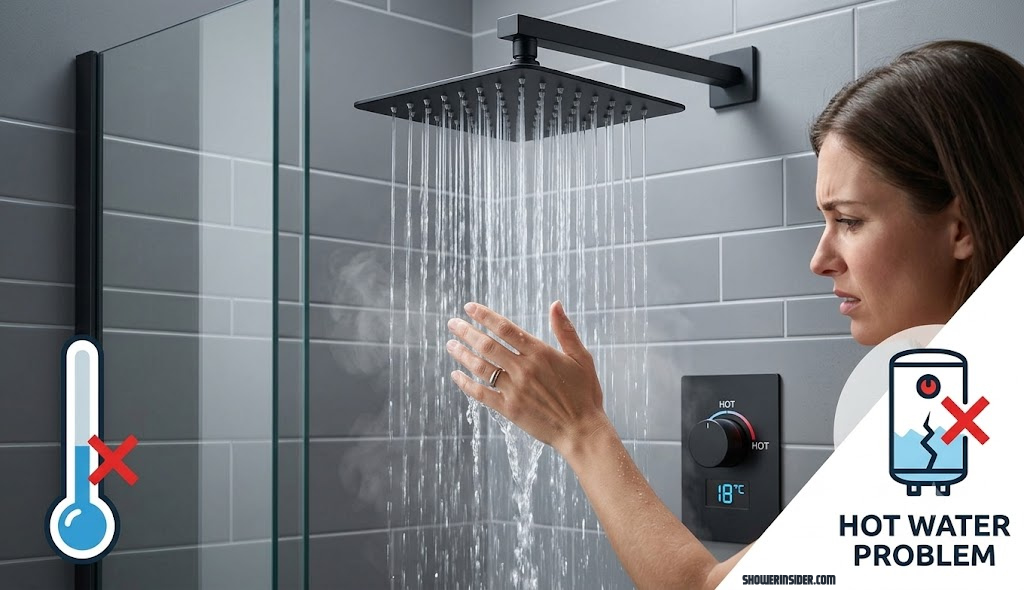
Stepping into a shower that turns ice-cold halfway through — or never heats up at all — is one of the most frustrating plumbing surprises a homeowner can face. The good news: most causes are diagnosable and fixable without calling a plumber. This guide walks through every likely culprit, from a stuck mixing cartridge to a failing water heater, with clear visuals for each fix.
Why Your Shower Loses Hot Water
Before grabbing a wrench, it helps to understand what’s actually happening inside your plumbing system. A shower that isn’t getting hot water is rarely a single, isolated fault — it’s usually the visible symptom of one of a handful of underlying issues: a failing water heater, a worn shower cartridge, sediment buildup, a cross-connection between hot and cold lines, or a tripped breaker on an electric unit. Each of these has a distinct signature, and learning to recognize that signature is the fastest way to a correct diagnosis.
Think of your hot water delivery as a chain with several links: the water heater (or tankless unit) generates heat, the pipes carry it to your bathroom, and the shower valve or mixing cartridge blends hot and cold to your desired temperature. A break anywhere in that chain shows up as the same complaint — “no hot water” — even though the root cause could be miles apart in terms of what’s physically failing. That’s why a systematic approach matters more than guessing.
It’s also worth noting that “no hot water” isn’t always literal. Sometimes the shower gets lukewarm and gives up, sometimes it runs hot for ninety seconds and then plunges cold, and sometimes it’s cold from the very first second. Each of these patterns points toward a different suspect, and we’ll cover all three scenarios throughout this guide.

Quick Diagnostic Checklist
Before diving into the deeper troubleshooting steps, run through this rapid checklist. It takes less than five minutes and can save you an entire afternoon of unnecessary work.
| Check | What It Tells You |
|---|---|
| Do other hot water fixtures work? | If yes, the problem is likely isolated to the shower valve. |
| Is the water heater pilot light or breaker on? | If off, that alone may explain the entire issue. |
| Does hot water arrive briefly, then vanish? | Points to a small tank, sediment buildup, or a failing heating element. |
| Is the shower handle hard to turn or stuck? | Suggests a worn or corroded cartridge. |
| Did water pressure drop at the same time? | Suggests a cross-connection or a clogged shower head — see our guide on how to increase shower water pressure. |
If you answered “no” to the water heater question, that’s your starting point. If everything upstream checks out, move on to the step-by-step guide below, which walks through each fix in the order most homeowners should attempt them — easiest and least invasive first.
Step-by-Step Fix Guide
This is the heart of the troubleshooting process. Work through these steps in order. Each one includes a simple diagram showing exactly what you’re looking at or doing, so you don’t need prior plumbing experience to follow along.
Step 1Check the Water Heater Power Source
Start at the source. For electric water heaters, check the breaker panel for a tripped switch. For gas units, confirm the pilot light is lit and the gas valve is turned to “on.” A surprising number of “broken shower” calls turn out to be nothing more than a tripped breaker or an unlit pilot.
Step 2Test Hot Water at Another Fixture
Run the hot tap at the bathroom sink or kitchen faucet. If hot water flows normally elsewhere but not in the shower, the fault is isolated to the shower valve or the pipe feeding it — not the heater itself.
Step 3Remove the Shower Handle
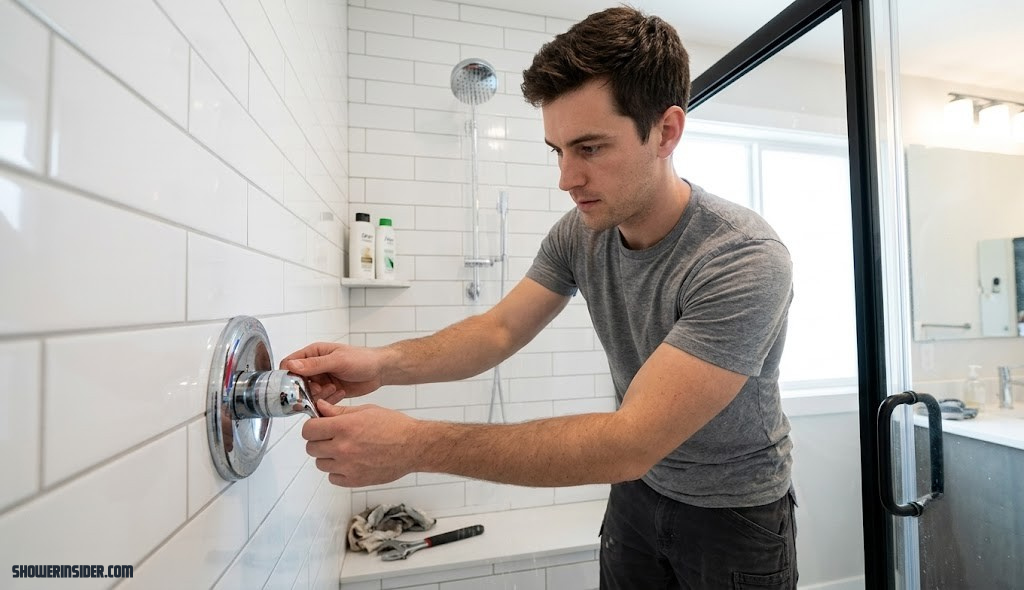
Turn off the water supply if your valve has shutoffs, then pop the decorative cap off the shower handle and remove the retaining screw. Gently pull the handle straight off — don’t twist, as this can shear plastic components.
Step 4Inspect and Replace the Cartridge
With the handle off, unscrew the retaining nut or clip and pull out the cartridge. Look for cracked plastic, mineral crust, or a rubber O-ring that’s flattened or torn. A worn cartridge is the single most common reason a shower runs cold or fails to reach full hot temperature, since it can no longer properly blend hot and cold water.

Step 5Flush the Line Before Reassembly
With the cartridge out, briefly turn the water supply back on (aim the valve body into a bucket) to flush out any loose sediment or debris that could clog the new cartridge or reduce hot water flow once everything is reassembled.
Step 6Reassemble and Test Temperature
Insert the new cartridge in the correct orientation (most have a flat side or notch that lines up with a matching slot), replace the retaining clip or nut, and reattach the handle. Turn on the water and let it run for two full minutes to test whether hot water now reaches full temperature and stays consistent.
Water Heater Problems That Cause Cold Showers
If the diagnostic checklist pointed you toward the water heater rather than the shower valve itself, there are several common failure points worth investigating before assuming you need a full replacement.
Failed Heating Element (Electric Tanks)
Most electric water heaters have two heating elements — an upper and a lower. If the upper element fails, you might still get a small burst of warm water before it turns cold, because the lower element continues heating the bottom portion of the tank. Testing elements requires a multimeter and involves working near electrical components, so if you’re not comfortable with that, this is a reasonable point to call an electrician or plumber.
Extinguished Pilot Light (Gas Tanks)
Gas water heaters rely on a small pilot flame to ignite the burner. Drafts, a dirty thermocouple, or a gas supply hiccup can extinguish it. Most units have a simple relighting procedure printed on a label near the control valve — follow it exactly, and if the pilot won’t stay lit after two or three attempts, the thermocouple is likely failing and should be replaced.
Undersized Tank for Household Demand
Sometimes there’s nothing “broken” at all — the tank is simply too small for the number of people showering back-to-back. A 40-gallon tank that comfortably serves two people may run out quickly with four people showering in sequence. In this case, the fix isn’t a repair but an upgrade, or spacing out shower times.
| Household Size | Recommended Tank Capacity |
|---|---|
| 1–2 people | 30–40 gallons |
| 3–4 people | 40–50 gallons |
| 5+ people | 50–80 gallons or tankless system |
For households debating between a traditional tank and a modern alternative, it’s worth reading up on how the two systems handle peak demand differently — our guide on the best electric shower for low water pressure covers this comparison in more depth.
Mixing Valve & Cartridge Issues
The mixing valve — sometimes called a shower valve or diverter valve depending on the fixture — is the mechanical heart of your shower’s temperature control. It blends water from the hot and cold supply lines in a ratio determined by the handle position. When this component wears out, several symptoms can appear: temperature that swings wildly, a handle that’s stiff or loose, or hot water that simply never gets warm enough regardless of handle position.
Anti-Scald Limit Stop Set Too Low
Many modern valves include an anti-scald safety feature, sometimes called a rotational limit stop, that physically prevents the handle from turning past a certain point. If a previous owner or installer set this limit conservatively, your shower may max out at a lukewarm temperature even though the water heater itself is working perfectly. Removing the handle and adjusting this small plastic ring (usually accessible right behind the handle) can restore full hot water range in minutes.
Mineral Deposits Restricting Cartridge Movement
In areas with hard water, mineral scale builds up inside the cartridge, gradually restricting how far it can rotate and how much hot water it lets through. Soaking a cartridge in a vinegar solution for a few hours before reinstalling it can sometimes restore function, though a heavily scaled cartridge is usually best replaced outright.
Pros of DIY Cartridge Replacement
- Inexpensive — parts typically cost under $30
- Takes 30–60 minutes for most valve types
- No specialized tools required for most brands
Cons of DIY Cartridge Replacement
- Wrong cartridge model can cause leaks
- Older valves may have seized or corroded screws
- Requires shutting off water supply correctly
Cross-Connection Problems
A cross-connection happens when hot and cold water lines are accidentally connected somewhere in the plumbing system, letting cold water leak into the hot line (or vice versa). This is more common after a DIY plumbing project, a recent fixture installation, or work done by an inexperienced contractor. The telltale sign is that hot water is available at some fixtures but weak or absent at others, and running cold water somewhere in the house may cause a noticeable temperature dip in an unrelated hot tap.
Diagnosing a cross-connection usually involves turning off the cold water supply to a fixture and checking whether water still flows from the hot side — if it does, there’s a connection between the two lines that shouldn’t exist. This is typically a job for a licensed plumber, since it usually means correcting improperly installed piping.
Sediment & Mineral Buildup
Over time, minerals naturally present in tap water settle at the bottom of a water heater tank, forming a layer of sediment. This layer acts as an insulating barrier between the burner or heating element and the water itself, meaning the heater has to work harder — and often can’t fully heat the water — to reach your set temperature. In severe cases, sediment buildup can reduce a tank’s effective hot water capacity by 30% or more.
How to Flush Sediment From a Water Heater
- Turn off power (electric) or set the gas valve to “pilot.”
- Connect a garden hose to the drain valve near the tank’s base and run it to a floor drain or outside.
- Close the cold water supply valve and open the drain valve, letting the tank empty fully.
- Briefly open the cold supply to flush remaining sediment, then close the drain valve and refill the tank before restoring power.
This is a maintenance task worth doing roughly once a year, particularly in hard water regions. It pairs well with checking your shower head for the same mineral buildup — our guide on removing hard water stains in the shower covers the visible side of this same problem.

Tankless Water Heater Troubleshooting
Tankless (on-demand) systems heat water as it flows rather than storing a reservoir, which introduces a slightly different set of failure points than traditional tanks.
Flow Sensor Not Triggering Ignition
Tankless heaters need a minimum flow rate to detect that water is running and kick on the burner. A partially clogged shower head or a low-flow fixture can sometimes fail to trigger this threshold, leaving you with cold water even though the unit itself is functioning normally.
Simultaneous Fixture Overload
Running the dishwasher, a load of laundry, and a shower at the same time can exceed a tankless unit’s maximum flow capacity, causing the temperature to dip or fluctuate. This isn’t a malfunction — it’s a capacity limit, and the fix is either staggering usage or upgrading to a higher-capacity or second unit.
Error Codes
Most tankless units display a numeric or alphanumeric error code on a control panel when something is wrong — commonly related to ignition failure, exhaust blockage, or a water flow sensor fault. Checking your specific manufacturer’s error code chart is the fastest path to a precise diagnosis.
How Water Pressure Affects Hot Water Delivery
Water pressure and water temperature are more connected than most people realize. Low pressure on the hot side alone — often caused by a partially closed shut-off valve, a clogged aerator, or sediment inside the pipe — can starve your shower of enough hot water flow to properly mix with cold, resulting in a shower that feels lukewarm even though the heater itself is producing hot water just fine.
If you notice reduced pressure specifically on the hot side, check the isolation valve under the sink or near the water heater to make sure it’s fully open. It’s also worth reviewing our dedicated guide on how to increase shower water pressure, which covers aerator cleaning, pressure-balancing valves, and pipe diameter considerations in detail.
Comparison: Common Causes, Symptoms, and Fixes
Use this table as a quick-reference summary once you’ve gathered a few observations from the diagnostic checklist.
| Cause | Typical Symptom | Difficulty to Fix | Average Cost |
|---|---|---|---|
| Worn shower cartridge | Handle stiff, temperature won’t reach hot | Easy–Moderate | $15–$40 |
| Anti-scald limit stop set low | Water stays lukewarm at max handle turn | Easy | $0 |
| Failed heating element | Brief warm burst then cold | Moderate | $20–$50 (part) |
| Extinguished pilot light | No hot water anywhere in house | Easy | $0–$25 |
| Sediment buildup | Reduced hot water duration | Moderate | $0 (DIY flush) |
| Cross-connection | Inconsistent hot water across fixtures | Hard (professional) | $150–$400 |
| Undersized tank | Runs out quickly with multiple showers | Upgrade required | $800–$1,800 |
Tools & Products You’ll Need
Most of the fixes described above require only a modest toolkit. Here’s what to have on hand before you start.
- Adjustable wrench and Phillips/flathead screwdrivers
- Cartridge puller tool (brand-specific for some Moen and Delta models)
- Plumber’s tape (PTFE tape) for reassembling threaded connections
- A small bucket or towel to catch residual water
- Replacement cartridge or O-ring kit matched to your valve brand
- A multimeter, if testing electric heating elements

When to Call a Professional
Not every hot water problem is a weekend DIY project. Call a licensed plumber or electrician if you encounter any of the following:
- You suspect a gas leak, or the pilot light won’t stay lit after multiple attempts
- Testing shows a failed electric heating element and you’re not comfortable working near 240V wiring
- You’ve confirmed a cross-connection between hot and cold lines
- The water heater is leaking from the tank itself (not just fittings), which usually signals internal tank failure
- You’ve replaced the cartridge and flushed sediment, but the problem persists
There’s no shame in calling in a professional at this point — some of these issues involve gas lines or high-voltage electrical work where the safety margin for DIY mistakes is genuinely low.
Preventing Future Hot Water Problems
Once your shower is back to full hot water, a little maintenance goes a long way toward avoiding a repeat of the same headache.
Annual Tank Flush
As covered above, flushing sediment once a year keeps your water heater working efficiently and extends its lifespan significantly.
Periodic Cartridge Inspection
If you live in a hard water area, consider inspecting your shower cartridge every couple of years, even if it’s still functioning — catching early mineral buildup before it fully seizes the valve saves a more disruptive repair down the line.
Whole-House Water Softener
In particularly hard water regions, a whole-house softener dramatically slows mineral buildup throughout the entire plumbing system, not just the water heater and shower valve.
While you’re addressing shower maintenance broadly, it’s also worth reviewing our general shower maintenance guide, which covers grout, drains, and fixtures beyond just hot water delivery, as well as our piece on why your shower head might be leaking, since leaks and temperature problems sometimes share the same root cause.
Frequently Asked Questions
Why does my shower get cold after a few minutes but the sink stays hot?
This usually points to a worn shower cartridge or a partially restricted hot supply line specific to the shower, rather than a water heater problem — since the sink drawing from the same tank continues to work fine.
Why is my shower cold but the bath faucet is hot?
If both share the same valve, this usually means a diverter issue rather than a temperature issue — the diverter may not be fully routing water to the shower head. If they’re on separate valves, treat it as two independent troubleshooting cases.
How long should it take for a shower to get hot?
Typically 15–45 seconds depending on the distance between the water heater and the bathroom. If it consistently takes several minutes, sediment buildup or a long, uninsulated pipe run may be the cause.
Can a clogged shower head cause cold water?
Yes — mineral buildup in the shower head restricts overall flow, which can throw off the hot/cold mixing ratio inside the valve and make the water feel cooler than it actually is.
Is it safe to shower while troubleshooting a water heater?
Generally yes, as long as you’re not actively working on gas lines or electrical components at the same time. Always let a reheated tank sit undisturbed for the recommended time before restoring full water pressure.
Why does my shower run hot for a moment then suddenly turn ice cold?
This pattern is a classic sign of a nearly-depleted tank or a failed upper heating element, especially if it happens at a fairly consistent point every time.
Do I need to replace the entire valve or just the cartridge?
In the vast majority of cases, only the cartridge needs replacing. The valve body itself rarely fails and is far more labor-intensive to replace, since it’s usually set in the wall.
Why does hot water disappear when someone flushes a toilet?
This is a pressure-balancing issue rather than a heating issue — flushing briefly draws cold water pressure away from the shower’s cold line, momentarily skewing the mix toward hot, then correcting. A pressure-balancing valve largely eliminates this.
How often should a water heater be flushed?
Once a year for most households, or twice a year in areas with notably hard water.
Can low water pressure cause a lack of hot water?
Yes, particularly if the pressure drop is isolated to the hot side, since insufficient hot water flow can’t adequately offset the cold water in the mixing valve.
Is it worth upgrading to a tankless water heater to solve this?
If your current tank is simply undersized for your household, yes — a tankless system provides continuous hot water rather than a fixed reservoir. If the issue is a worn cartridge or sediment, upgrading the heater won’t fix it.
Why does only my shower lack hot water while every other fixture works fine?
This strongly suggests a localized problem at the shower valve itself — either a worn cartridge, a mis-set anti-scald limit stop, or a partially closed isolation valve feeding that specific fixture.
Conclusion
A shower that won’t get hot water is almost always traceable to one of a small number of common culprits: a worn cartridge, a set-too-low anti-scald limit, sediment buildup, a failed heating element, or a cross-connection. Working through the diagnostic checklist and step-by-step guide above will resolve the majority of cases without needing to call in a professional — and for the cases that do require a plumber or electrician, you’ll now walk into that conversation with a much clearer picture of what’s likely wrong.
If your fix involved replacing a cartridge or flushing your tank, it’s a great moment to also glance at your shower head and drain for any related maintenance, since hot water issues and mineral buildup often travel together. Our guides on unclogging a shower drain naturally and cleaning shower grout without scrubbing pair well with the repair you just completed.
