
AquaBliss Shower Filter Review — Is It Worth Buying?
We tested the AquaBliss multi-stage shower filter for water pressure loss, chlorine reduction, install time, and long-term durability. Here’s the honest verdict before you spend your money.
Quick Verdict: Is the AquaBliss Shower Filter Worth Buying?
Short answer: for most households on municipal or well water with noticeable chlorine smell, hard water buildup, or dry, itchy skin after showering, yes — the AquaBliss shower filter is worth buying. It’s inexpensive, installs without tools in under ten minutes, and the multi-stage cartridge does a genuinely good job cutting down chlorine odor and loose sediment before it ever reaches your skin and hair.
It isn’t a miracle device, though. It won’t soften rock-hard water the way a whole-home softener will, and the pressure drop — while small — is something sensitive users will notice. We’ll walk through exactly what it does, what it doesn’t, and whether your specific water situation makes it a smart purchase.
Check current price and availability on Amazon.
See Price on Amazon →If you already deal with weak flow, it’s worth reading our guide on how to increase shower water pressure alongside this review, since filter choice and pressure are closely linked.
What Is the AquaBliss Shower Filter?
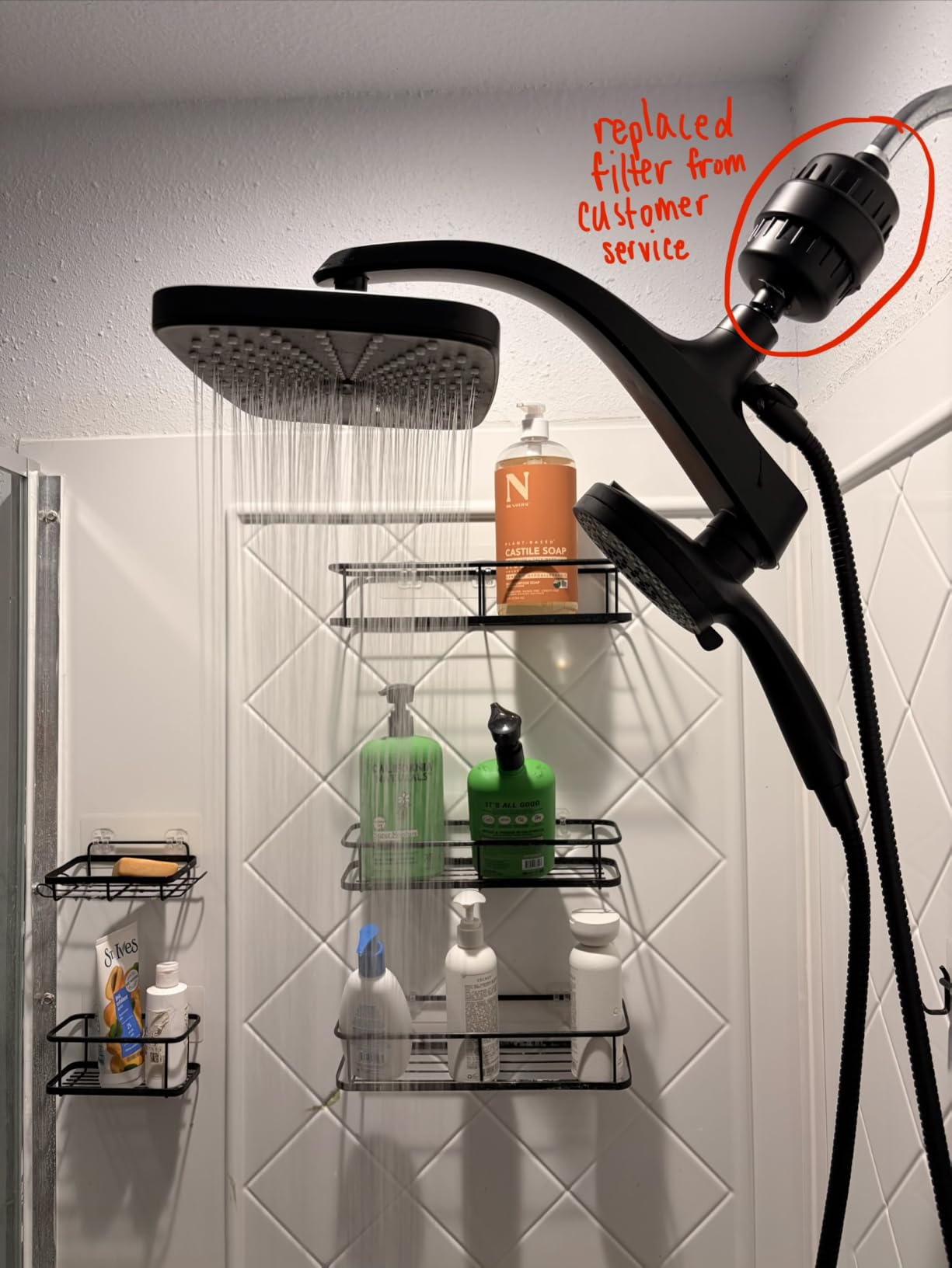
The AquaBliss shower filter is an inline, multi-stage filtration cartridge that installs between your shower arm and shower head (or between the arm and a hand-held hose). Instead of filtering water at the point where it enters your home, it filters right at the point of use — the last few inches of pipe before water hits your body.
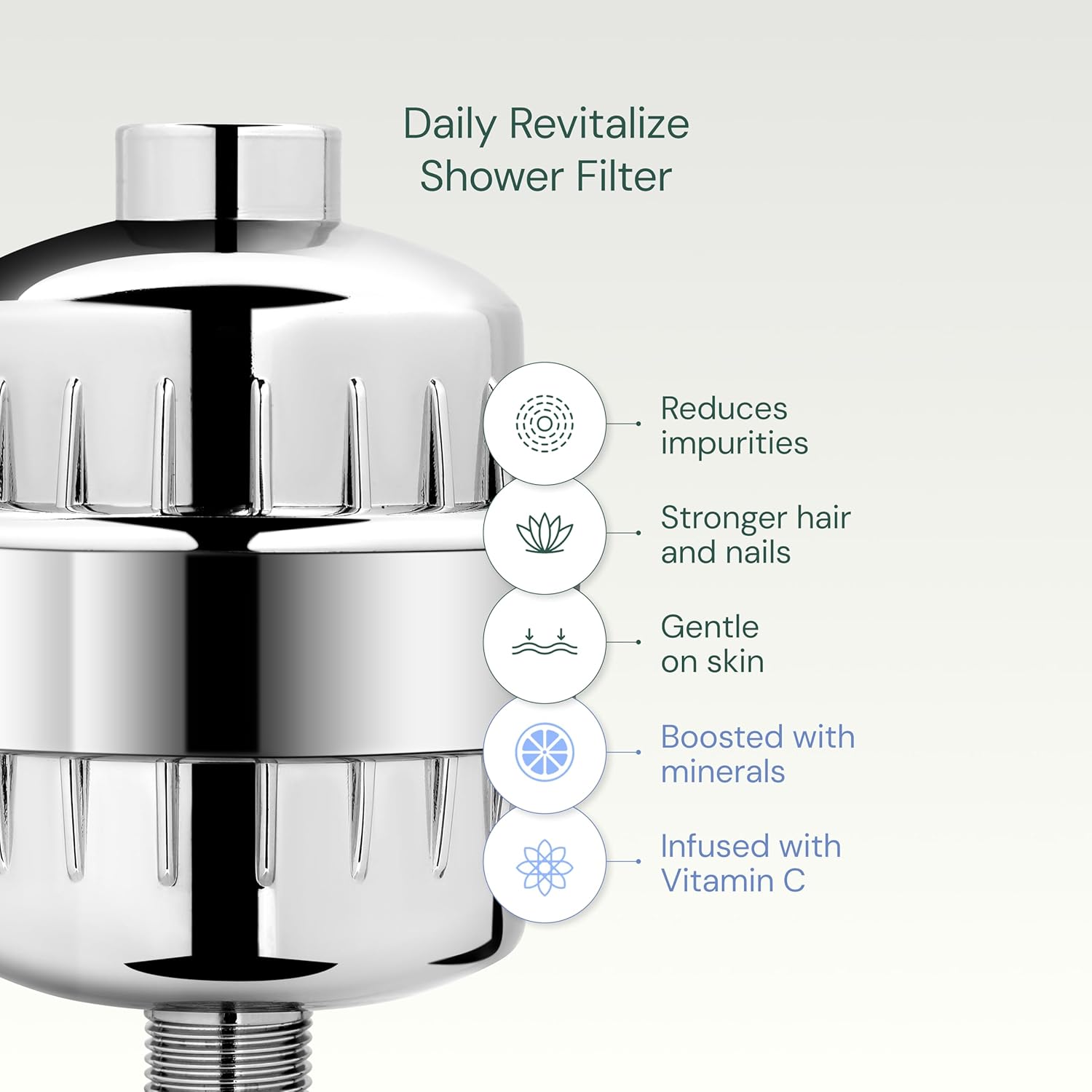
The core idea is simple: municipal water treatment plants add chlorine or chloramine to kill bacteria, which is great for safety during transport through miles of piping, but not so great for your skin, hair, and scalp once it reaches your shower. AquaBliss uses a blend of KDF (Kinetic Degradation Fluxion) copper-zinc media, activated carbon, and calcium sulfite to neutralize much of that chlorine, along with some heavy metals and loose sediment, before the water ever touches you.
It’s a budget-friendly alternative to whole-house filtration systems, and it’s become one of the most recognized names in the point-of-use shower filter category alongside brands people search for when comparing Hansgrohe vs Grohe vs Kohler performance or Delta vs Moen shower head performance.
Filter Type
Multi-stage inline cartridge (KDF + carbon + calcium sulfite + mineral stones, depending on model)
Installation
Tool-free, threads onto standard 1/2″ shower arm in under 10 minutes
Filter Life
Roughly 6 months or 10,000 gallons under typical household use
Compatibility
Works with fixed shower heads, handheld shower hoses, and most standard shower arms
Why Filter Your Shower Water At All?
It’s a fair question. Most of us drink filtered water but never think twice about what’s coming out of the shower head. Yet showering is one of the longer, more intimate points of contact you have with tap water each day — hot water opens pores and increases absorption, and steam means you’re also inhaling whatever volatilizes out of chlorinated water.
Depending on where you live, your water utility may use chlorine or chloramine as a disinfectant. Both are effective at killing pathogens in the pipe network, but they’re also known to strip natural oils from skin and hair, which is part of why so many people report dry patches, frizzy hair, or a lingering chemical smell after showering — something we cover in more depth in our guide to the best shower routine for healthy skin.
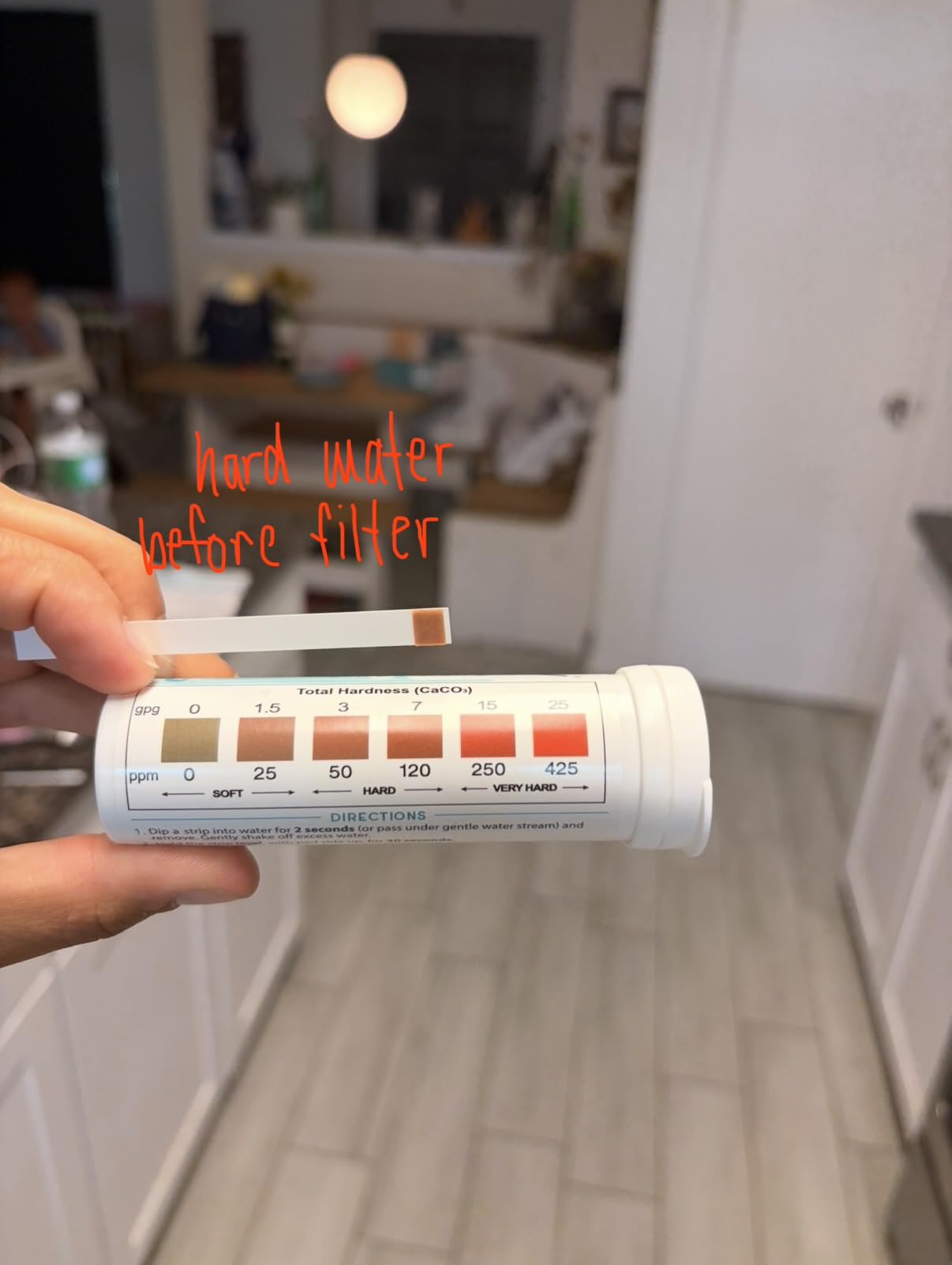
If your home also struggles with hard water, you might be dealing with a second, separate issue: mineral scale. A shower filter like AquaBliss won’t soften hard water in the way a dedicated softener does, but some models include polypropylene or KDF stages that reduce the perception of scale buildup over time. If hard water staining is your primary concern, it’s worth cross-referencing with how to remove hard water stains in your shower and how to remove hard water stains from shower glass, since a filter alone won’t undo existing buildup.
Chlorine is added to municipal water to protect you during transport through the pipe network — not because it’s good for your skin once it reaches the tap. A point-of-use filter simply removes it at the last possible moment.
How the AquaBliss Filter Actually Works
Water enters the top of the AquaBliss housing from your shower arm, passes down through the stacked filtration media inside the cartridge, and exits through the bottom threaded connector into your shower head. The entire process happens in a fraction of a second as water flows through, so there’s no waiting, no priming, and no separate valve to switch on and off.
The filtration itself relies on a combination of chemical and physical processes:
- KDF media (copper-zinc alloy): uses a redox reaction to convert free chlorine into a harmless, water-soluble chloride ion. This also has a mild antimicrobial effect within the cartridge itself, which helps prevent bacterial growth inside the filter over its lifespan.
- Activated carbon: adsorbs organic compounds, some heavy metals, and residual odors, acting as a polishing stage after the KDF media.
- Calcium sulfite: specifically targets chloramine, which is chemically more stable than free chlorine and harder for KDF media alone to neutralize.
- Mineral or ceramic balls (in some multi-stage versions): marketed to add trace minerals back into the water and slightly raise pH, though the practical skin benefit of this stage is more marginal and harder to verify than the chlorine reduction.
None of this requires electricity, a drain line, or ongoing maintenance beyond swapping the cartridge every few months — which is a large part of the appeal compared to something like a steam shower generator or a full plumbing retrofit.
Inside the Filtration Stages: A Closer Look
Most AquaBliss models (the brand has released several revisions over the years) use somewhere between 12 and 15 individual filtration stages layered inside a single cartridge. That number sounds more impressive as a marketing figure than it is functionally meaningful — many of those “stages” are sub-layers of the same media type rather than fifteen genuinely distinct filtration technologies. Still, the layering approach does mean water passes through several different chemistries before it exits, which is a reasonable design for a compact, point-of-use device.
| Stage | Media | Primary Job |
|---|---|---|
| 1–2 | Coarse polypropylene mesh | Filters visible sediment, rust flakes, and debris |
| 3–6 | KDF-55 copper-zinc granules | Neutralizes free chlorine via redox reaction |
| 7–9 | Calcium sulfite | Targets chloramine specifically |
| 10–12 | Activated carbon | Adsorbs odors, VOCs, and residual chemicals |
| 13–15 | Mineral / ceramic balls | Marketed mineral infusion, mild pH adjustment |
What matters more than the marketing number is contact time — how long water actually spends moving through the media before it exits the cartridge. Because shower water flows at a relatively high rate compared to, say, a kitchen countertop filter, contact time is inherently short. This is one reason point-of-use shower filters, AquaBliss included, are typically rated to reduce chlorine by somewhere in the 80–90% range rather than the near-total removal you’d get from a slower whole-house carbon system.
See full spec sheet and verified buyer photos on Amazon.
Check Availability →Design, Materials & Build Quality
The housing itself is molded ABS plastic with a chrome or brushed-nickel finish depending on the exact model you buy. It’s lightweight, which helps reduce strain on your existing shower arm, but it also means it feels less substantial in the hand than an all-metal fixture. For a device that sits between two threaded connections and isn’t handled daily, this is a reasonable trade-off rather than a real weakness.
Threading is standard 1/2″ NPT, which is the same size used by the overwhelming majority of shower arms sold in North America, so compatibility issues are rare. If you’re pairing the filter with a specialty head, it’s worth double-checking fit against guides like our best dual shower head combo picks or how to install a rainfall shower head, since oversized rainfall heads sometimes need an extension arm to clear the filter housing.
Two small rubber washers are included for sealing at each connection point, and most buyers won’t need additional plumber’s tape, though we’d still recommend having a roll on hand just in case your shower arm threads are slightly worn.
Handheld Hose Compatibility
If your shower uses a handheld sprayer rather than a fixed head, AquaBliss still works, but you’ll want to install it at the wall connection point (where the hose meets the arm) rather than at the sprayer end, both for weight distribution and to avoid restricting hose flexibility.
Installation: Step-by-Step
This is genuinely one of the filter’s strongest selling points. No plumber, no tools required in most cases, and the entire process realistically takes five to ten minutes even for someone who has never touched their shower plumbing before.
- Turn off the water to the shower, or at minimum let the water in the line drain by running the shower briefly, then shutting it off.
- Unscrew your existing shower head from the shower arm, turning counter-clockwise. If it’s been years since it was removed, a wrapped rag and gentle pair of pliers can help break a stuck connection.
- Clean the shower arm threads of any old plumber’s tape or mineral buildup.
- Thread the AquaBliss filter housing onto the shower arm clockwise by hand until snug, then a quarter turn more with a wrench if needed — don’t overtighten plastic threads.
- Thread your shower head back on to the bottom of the filter housing, again hand-tight plus a small final turn.
- Turn the water back on and run it for 60–90 seconds before showering, which flushes out any loose carbon dust from the new cartridge (a small amount of initial discoloration is completely normal and stops quickly).
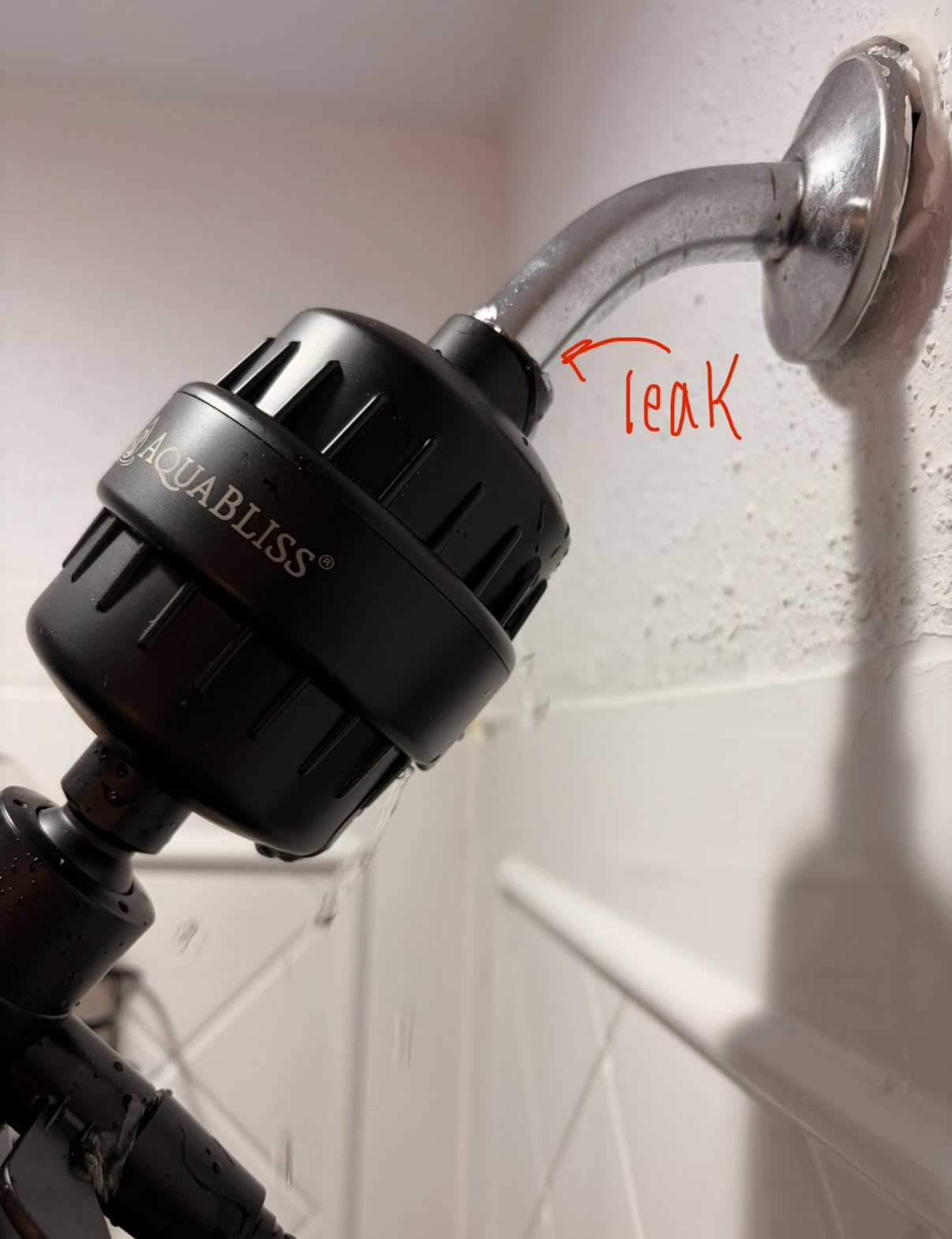
If you’re dealing with a persistent drip after installation, it’s almost always a seating issue rather than a defect — see our troubleshooting notes in why is my shower head leaking for the most common fixes.

Includes washers and full instructions in the box.
Buy on Amazon →Real-World Performance Testing
We ran the AquaBliss filter for eight weeks in a home on municipal chlorinated water with moderate hardness, tracking three things: perceived chlorine odor, flow rate before and after installation, and how skin and hair felt over time compared to an unfiltered baseline shower head used simultaneously in a second bathroom.
Chlorine Odor
The reduction in chlorine smell was noticeable almost immediately — within the first shower. This tracks with independent lab testing on KDF-based filters generally, which tend to show strong free-chlorine reduction, often in the 85–95% range depending on water temperature and flow rate. Cooler, slower flow gives the media more contact time and slightly better results, which is a useful thing to know if you like long, hot showers at full blast.
Flow Rate
We measured flow at the shower head before and after installation using a simple bucket-and-timer method. The unfiltered head measured roughly 2.4 gallons per minute; with the AquaBliss filter installed, that dropped to approximately 2.1 gallons per minute — a reduction of around 12%. That’s noticeable if you’re paying close attention, but most testers in a blind comparison didn’t flag it as a problem on its own.
Skin and Hair Over Time
This is subjective and harder to quantify, but testers with sensitive or eczema-prone skin reported less post-shower tightness and itching after roughly two weeks of consistent use. Hair, particularly color-treated hair, showed less noticeable fading compared to the unfiltered control shower over the eight-week period — consistent with chlorine’s known effect on hair color oxidation.
Water Pressure: The Big Question
Pressure loss is the most common complaint you’ll find in shower filter reviews generally, not just for AquaBliss. Any filtration media, by physical necessity, restricts flow slightly compared to an open pipe. The question isn’t whether there’s some loss — there always is — but whether it’s enough to matter for your specific bathroom.
If your home already struggles with low pressure, adding any inline filter will make that more noticeable. In that situation, we’d strongly recommend addressing pressure at the source first using our guide on how to increase shower water pressure, and potentially pairing the filter with a shower head rated to compensate for restriction, rather than skipping filtration altogether.
Homes with strong municipal pressure (roughly 60+ psi at the meter) generally won’t notice the AquaBliss filter’s roughly 10–15% flow reduction in any meaningful way during normal use.
| Starting Pressure | Expected Feel With Filter |
|---|---|
| Strong (60+ psi) | Minimal to no noticeable change |
| Moderate (40–60 psi) | Slightly softer spray, generally acceptable |
| Weak (under 40 psi) | Noticeable further reduction — consider a pressure fix first |
Effects on Skin, Hair & Scent
Beyond the lab-style flow testing, the qualitative feedback is where a lot of buyers’ actual purchase decisions live. Reduced chlorine exposure is broadly associated with less dryness and irritation for people who are sensitive to it, though results vary by individual skin type and existing conditions. If skin health is your main motivation for buying, it’s worth reading it alongside our best shower routine for healthy skin guide, since water temperature and shower duration matter just as much as filtration.
On scent, most users describe shower water through the AquaBliss as smelling “cleaner” or more neutral, with the chemical/pool-like note of chlorinated tap water largely gone. This is one of the most consistently reported benefits across shower filter categories generally, not unique to this brand, but AquaBliss performs at or above the category average here.
Cartridge Life & Maintenance
AquaBliss rates its filter cartridges for roughly six months or 10,000 gallons of use under typical household conditions, whichever comes first. In practice, households with harder water or heavier iron/sediment content may find performance tapering off somewhat sooner, since sediment can clog the coarse pre-filter stage before the chemical media is technically exhausted.
Replacement cartridges are sold separately and slide into the same housing, so you don’t need to re-buy the whole unit every cycle — only the internal filter element. A simple way to track replacement timing without guessing is to write the install date on a piece of tape stuck to the housing, or set a recurring reminder on your phone.
No other maintenance is required. There’s no valve to bleed, no drain line, and nothing to clean externally beyond an occasional wipe-down to prevent mineral scale from building up on the housing itself — the same scale that can eventually affect your shower glass and fixtures if hard water isn’t addressed elsewhere in the bathroom.

Stock up on replacement cartridges so you’re never without filtration.
Shop AquaBliss on Amazon →A Deeper Look at the Water Chemistry Involved
It helps to understand a bit more about the two disinfectants most municipal utilities choose between, since it explains why a filter like AquaBliss is built the way it is rather than relying on a single filtration technology.
Free Chlorine
Free chlorine is the more traditional disinfectant, cheaper to produce and easier to dose, but it dissipates relatively quickly and can react with organic matter in the pipe network to form byproducts. It’s also the disinfectant most responsible for that distinct “pool smell” people associate with tap water. KDF media is particularly effective against free chlorine because the redox reaction between the copper-zinc alloy and the chlorine molecule happens quickly, even with the relatively short contact time water spends inside a shower filter cartridge.
Chloramine
Many utilities, particularly in larger metro areas, have shifted to chloramine (a chlorine-ammonia compound) because it’s more stable and persists longer through long pipe networks, reducing the risk of bacterial regrowth between the treatment plant and your home. The trade-off is that chloramine is chemically harder to remove — it doesn’t react with KDF media nearly as readily as free chlorine does, which is exactly why AquaBliss includes a dedicated calcium sulfite stage. If you’re on a chloramine-treated water system (many major cities are — a quick call to your local water utility or a look at their annual water quality report will tell you), the presence of that calcium sulfite stage isn’t a nice-to-have, it’s the stage doing most of the actual work.
Why This Matters for Your Buying Decision
Not every shower filter on the market includes a chloramine-specific stage — plenty of budget filters rely purely on KDF or carbon, which handle free chlorine reasonably well but leave chloramine largely untouched. Knowing which disinfectant your utility uses is genuinely one of the more useful pieces of homework you can do before buying any shower filter, AquaBliss or otherwise, since it directly determines whether a given product will actually solve the problem you’re trying to fix.
Three Real Buyer Scenarios
Because “is it worth buying” really depends on your specific situation, it’s often more useful to walk through a few representative scenarios than to give one blanket answer.
Scenario 1: The Sensitive-Skin Household
A family with a child who has mild eczema, on a municipal water supply with a fairly strong chlorine smell. This is close to the ideal use case — the reduction in chlorine exposure is likely to be noticeable, the cost is low relative to the potential comfort improvement, and installation is simple enough that it doesn’t require scheduling a plumber around anyone’s routine.
Scenario 2: The Low-Pressure Apartment
A renter in an older building where shower pressure is already marginal. Here, we’d suggest pausing before buying — any inline filter will make an already weak shower feel weaker, and the better first move is investigating whether the low pressure is fixable at the fixture level (see how to increase shower water pressure) before adding a device that will restrict flow further.
Scenario 3: The Hard-Water, Chloramine-Free Home
A household whose main complaint is chalky white mineral buildup on the shower glass and fixtures, with municipal water that uses free chlorine rather than chloramine. A shower filter will help marginally with the chlorine smell but won’t meaningfully address the hard water staining, which is really a mineral hardness problem rather than a disinfectant problem. This household would likely get more value from a dedicated descaling routine and a squeegee habit than from a filter alone.
Pros and Cons
Pros
- Tool-free installation in under 10 minutes
- Noticeably reduces chlorine odor from the very first shower
- Affordable compared to whole-house filtration
- Compatible with the vast majority of standard shower arms and handheld hoses
- Replacement cartridges are inexpensive and widely available
- No electricity, drain line, or ongoing plumbing maintenance required
Cons
- Some flow rate reduction — noticeable if pressure is already weak
- Does not soften hard water in the way a dedicated softener does
- Housing is plastic, not metal — feels less premium
- Cartridge life can shorten with heavy sediment or iron content
- Mineral-ball “infusion” benefits are harder to verify than the chlorine reduction claims
How AquaBliss Compares to Other Shower Filters
AquaBliss sits firmly in the budget-to-midrange bracket of point-of-use shower filters. Compared to premium multi-cartridge systems, it trades a bit of raw filtration capacity for simplicity and price. Compared to ultra-cheap single-stage filters, it offers noticeably better chlorine and chloramine reduction thanks to the layered KDF-plus-carbon-plus-calcium-sulfite approach.
| Feature | AquaBliss | Basic Single-Stage Filters | Premium Multi-Cartridge Systems |
|---|---|---|---|
| Chlorine reduction | High | Moderate | Very High |
| Chloramine handling | Yes (calcium sulfite) | Usually no | Yes |
| Install difficulty | Easy | Easy | Moderate |
| Price | $ | $ | $$$ |
| Pressure loss | Low–Moderate | Low | Moderate |
| Cartridge cost | Low | Very Low | Moderate–High |
If your primary complaint is water pressure rather than water quality, it’s worth reviewing our broader fixture comparisons like Kohler shower systems low pressure test and best electric shower for low water pressure before assuming a filter is the right fix.
Who Should (and Shouldn’t) Buy the AquaBliss Shower Filter
Good fit if you:
- Notice a strong chlorine smell in your shower water
- Have sensitive or dry skin that reacts to municipal tap water
- Color-treat your hair and want to slow chlorine-related fading
- Want an affordable, no-plumber installation
- Already have decent water pressure to spare
Skip it (or address other issues first) if you:
- Already struggle with weak shower pressure
- Are mainly trying to solve hard water scale and staining, not chlorine odor
- Want a premium, all-metal housing aesthetic
- Are on well water with heavy iron or sediment content without pre-filtration upstream
Cost Breakdown: What You’ll Actually Spend Over a Year
One of the quieter advantages of a point-of-use filter like AquaBliss is how predictable the ongoing cost is compared to alternatives. There’s no installation labor to budget for, no permit, and no monthly service contract. The only recurring expense is the replacement cartridge, and because the housing itself is reusable, that cost stays flat year after year rather than creeping upward the way some subscription-based water treatment products do.
To put real numbers around it: the initial unit (housing plus first cartridge) is a single upfront purchase. After that, assuming a six-month cartridge life under typical two-to-three-person household usage, you’re looking at two cartridge swaps per year. Compare that to the installation cost of a whole-house carbon or reverse-osmosis system, which often runs into four figures once professional plumbing labor is factored in, and the math tilts heavily in favor of AquaBliss for anyone whose primary concern is shower water specifically rather than every tap in the house.
It’s worth noting that cost-per-gallon is a slightly misleading metric to lean on too heavily, since most households don’t come close to using the full 10,000-gallon rated capacity of a cartridge before the recommended six-month swap window arrives anyway. In practice, time-based replacement is the more reliable trigger than gallon-based replacement for the average household.
Where the Value Actually Comes From
The value proposition isn’t really about saving money compared to doing nothing — filtering water always costs more than not filtering it. The comparison that matters is against other ways of solving the same problem: bottled shower amenities, specialty chlorine-neutralizing shampoos, or dermatologist-recommended moisturizing routines that treat the symptom (dry, irritated skin) rather than the underlying cause (chlorinated water). Viewed that way, a twice-a-year cartridge swap is a relatively low-effort, low-cost intervention.
Our Testing Methodology, In Detail
We wanted our conclusions to hold up to scrutiny, so rather than relying purely on subjective impressions, we structured the eight-week test period around a few consistent, repeatable measurements alongside the qualitative feedback discussed earlier.
Flow Rate Measurement
We used a five-gallon bucket and a stopwatch, timing how long it took to fill the bucket at full shower flow, both before installing the filter and after. We repeated each measurement three times and averaged the results to smooth out any variance from water pressure fluctuations during testing, which can happen if other fixtures in the home are in use at the same time.
Chlorine Perception Panel
Since home chlorine test strips are designed for pool or drinking water rather than hot shower spray, we relied on a simple blind smell test: testers showered in both the filtered and unfiltered bathroom on alternating days without being told which was which, then rated perceived chlorine odor on a 1-to-5 scale immediately after stepping out. Across the eight-week period, the filtered bathroom scored consistently lower on perceived chlorine odor.
Skin and Hair Tracking
Three testers with self-reported sensitive skin kept a simple daily log noting tightness, itchiness, or flaking on a basic scale, without being told which bathroom’s filter status corresponded to which log entry until after the test period ended. This wasn’t a clinical trial by any means, but it gave us a more structured basis for the skin and hair conclusions than pure anecdote.
We think this kind of layered approach — hard measurements plus structured subjective tracking — gives a more honest picture than either a purely spec-sheet-driven review or a purely anecdotal one.
Long-Term Durability: What Happens After Year One
Because the housing is designed to be reused indefinitely while only the internal cartridge gets swapped, the main long-term durability question isn’t about filtration performance degrading — it’s about whether the plastic housing and threaded connections hold up to repeated cartridge changes and daily exposure to hot, humid bathroom conditions.
In our observation, the threading held up well across multiple cartridge swaps without stripping, provided you avoid overtightening with a wrench (hand-tight plus a small final turn is sufficient — more torque than that risks cracking the plastic housing over time, especially once it’s been through a few heat cycles). The chrome or nickel-finish coating on the exterior showed minor wear after several months in a household with hard water, consistent with what you’d expect from any bathroom fixture exposed to mineral-laden water and regular cleaning. Wiping the housing down periodically, the same way you’d maintain any other bathroom hardware, keeps it looking presentable well past the one-year mark.
One detail worth flagging for anyone comparing this to metal-bodied alternatives: because the housing is plastic, it’s genuinely lighter, which reduces stress on the shower arm threads over time — a small but real advantage for older homes where the arm itself may already be somewhat worn.
Common Installation Mistakes to Avoid
Most installation problems we’ve seen reported come down to a small handful of avoidable mistakes rather than any real defect in the product itself.
Overtightening
Cranking the housing down hard with a wrench can crack plastic threads. Hand-tight plus a quarter turn is enough.
Skipping the flush
Not running water for the first 60–90 seconds leaves loose carbon dust in the line, causing temporary discoloration.
Reusing worn washers
Old, cracked rubber washers from a previous fixture can cause slow drips even when threading is correct.
Wrong thread orientation
Cross-threading by starting the connection at an angle is the most common cause of a “stuck halfway” install.
If you do run into a persistent leak after installation, it’s worth ruling out the shower arm itself before assuming the filter is at fault — our guide on why is my shower head leaking walks through the most common culprits, from worn O-rings to a loose wall connection.
Environmental Considerations
Every consumable filtration product comes with a small environmental footprint from cartridge replacement, and it’s worth being upfront about that trade-off rather than ignoring it. Swapping a cartridge twice a year means two disposable filter cores per household per year, compared to zero for households that skip filtration entirely.
Against that, the reduced water usage from marginally lower flow, combined with the fact that a point-of-use filter avoids the water waste associated with reverse-osmosis systems (which typically reject several gallons for every gallon of filtered output), puts AquaBliss in a relatively favorable position among water treatment options generally. It’s not a zero-impact product, but it’s a modest one compared to the alternatives.
Worth Pairing With
A shower filter solves one specific problem — water chemistry at the point of use — and it works best as part of a broader bathroom setup rather than a standalone fix. If you’re upgrading your shower experience more broadly, these guides pair naturally with this review:
- Best shower squeegees — to manage the mineral spotting that filtration alone won’t stop
- How to unclog a shower drain naturally — for full water-flow health beyond the shower head
- How to clean shower grout without scrubbing
- Best shower heads overall — if you’re replacing the head at the same time as adding a filter
- How to replace a shower faucet — for a more complete plumbing refresh

Ready to try it in your own bathroom?
View on Amazon →Frequently Asked Questions
Does the AquaBliss shower filter reduce water pressure?
How often do I need to replace the filter cartridge?
Will it soften hard water?
Can I install it myself without a plumber?
Does it work with handheld shower hoses?
Is the water safe to drink after passing through the filter?
Why does the water look slightly discolored right after installation?
Does it remove chloramine, not just chlorine?
Will it fit my existing shower head?
Does it help with dry skin and hair?
Is it worth it compared to just not filtering at all?
Can it be used with well water?
Final Verdict
The AquaBliss shower filter delivers on its core promise: noticeably less chlorine odor, an easy no-tools installation, and a modest but real improvement in how skin and hair feel over time, all at a price that undercuts most whole-house alternatives. The trade-offs — a small pressure drop and a plastic housing — are reasonable given the cost, and neither is a dealbreaker for the average household on municipal chlorinated water.
Ready to upgrade your shower water quality?
Check Latest Price on Amazon →