Best Shower Head With Filter: 7 Filtered Shower Heads That Actually Work
If your water leaves your skin dry, your hair dull, and your bathroom smelling faintly of chlorine, a filtered shower head can genuinely change your daily shower. We tested, compared, and researched the most talked-about filtered shower heads on the market to help you pick the right one for your water, your budget, and your bathroom setup.
Why a Filtered Shower Head Matters
Most people spend more money filtering their drinking water than the water they shower in, even though showering exposes skin and hair to far more volume of tap water over time. Chlorine, chloramine, and hard-water minerals don’t just affect taste — they strip natural oils from skin, leave hair brittle, and can trigger flare-ups for people with eczema or sensitive scalps. A good filtered shower head reduces these irritants at the point of use, which is a far simpler fix than a whole-house filtration system.
The seven shower heads in this guide represent very different approaches: some rely on KDF and activated carbon cartridges, others use vitamin C infusion, and a few combine multiple filtration stages in a single cartridge. We’ll break down how each one filters water, how it performs in daily use, and who it’s actually built for.
Throughout this guide, we’ve tried to separate genuine, well-supported filtration benefits from the kind of vague marketing language that’s common across this entire product category. Where a brand’s claims are backed by published third-party lab results, we’ve noted that; where the claims are largely anecdotal, we’ve framed the description accordingly, so you can weigh each option on its actual merits rather than its advertising copy alone.
What’s Actually Floating in Your Shower Water
Municipal water treatment plants use chlorine or chloramine to keep water safe to drink, and that same disinfectant travels through every pipe in your home, including the ones feeding your shower. In hot water, chlorine vaporizes more readily than it does in a cold glass at the kitchen sink, which is part of why a hot shower can leave a faint chemical smell in a closed bathroom. Beyond disinfectant residue, many households also deal with dissolved minerals like calcium and magnesium — the culprits behind hard water — along with trace sediment, rust particles from aging pipes, and in some regions, low levels of heavy metals depending on the age of local infrastructure.
None of this makes tap water unsafe to shower in for most people. But cumulative daily exposure, especially for anyone with sensitive skin, colored or chemically treated hair, or a compromised skin barrier, can make a noticeable difference over weeks rather than days. That’s the real case for a filtered shower head: not a dramatic overnight transformation, but a gradual reduction in the daily irritant load your skin and hair deal with.
How We Chose These Filters
Rather than ranking these by marketing claims, we looked at cartridge composition, replacement cost over a year, flow rate impact, ease of installation, and how each brand’s independent lab testing (where published) holds up. We also weighed customer-reported longevity, since a filter that clogs in six weeks isn’t a good value even if it’s cheap upfront.
- Filtration media: KDF-55, activated carbon, calcium sulfite, vitamin C, or a blend
- Flow rate: Whether the filter noticeably reduces water pressure
- Cartridge lifespan: Months of use before replacement is needed
- Installation: Tool-free vs. requiring plumber’s tape or a wrench
- Design: Fixed head, handheld, or dual combo
- Price per month of ownership: Upfront cost plus ongoing cartridge replacement
We also paid attention to how each brand talks about its own limitations. A company that’s upfront about what its filter doesn’t do — for example, admitting that a shower filter isn’t a substitute for a certified whole-home system — tends to be more trustworthy than one making sweeping claims about eliminating “all contaminants.” None of the products below claim to be medical devices or make disease-prevention claims, and we’ve tried to describe their realistic, everyday benefits rather than repeat marketing language uncritically.
Who Benefits Most From a Filtered Shower Head
While anyone can use a filtered shower head, certain situations make the upgrade more worthwhile than others. People living in cities with heavily chlorinated municipal water, especially during summer months when treatment plants sometimes increase chlorine dosing, tend to notice the biggest difference. Frequent swimmers who already shower to rinse off pool chemicals often layer on additional chlorine exposure from their home shower without realizing it, compounding the effect.
Anyone managing eczema, psoriasis, or generally reactive skin frequently reports that reducing chlorine exposure helps limit flare-ups, though results vary from person to person and a filter should complement rather than replace a dermatologist’s recommended routine. People with color-treated, chemically processed, or naturally dry and curly hair also tend to see clearer, faster benefits, since both chlorine and hard-water minerals are known contributors to hair dullness and breakage over time.
On the other end of the spectrum, if you already have a whole-home filtration system installed, or if your local water utility reports consistently low chlorine levels and you have no particular skin or hair sensitivity, a filtered shower head is more of a nice-to-have than a necessity. It’s still a low-risk upgrade in that case, just one with a smaller noticeable payoff.
Quick Comparison Table
| Shower Head | Filter Type | Cartridge Life | Style | Best For |
|---|---|---|---|---|
| Jolie Filtered Showerhead | KDF-55 + activated carbon | ~4-5 months | Fixed, all-metal | Design-conscious buyers |
| Canopy Filtered Showerhead | Multi-stage carbon + mineral | ~4 months | Fixed | High-flow performance |
| Weddell Duo Shower Filter | KDF + carbon dual cartridge | ~6 months | Handheld + fixed combo | Families sharing one shower |
| AquaBliss SF100/SF220 | Multi-stage (12-14 stage) | ~6 months | Inline filter (any head) | Budget-conscious buyers |
| Afina A-01 | KDF + vitamin C blend | ~3-4 months | Fixed, minimalist | Softer skin/hair focus |
| Delta Clarifi | Carbon + KDF cartridge | ~4-6 months | Fixed, standard fit | Delta ecosystem owners |
| SparkPod Filtered | Multi-layer carbon filter | ~3-4 months | Fixed, high-pressure | Budget high-pressure fans |
Jolie Filtered Showerhead
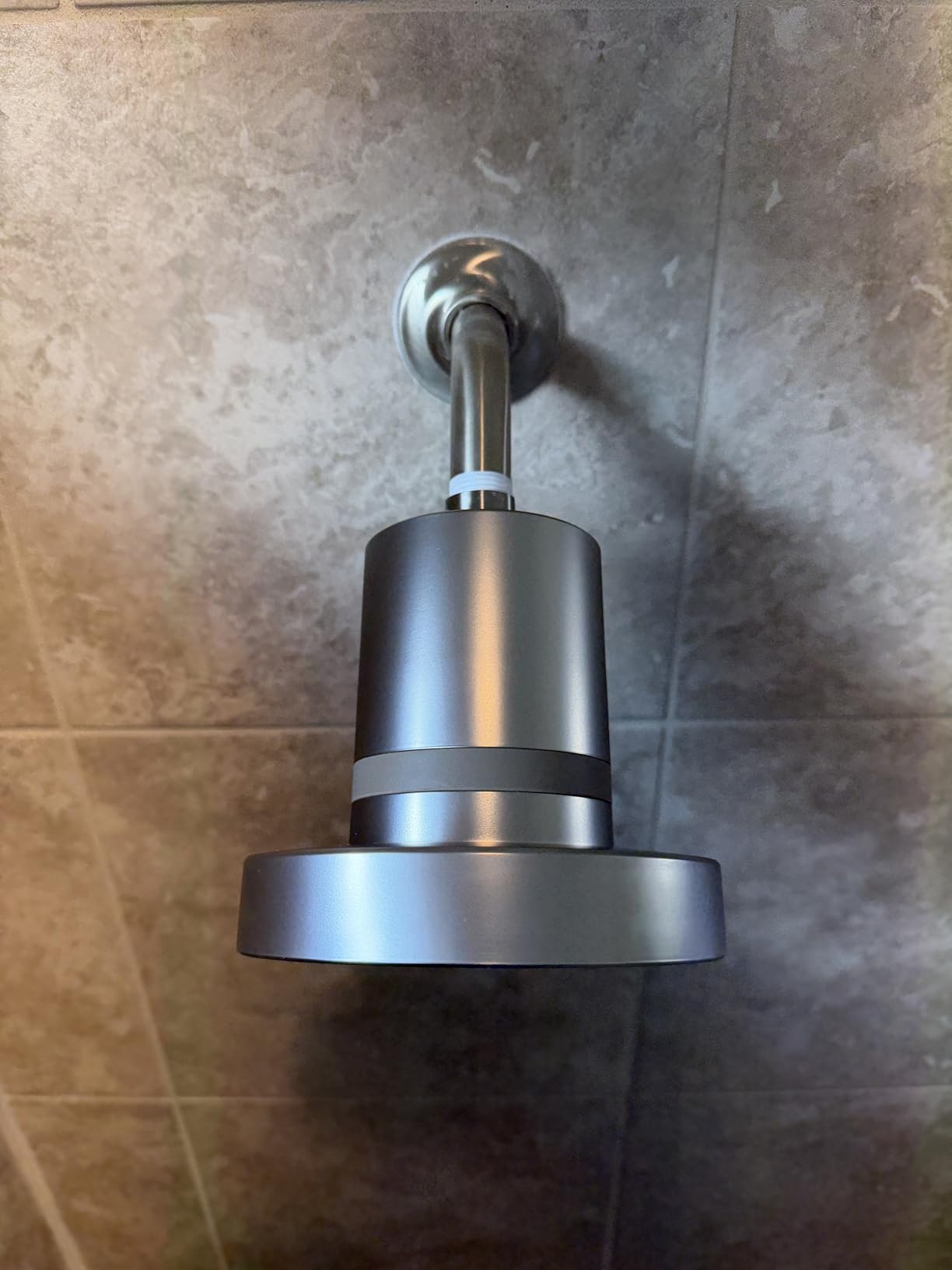
Jolie built its reputation on making a filtered shower head that doesn’t look like a filtered shower head. The all-metal construction, available in several finishes, has made it a favorite for people who care about how their bathroom fixtures look as much as how they perform. Underneath the polished shell is a KDF-55 and activated carbon cartridge designed to reduce chlorine and heavy metals without a noticeable pressure drop for most household setups.
What stands out in real-world use is how quiet the transition is — no rattling, no plastic housing creaks, and the cartridge swap takes under a minute once you’ve done it once. The trade-off is price: Jolie sits at the premium end of this list, and replacement cartridges aren’t the cheapest either.
Pros
- Premium metal build, several finish options
- Minimal pressure loss reported by most users
- Simple twist-off cartridge replacement
- Reduces chlorine odor noticeably within days
Cons
- Higher upfront and ongoing cartridge cost
- Not designed for extremely hard water areas
- Handheld version sold separately
Who it’s for: Renters and homeowners who want a bathroom upgrade that doubles as a functional filter, and who don’t mind paying more for a fixture that looks like it belongs in a boutique hotel rather than a hardware store aisle. It’s also a strong pick for anyone who’s tried a cheaper filtered head before and been put off by a plasticky feel or an obvious pressure drop.
Who should skip it: If your main concern is heavy mineral buildup from very hard water, Jolie’s cartridge isn’t specifically engineered for scale reduction, so you may still need periodic descaling regardless of which filter you choose.

Canopy Filtered Showerhead
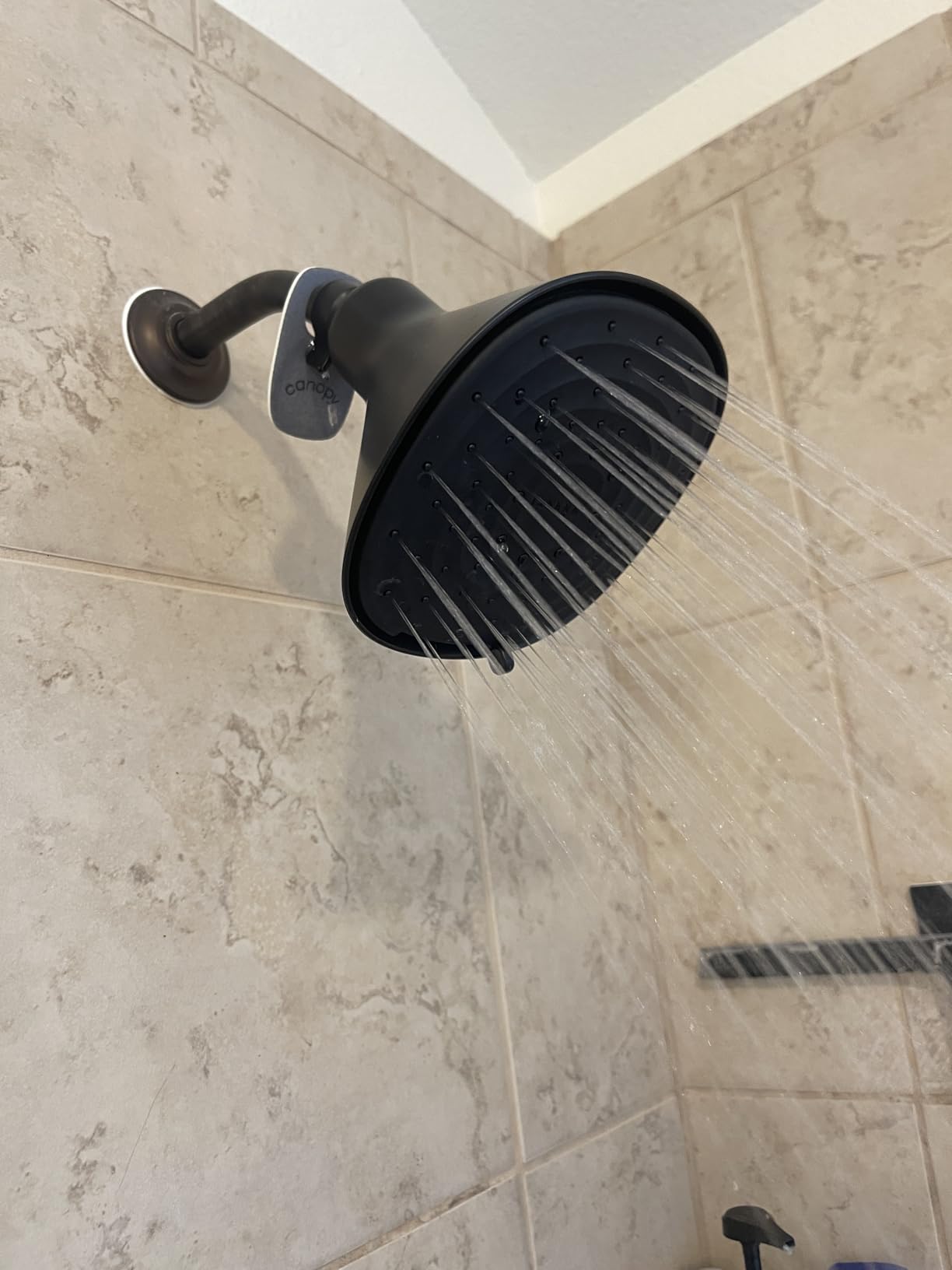
Canopy markets itself heavily on the “no pressure drop” promise, and in our comparison of user feedback and published flow data, it’s one of the few filtered heads that genuinely holds up to that claim across a wide range of home water pressures. The multi-stage cartridge blends activated carbon with mineral balls, and the shower head itself has a wide rain-style spray pattern that many reviewers say feels like an upgrade even before you factor in the filtration.
Where Canopy shines is consistency — cartridge life is fairly predictable at around four months of average use, and the company sells subscription refills, which removes the guesswork of remembering to reorder.
Pros
- Wide, even spray pattern
- Strong reputation for holding pressure
- Subscription refill option available
- Sleek, modern design
Cons
- Mid-to-premium pricing
- Fixed mount only, no handheld version
- Some users report a slight plastic smell on first use
Who it’s for: Anyone who has been burned by a filtered shower head that turned their shower into a weak trickle. Canopy’s whole pitch is built around preserving pressure, and it’s one of the more credible options on the market for households that already have decent water pressure and don’t want to sacrifice any of it.
Who should skip it: If you already struggle with genuinely low water pressure before adding any filtration, no filtered head — including Canopy — will increase pressure beyond what your plumbing supplies; you may want to address that separately first.

Weddell Duo Shower Filter
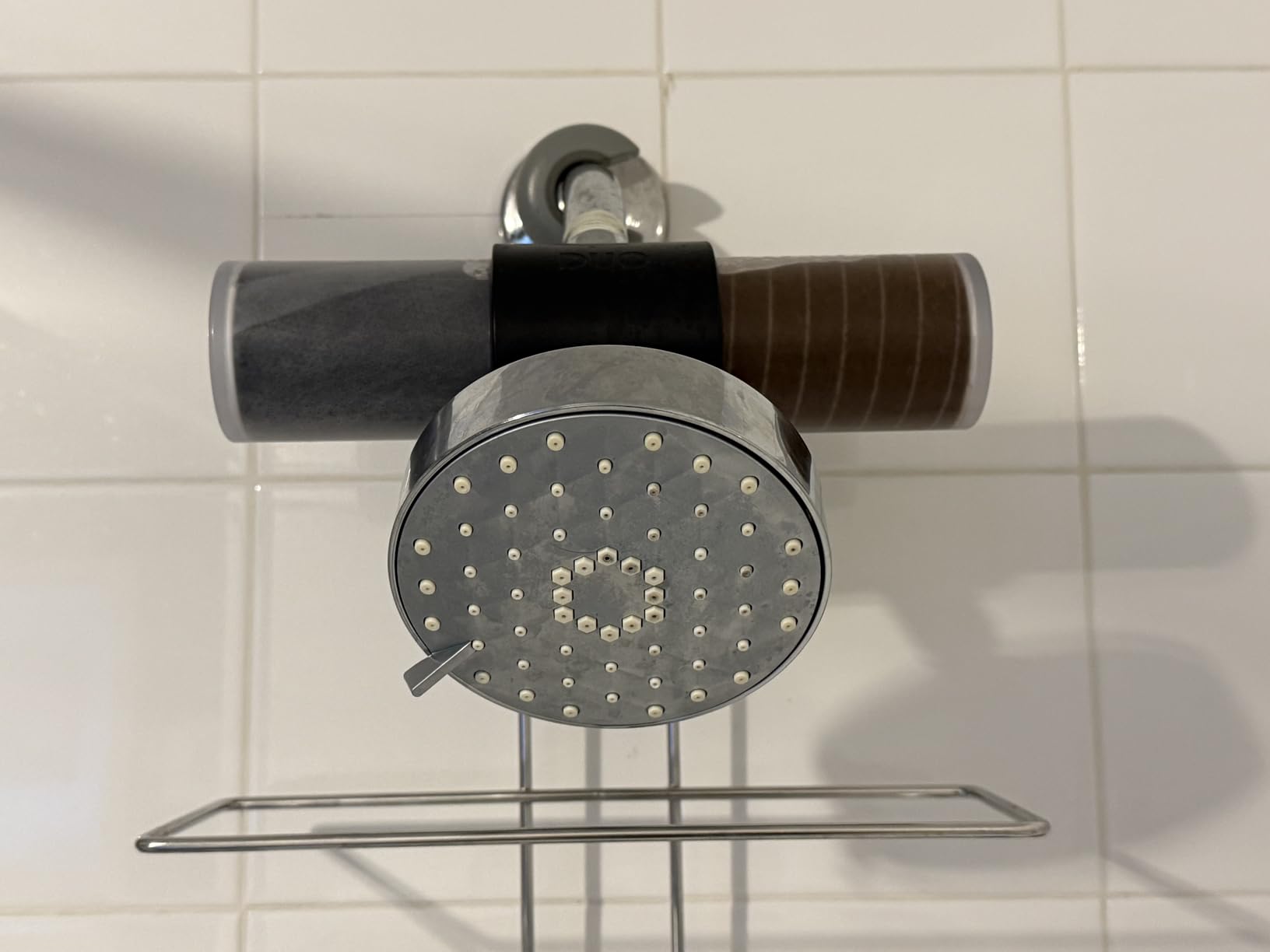
Weddell’s Duo system pairs a fixed shower head with a handheld wand fed through the same filtered line, which makes it a smart pick for households where one person wants a rainfall-style rinse and another prefers a handheld spray for washing kids or pets. Both outlets pull from a single dual-stage KDF and carbon cartridge mounted at the shower arm.
The six-month cartridge life is longer than most competitors on this list, which helps offset the slightly higher combo price. Installation requires a bit more patience than a single fixed head since you’re mounting the diverter valve as well, but most users report finishing the swap in under twenty minutes with basic tools.
Pros
- Fixed + handheld in one filtered system
- Longer 6-month average cartridge life
- Good value per month of filtered water
- Diverter lets you switch outlets easily
Cons
- Slightly more involved installation
- Bulkier valve hardware behind the wall plate
- Handheld hose is on the shorter side for some users
Who it’s for: Households with kids, pets, or multiple people who use the shower differently day to day. Being able to switch between a fixed rainfall spray and a handheld wand without losing filtration on either outlet is a genuinely useful feature that single-outlet filters can’t replicate.
Who should skip it: If you live alone or have a small, simple shower setup, the dual-outlet complexity and higher price may be more system than you actually need — a single fixed filtered head will likely serve you just as well for less money.

AquaBliss High Output Shower Filter (SF100 / SF220)
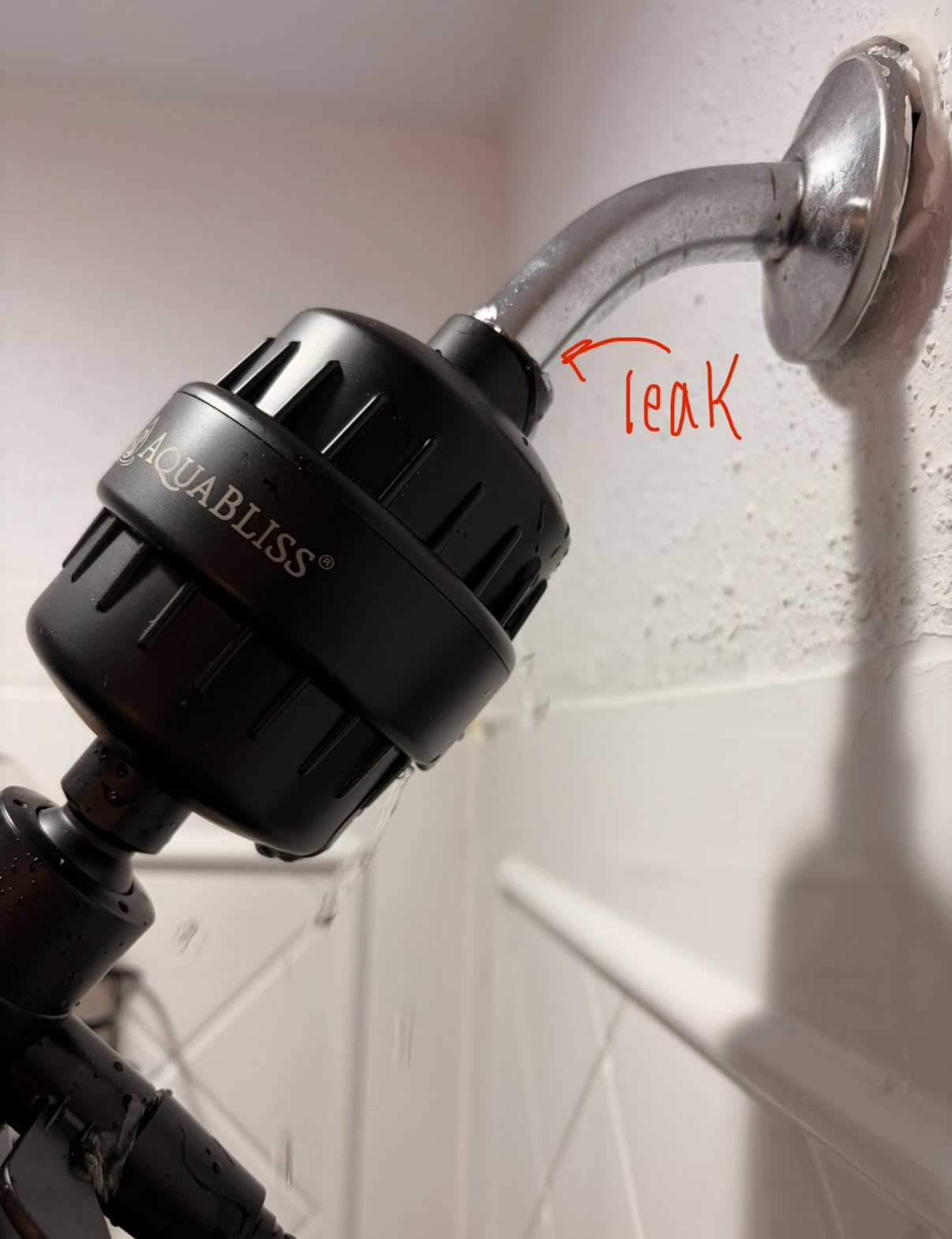
AquaBliss takes a different approach: instead of a filter built into the shower head itself, the SF100 (single stage) and SF220 (dual, more advanced) are inline filters that sit between your existing shower arm and whatever head you already own. That means you don’t have to give up a shower head you already like — you just add filtration in front of it.
The SF220 in particular is popular because it stacks a wider range of media (calcium sulfite, KDF-55, and activated carbon among other stages) into one cartridge, aiming to tackle both chlorine and some heavy metals. It’s consistently one of the best-reviewed budget options, and we’ve covered it in more depth in our dedicated AquaBliss shower filter review.
Pros
- Works with your existing shower head
- Very competitive price point
- Long-standing brand with wide review history
- SF220 covers more filtration stages than most rivals
Cons
- Adds visible hardware between arm and head
- Plastic housing feels less premium
- Some models are slightly bulkier on short shower arms
Who it’s for: Anyone who already owns a shower head they like — whether it’s a rainfall panel, a massage-setting handheld, or a builder-grade fixture that’s simply fine — and doesn’t want to replace it just to get filtration. It’s also a smart pick for renters who want to take the filter with them when they move without having to reinstall an entire shower head.
Who should skip it: If a clean, minimal look matters to you, the extra inline canister between the arm and head is hard to hide, and it does add a few inches of length that can look bulky in a small shower stall.

Afina A-01 Filtered Shower Head
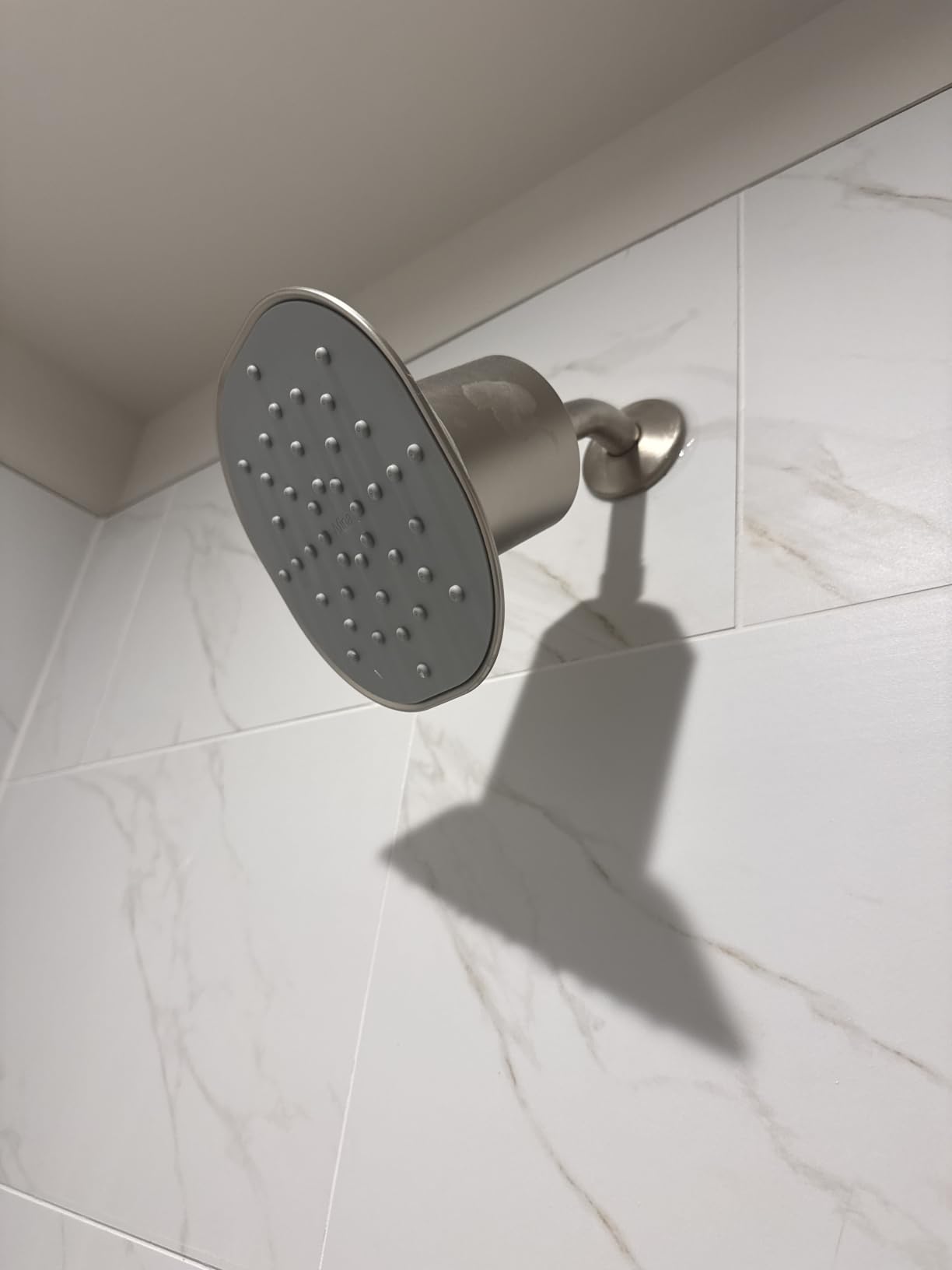
Afina leans into the wellness angle with a KDF and vitamin C blended cartridge, a combination often marketed toward neutralizing chlorine specifically for skin and scalp sensitivity rather than broader water quality concerns. The minimalist head design and matte finish give it a spa-like feel, and it’s one of the lighter shower heads on this list, which some users find easier to mount on older or more fragile shower arms.
Cartridge life runs shorter than several competitors, at roughly three to four months, so factor that into your ongoing cost if you’re comparing purely on price per year.
Pros
- Vitamin C blend aimed at skin sensitivity
- Lightweight, easy install on any standard arm
- Clean, minimalist aesthetic
- Noticeably softer water feel reported by users
Cons
- Shorter cartridge lifespan than most rivals
- Single fixed spray setting
- Limited independent lab testing published
Who it’s for: People shopping for a filtered shower head specifically because of skin or scalp sensitivity, rather than general water-quality concerns. The lightweight build also makes it a reasonable option for older shower arms that might not comfortably support a heavier metal head.
Who should skip it: If you want the longest possible stretch between cartridge changes, the roughly three-to-four-month lifespan here is shorter than options like the Weddell Duo or AquaBliss SF220, which will mean more frequent reordering over a year.

Delta Clarifi Standard Shower Filter
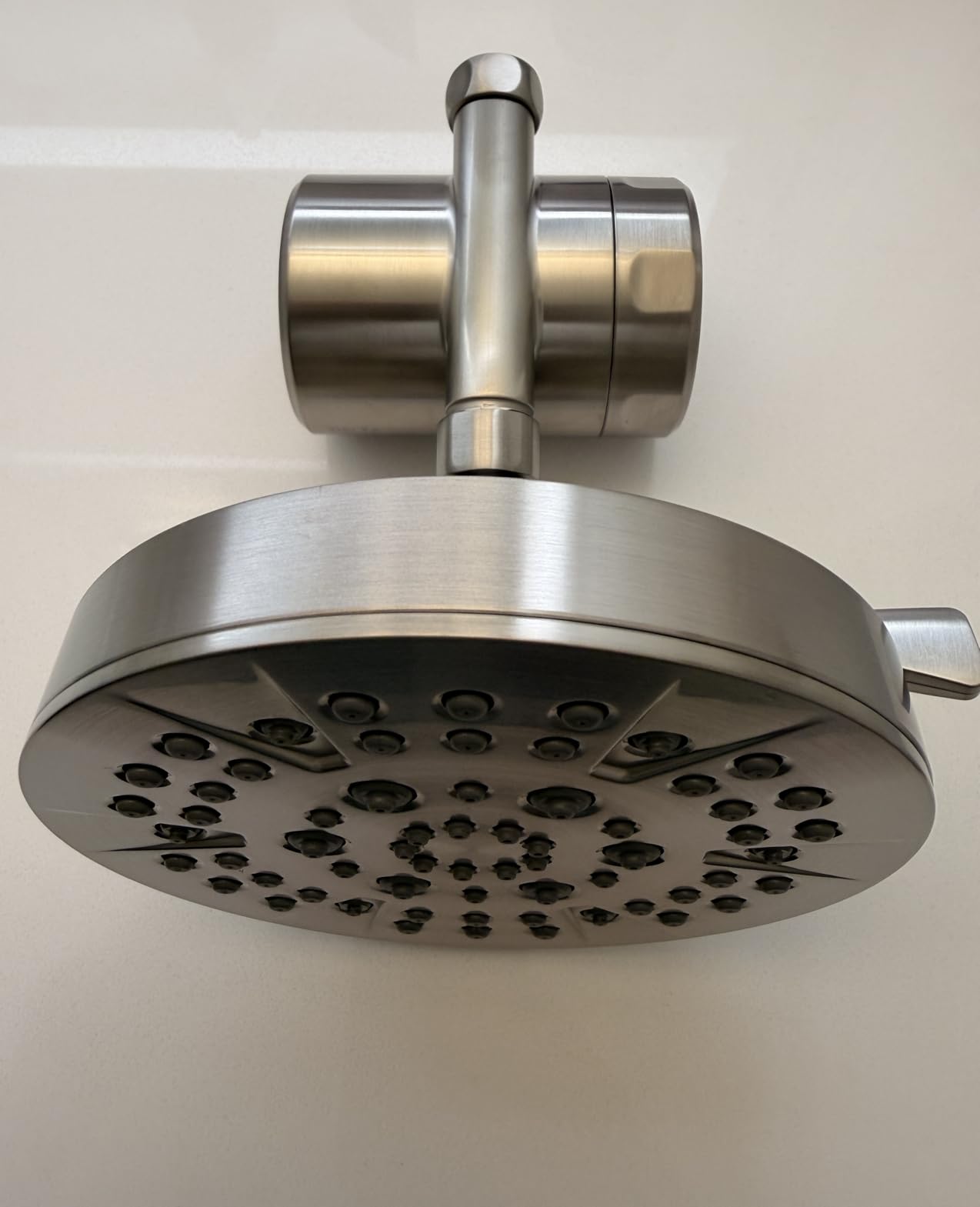
Delta is a familiar name in plumbing fixtures, and the Clarifi line brings that same fit-and-finish reliability to filtered shower heads. It uses a carbon and KDF cartridge and is designed to thread onto standard shower arms without extra adapters, which matters if you already have Delta fixtures elsewhere in your bathroom and want a matching look.
Performance-wise, it’s a solid middle-of-the-pack option — not the most advanced filtration media on this list, but backed by a major brand’s customer support and warranty, which some buyers value more than squeezing out the last percentage point of chlorine reduction. If your Delta system has other issues, our Delta shower system reviews and Delta vs. Moen performance comparison go into more detail.
Pros
- Trusted, established brand with strong warranty support
- Standard-fit installation, no adapters needed
- Consistent build quality
Cons
- Filtration media is less advanced than boutique competitors
- Fewer finish options
- Cartridge replacement cost adds up over a year
Who it’s for: Homeowners who already trust Delta’s fixtures elsewhere in the house and would rather stick with a familiar, well-supported brand than experiment with a smaller filtration-focused company. It’s a low-risk way to add filtration without stepping outside a brand ecosystem you already know.
Who should skip it: If maximizing filtration performance is your top priority over brand familiarity, the newer, filtration-focused brands on this list generally use more advanced or multi-stage media for a similar price.

SparkPod Filtered Shower Head
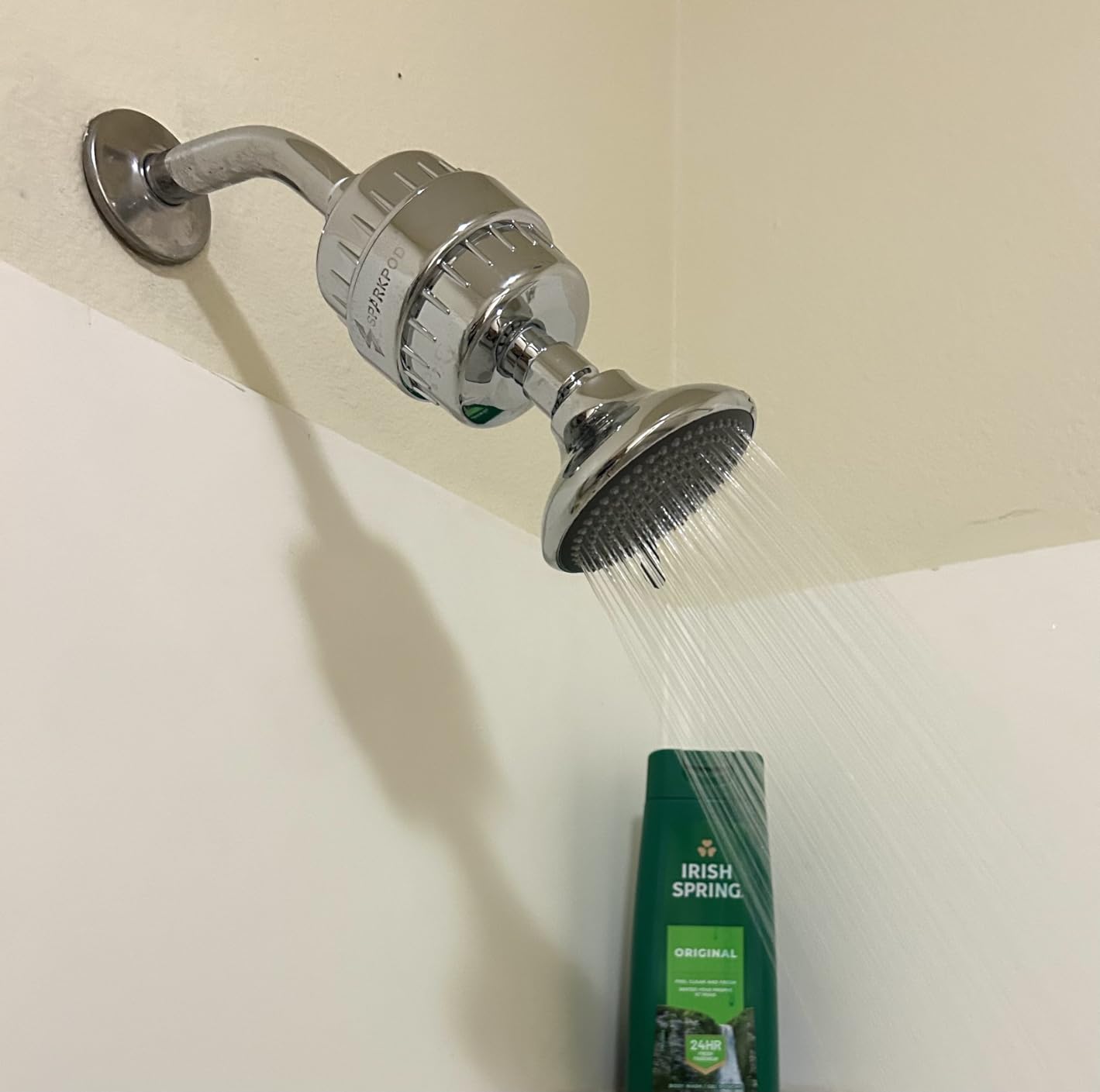
SparkPod built its brand on high-pressure shower heads for low-flow homes, and its filtered version keeps that same focus while adding a multi-layer carbon filter cartridge. It’s one of the more affordable filtered options here, which makes it a reasonable entry point if you’re not sure a filtered shower head is worth the investment yet.
Because it’s engineered around pressure first, some reviewers note the filtration feels like a secondary feature rather than the main event — cartridge life runs on the shorter side, and the filtration media isn’t as multi-stage as options like AquaBliss. Still, for the price, it’s a solid way to test the waters. We’ve covered SparkPod’s non-filtered lineup in our full SparkPod shower head review if you want a deeper look at the brand.
Pros
- Strong water pressure even in low-flow homes
- Most affordable option on this list
- Easy tool-free installation
Cons
- Simpler single-layer carbon filtration
- Shorter cartridge life
- Less effective on heavy metals compared to KDF blends
Who it’s for: Budget-conscious shoppers who care more about strong water pressure than deep filtration, or who just want to try a filtered shower head for the first time without a big financial commitment.
Who should skip it: If filtration performance is your primary concern and price is secondary, the simpler single-layer media here won’t match the multi-stage cartridges found in the AquaBliss SF220 or Jolie.

How Filtered Water Affects Skin and Hair Over Time
Chlorine is designed to kill microorganisms, and while that’s exactly what you want in a public water supply, it doesn’t distinguish between bacteria and the natural oils and proteins on your skin and in your hair. Repeated exposure can strip the skin’s protective lipid barrier, which is part of why people in heavily chlorinated areas — or those who shower frequently, such as daily swimmers — sometimes notice increased dryness, flakiness, or a tight feeling after showering even when using a good moisturizer afterward.
Hair tells a similar story. Color-treated hair is particularly sensitive to chlorine, since it can cause noticeable fading over time, and both chlorine and hard-water minerals can leave a dulling residue that makes hair feel coarse or look less vibrant even with quality shampoo and conditioner. This is one of the more commonly cited reasons people invest in a filtered shower head specifically, separate from any general concern about water safety.
It’s worth being realistic about the pace of change here. Most users report gradual improvement over two to four weeks of consistent use rather than an immediate transformation after the first shower. Skin and hair that have been dealing with daily chlorine exposure for years don’t reset overnight, but the cumulative reduction in irritant exposure tends to compound in a positive direction the longer a filter stays in regular use — provided the cartridge is replaced on schedule rather than left in place well past its effective lifespan.
1. Know What’s Actually in Your Water
Chlorine-heavy municipal water responds well to carbon and KDF-55 filters. If you’re on a well or have heavy mineral buildup, look for options that also address hardness, and pair the shower head with routine descaling — our guide on removing hard water stains in the shower is a useful companion resource either way.
2. Decide Between an Integrated Head or an Inline Filter
If you love your current shower head, an inline filter like the AquaBliss keeps it in place. If you’re open to a full swap, an integrated design like Jolie or Canopy tends to look cleaner and avoids adding extra length to the shower arm.
3. Factor In Cartridge Cost, Not Just Sticker Price
A $30 shower head with a $25 cartridge you replace every three months costs more over a year than a $60 head with a $20 cartridge replaced twice a year. Do the math on annual cost before deciding purely on upfront price.
4. Match Flow Rate to Your Existing Pressure
Any filtration media adds some resistance to water flow. If your home already struggles with pressure, prioritize models specifically tested for minimal pressure loss, and consider reading up on why shower head pressure runs low before assuming the filter is the culprit.
5. Think About Household Size and Shower Frequency
Cartridge lifespan estimates from manufacturers usually assume a single person showering once a day. If you have three or four family members sharing one shower, expect to replace cartridges noticeably faster than the advertised window, since filtration media wears out based on total water volume passed through it, not calendar time. This is one reason the Weddell Duo’s longer six-month rating still tends to hold up better for larger households than shorter-rated options.
6. Check Compatibility With Your Shower Arm
Nearly all filtered shower heads use a standard 1/2-inch NPT threaded connection, which fits the vast majority of U.S. shower arms without an adapter. Still, it’s worth a quick check if you have an unusually old or non-standard fixture, particularly in older homes. If you eventually decide to replace the arm itself rather than just the head, our guide on how to replace a shower faucet walks through that separately.
7. Consider Whether You’re Renovating or Just Upgrading
If you’re in the middle of a broader bathroom renovation or a tub-to-shower conversion, it’s worth planning your filtered shower head choice alongside the rest of the fixture selection rather than as an afterthought, since some filtered heads pair more naturally with certain valve and trim styles than others. Our guide on tub-to-shower conversions and our overview of how long a shower remodel typically takes are useful starting points if you’re tackling a bigger project rather than a simple swap.
On the other hand, if you’re simply upgrading an existing, otherwise-fine shower setup, there’s no need to overthink the decision. A filtered shower head is one of the lowest-risk, most reversible upgrades you can make to a bathroom — if you don’t like it, swapping back to your old head takes the same few minutes as installing the new one did.
The Science Behind Filtration Media, Briefly
KDF-55 media uses a copper-zinc alloy that creates a small electrochemical reaction with chlorine, converting it into a harmless, water-soluble chloride as water passes through. Activated carbon works differently, relying on adsorption — chlorine and organic compounds physically bind to the carbon’s porous surface as water flows past. Many of the shower heads in this guide combine both, since KDF handles chlorine breakdown efficiently while carbon helps with taste, odor, and some organic compounds. Vitamin C (ascorbic acid) cartridges, used in products like the Afina A-01, take a third approach: they neutralize chlorine and chloramine through a direct chemical reaction rather than filtering it out physically, which is part of why vitamin C filters are popular for people specifically worried about chloramine, since chloramine is harder for KDF and carbon alone to fully address.
Filtered Shower Heads vs. Whole-House Filtration Systems
One question that comes up constantly when people start researching filtered shower heads is whether it makes more sense to just install a whole-house filtration system at the main water line instead. Both approaches are legitimate, and they’re not mutually exclusive — many households eventually end up with both, but for different reasons.
A whole-house system treats every drop of water entering your home, including what goes to your kitchen sink, washing machine, dishwasher, and every shower and tub. That’s a real advantage if your concerns extend beyond just showering, such as protecting appliances from scale buildup or improving drinking water at every tap. The tradeoff is cost and complexity: whole-house systems typically require professional installation, ongoing maintenance of larger filter tanks or cartridges, and a much higher upfront investment, often running into the thousands of dollars for a quality system.
A filtered shower head, by contrast, is a point-of-use solution. It only treats the water coming out of that specific fixture, but it does so at a fraction of the cost, with no professional installation required, and with a replacement cycle you can manage yourself in a couple of minutes every few months. For most people whose primary concern is how their skin and hair feel after showering — rather than concerns about drinking water safety throughout the house — a filtered shower head delivers the bulk of the practical benefit without the bulk of the cost.
If you’re on a well rather than municipal water, or if you have specific documented contamination concerns from a water quality report, a whole-house system or a certified point-of-use drinking water filter is generally the more appropriate tool, and a shower filter should be treated as a comfort upgrade rather than a primary safety measure in those cases.
Common Mistakes People Make When Buying a Filtered Shower Head
Assuming All Filters Use the Same Media
It’s tempting to treat “filtered shower head” as a single category, but the difference between a basic single-stage carbon filter and a multi-stage KDF-plus-carbon cartridge is significant. Two products can look nearly identical on the outside while performing very differently in terms of actual chlorine reduction.
Ignoring Cartridge Cost Until After Purchase
The shower head itself is usually a one-time cost, but cartridges are a recurring expense for as long as you own the product. Before buying, it’s worth checking how much a pack of replacement cartridges costs and how often you’ll realistically need to buy them based on your household size, then multiplying that out over a year to get a true cost comparison between models.
Not Flushing New Cartridges Before First Use
Skipping the initial flush step can leave a temporary odor or a slightly discolored first burst of water, which sometimes leads people to think a product is defective when it just needs a minute of running water to clear out manufacturing residue.
Forgetting to Check Thread Compatibility on Unusual Fixtures
While the vast majority of shower arms use a standard threaded connection, some specialty or imported fixtures use different thread patterns. A quick look at your current shower head’s connection before ordering can save you the hassle of a return.
Expecting a Shower Filter to Fix Pressure Problems
A filtered shower head can maintain reasonable pressure relative to what’s already coming through your pipes, but it cannot create pressure that isn’t there to begin with. If pressure was already weak before installing a filter, the filter isn’t the right tool to solve that separate issue.
Installation and Maintenance Tips
Most filtered shower heads on this list install the same way a standard shower head does — hand-tighten onto the shower arm, then use plumber’s tape for a leak-free seal. A few tips that make a real difference in performance and longevity:
- Always wrap 2-3 turns of plumber’s tape clockwise around the threads before installing.
- Run the shower for 30-60 seconds after installing a new cartridge to flush out initial carbon dust.
- Set a phone reminder for cartridge replacement dates rather than waiting for performance to drop noticeably.
- If you notice dripping after installation, check our guide on fixing a leaking shower head before assuming the unit is defective.
- Periodically soak the head’s nozzle plate in vinegar to prevent mineral buildup from affecting spray pattern — see how to clean a shower head with vinegar for the full method.
What Happens If You Forget to Replace the Cartridge
Filtration media has a finite capacity. Once a KDF or carbon cartridge is saturated, it doesn’t fail dramatically — it simply stops removing chlorine and other compounds effectively, meaning you’re showering in essentially unfiltered water while still believing you’re getting the benefit. Some cartridges also become a place where bacteria or mineral deposits can accumulate once they’re past their effective lifespan, which is part of why manufacturers recommend replacement on a schedule rather than waiting until performance visibly drops. Keeping a simple recurring reminder, whether on your phone or a subscription-based reorder, is the easiest way to avoid this.
A Rough Look at Annual Cost of Ownership
To put cartridge costs in perspective, a filtered shower head with a four-month cartridge life needs three replacements per year for a single daily user, while one rated for six months needs only two. If a replacement cartridge costs somewhere between fifteen and thirty dollars depending on the brand, that works out to roughly forty-five to ninety dollars a year in ongoing costs on top of the initial purchase price. It’s a modest expense compared to many home upgrades, but it’s worth budgeting for rather than being surprised by it a few months after your first purchase.
Signs Your Filter Needs Replacing Sooner Than Expected
A gradual return of chlorine smell, a noticeable drop in water pressure that wasn’t there when the cartridge was new, or visible discoloration inside the cartridge housing are all signs it’s time for a replacement, even if you haven’t hit the manufacturer’s suggested timeframe yet. Households with more than two daily users, or homes with unusually high chlorine levels, often find they need to replace cartridges somewhat ahead of the advertised schedule.
Chlorine vs. Chloramine: Why It Changes Your Filter Choice
Not every municipal water system disinfects the same way, and the difference matters more than most buying guides let on. Many cities still use free chlorine, which is relatively reactive and breaks down fairly easily through KDF media, activated carbon, or a vitamin C reaction. A growing number of utilities, however, have switched to chloramine — a combination of chlorine and ammonia — because it’s more stable in the pipes over long distances and doesn’t dissipate as quickly, which is exactly why it’s harder for a shower filter to remove.
Chloramine doesn’t break down through activated carbon nearly as efficiently as free chlorine does, since carbon’s adsorption process was primarily designed around chlorine’s chemistry rather than the more stable ammonia-chlorine bond. This is where vitamin C (ascorbic acid) filters, like the one in the Afina A-01, tend to have a real edge: the chemical reaction between ascorbic acid and chloramine is direct and doesn’t rely on adsorption capacity the way carbon does, so it can continue neutralizing chloramine even as the cartridge ages, right up until the media itself is depleted.
KDF-55 alone is also less effective against chloramine than against free chlorine, which is why the strongest all-around filters on this list — such as the AquaBliss SF220 and the Weddell Duo — combine KDF with carbon and sometimes calcium sulfite, stacking multiple mechanisms rather than relying on a single one. If you’re not sure whether your city uses chlorine or chloramine, most municipal water utilities publish an annual water quality report, sometimes called a Consumer Confidence Report, that specifies which disinfectant is used and at what typical concentration. A quick search for your city name plus “water quality report” usually turns up the most recent version.
Practically speaking, if you already know your utility uses chloramine, prioritize a vitamin C blend or a multi-stage cartridge that explicitly lists chloramine reduction rather than one that only mentions chlorine. If your water report specifies free chlorine, a standard KDF-plus-carbon cartridge like those found in the Jolie, Canopy, or Delta Clarifi will generally perform well without needing the extra chemistry a chloramine-focused filter provides.
NSF/ANSI Standards and What “Certified” Really Means
You’ll see a lot of filtered shower heads advertise that they’re “tested to NSF standards” or “certified,” and it’s worth understanding what that actually means before it factors into your decision. NSF International is an independent, non-profit organization that develops standards for water treatment products and certifies products that meet them through third-party testing, rather than simply taking a manufacturer’s word for it.
For shower filters specifically, the most relevant standard is NSF/ANSI 177, which covers shower filtration systems and their ability to reduce free available chlorine. A product that’s genuinely certified to this standard has been tested by an accredited lab, not just by the manufacturer’s own team, and the certification is renewed periodically rather than being a one-time claim. This is different from a product simply stating that its media “is capable of” reducing chlorine, or citing a lab test the company commissioned itself without third-party oversight.
It’s worth being a careful reader here, because marketing language often blurs the line between “NSF certified,” “tested to NSF standards,” and “uses NSF-registered materials,” which are three meaningfully different claims. Certification means an accredited third party verified the finished product’s performance. Materials-based claims only mean the components used are approved for water contact, which says nothing about how well the finished cartridge actually performs. When a brand’s site or packaging is vague about which category its claim falls into, that ambiguity is itself useful information — a company confident in full independent certification usually says so explicitly and links to a certificate or listing you can verify on NSF’s own database.
None of this means an uncertified filter doesn’t work; plenty of well-reviewed products haven’t pursued formal certification simply because of its cost, which can run into the tens of thousands of dollars for a small company. But if third-party verification matters to you, checking a brand’s actual certification status, rather than trusting adjectives like “premium” or “advanced,” is the more reliable way to compare products on this specific point.
Filtered Shower Heads and Well Water
Well water introduces a different set of concerns than municipal water, and it’s one of the more common gaps in generic shower filter buying guides. Because well water isn’t treated with chlorine or chloramine at a municipal plant, the filters designed primarily around KDF’s chlorine-neutralizing electrochemical reaction have less to actually do — the marquee feature of several products in this guide, including the Jolie and Canopy, is built around a problem well-water households may not have in the first place.
What well water more commonly deals with instead is iron, sulfur (the “rotten egg” smell), manganese, and hardness minerals like calcium and magnesium, sometimes at much higher concentrations than municipal supplies. A standard KDF-and-carbon shower filter can still help modestly with sulfur odor and some sediment, but it isn’t engineered to handle iron staining or heavy hardness the way a dedicated whole-house water softener or iron filter is. Running heavily mineralized or iron-rich well water through a shower filter cartridge not built for it can also clog the media noticeably faster than the manufacturer’s advertised lifespan, since the cartridge is absorbing a load of sediment and minerals it wasn’t primarily designed to handle.
If you’re on a well, the more useful first step is usually getting your water tested — many county extension offices offer inexpensive well water testing — so you know whether iron, sulfur, hardness, or bacteria are the actual issues at play. From there, a shower filter can be a reasonable secondary layer for odor and general freshness, but it should be treated as a complement to appropriate well-specific treatment (such as a sediment pre-filter, iron filter, or softener) rather than a replacement for it. Among the products in this guide, the multi-stage AquaBliss SF220 tends to hold up somewhat better on well water than single-mechanism options, simply because it stacks more filtration stages, but even that shouldn’t be treated as a substitute for addressing iron or hardness at the source.
Filtered Shower Heads for Eczema, Psoriasis & Rosacea
People managing chronic skin conditions are one of the most common groups searching specifically for a filtered shower head, and it’s worth separating what’s reasonably well-supported from what’s still anecdotal. Chlorine is a known skin irritant that can disrupt the skin’s protective barrier, and for people whose barrier is already compromised — as is common with eczema and psoriasis — that disruption can plausibly contribute to itching, dryness, or flare frequency. Reducing chlorine exposure through a shower filter is a low-risk change that many dermatology-adjacent sources suggest as one piece of a broader management routine, alongside things like shorter, lukewarm showers, fragrance-free cleansers, and prompt moisturizing after bathing.
That said, it’s important to be realistic: a shower filter is not a treatment for eczema, psoriasis, or rosacea, and it shouldn’t replace any medication, topical treatment, or dermatologist guidance already in place. What it can reasonably do is remove one potential daily irritant from the equation, which for some people translates into a noticeable reduction in post-shower tightness or itching, and for others makes little discernible difference, since these conditions have many possible triggers beyond water chemistry.
For rosacea specifically, hot water and any additional chemical irritation can both contribute to flushing and sensitivity, so pairing a filtered shower head with lukewarm rather than hot water tends to matter as much as, or more than, the filtration itself. Among the products covered here, the vitamin C-based Afina A-01 is the one most explicitly marketed toward sensitive skin, though the KDF-and-carbon options in the Jolie, Canopy, and AquaBliss lines address the same core chlorine-reduction goal through a different mechanism. If skin sensitivity is your primary reason for buying a filter, it’s worth discussing your specific condition with a dermatologist rather than relying solely on a shower head’s marketing claims, since individual triggers vary widely.
Can a Shower Filter Help With Hair Loss or Thinning?
This is one of the most frequently searched questions around filtered shower heads, and the honest answer is more nuanced than most product pages suggest. There’s no strong clinical evidence that chlorine or hard water directly causes hair loss in the sense of stopping hair growth at the follicle. What chlorine and hard-water minerals can do is make existing hair more prone to breakage, dryness, and a rough, tangled texture, which can look like thinning because more strands are snapping off partway down the shaft rather than falling out at the root.
Hard water in particular tends to leave a mineral film on hair strands that makes them feel coarse and harder to detangle, which increases mechanical stress during washing, brushing, and styling — and mechanical stress is a well-established contributor to breakage. Chlorine, meanwhile, can strip the hair’s outer cuticle layer over repeated exposure, again making strands more fragile and prone to snapping, particularly for hair that’s already chemically processed, color-treated, or naturally fine.
If your hair concern is genuine thinning at the scalp — meaning fewer active follicles rather than more breakage along the strand — a filtered shower head isn’t likely to be the primary fix, and conditions like androgenetic alopecia, telogen effluvium, or other scalp-driven hair loss are worth discussing with a dermatologist rather than addressing through water filtration alone. But if what you’re noticing is more consistent with breakage — split ends, strands that feel rough or “straw-like,” or hair that seems to snap rather than shed from the root — reducing chlorine and mineral exposure through a filtered shower head is a reasonable, low-cost piece of a broader hair-health routine that also includes gentler brushing, regular trims, and a conditioner suited to your hair type.
Filtered Shower Heads for Babies, Kids & Pregnancy
None of the shower heads in this guide are marketed or certified specifically as baby bath filters, and it’s worth being clear about that distinction upfront, since the search interest for “filtered shower head baby” and “filtered shower head pregnancy” tends to assume a level of specialized design that most standard shower filters simply aren’t built around. What these products do is reduce chlorine and, to varying degrees, some other compounds in whatever water passes through them — a benefit that applies the same way regardless of who’s showering, but isn’t a pediatric or prenatal-specific feature.
Many parents choose to install a standard filtered shower head — often one from this list, most commonly a fixed model like the Jolie or Canopy, or a handheld-capable option like the Weddell Duo for bathing young children directly — for the same general reasons any household would: reducing daily chlorine exposure for sensitive skin. Infant and young children’s skin is thinner and can be more reactive than adult skin, which is part of why some parents are especially motivated to reduce potential irritants during bath time, though this remains a matter of personal preference rather than a documented medical necessity for most healthy children.
If you’re specifically concerned about bathing a newborn or a child with diagnosed eczema or another skin condition, it’s worth raising the question with your pediatrician rather than assuming a shower filter addresses whatever concern prompted the question, since recommendations can vary based on the specific skin issue. Similarly, pregnant individuals sometimes look into filtered shower heads out of general caution around chemical exposure, but a standard shower filter isn’t a substitute for medical guidance on water safety during pregnancy, and any specific concerns about local water quality are better addressed by reviewing your municipal water quality report or speaking with an OB-GYN.
Practically, if you do want a filtered shower head for a household with young children, the Weddell Duo’s handheld component tends to be the most functionally useful of the options here, since it makes rinsing a child directly in the tub or shower easier than a fixed overhead spray alone.
Best Filtered Shower Heads for Renters, Apartments & RVs
Renters have a specific set of priorities that don’t always line up with a general buying guide: the ability to install without permanent modification, the ability to take the filter along at move-out, and ideally a low upfront cost given the possibility of relocating before a filter fully pays for itself. Nearly every product in this guide qualifies on the installation front, since all of them thread onto a standard shower arm without any plumbing changes, and removal is just as simple as installation — unscrew, save the original head in a drawer, and reinstall it before your final walkthrough.
Among the options here, the AquaBliss inline filter has a particular advantage for renters who like their current shower head and don’t want to change the look of the bathroom at all; it slots in behind whatever head is already there, which also makes it easy to explain to a landlord if asked, since the original fixture stays visibly in place. Budget also tends to matter more for renters who may move within a year or two, which puts the SparkPod and AquaBliss SF100 toward the front of the list on pure value grounds.
RVs and other mobile living situations add a further wrinkle: many RV shower arms use the same standard 1/2-inch NPT thread as residential fixtures, so most filtered shower heads on this list are technically compatible, but space constraints in an RV shower stall matter more than they do in a full-size bathroom. A compact, lower-profile option — generally a fixed head rather than a bulkier inline canister — tends to fit more comfortably in the tighter clearance of an RV shower, and it’s worth measuring your existing shower arm clearance before ordering, since some RV shower enclosures have less room around the arm than a typical home bathroom. RV owners on a municipal or campground water hookup will get the same basic filtration benefit as a home installation; those relying on a fresh water tank rather than an external hookup are dealing with a different set of water quality variables that a shower filter alone won’t fully address.
Regional Water Quality: Does Where You Live Matter?
Water quality, disinfectant type, and hardness levels vary meaningfully by region, and that variation is one of the more overlooked factors in choosing a filtered shower head. Coastal and older Northeastern and Midwestern cities often run harder water due to underlying geology, with more dissolved calcium and magnesium moving through the plumbing, which is part of why residents in those regions frequently report more visible scale buildup on fixtures and a filmy feeling on skin and hair, independent of chlorine levels. Much of the Southwest and parts of Texas and Florida also see notably hard water, again tied to local mineral content in the ground and surface water sources feeding municipal systems.
Chlorine versus chloramine use also varies by utility rather than by region in any consistent pattern, since it’s a treatment choice made at the individual water authority level rather than something that follows state or regional lines neatly. Some major metro utilities disinfect primarily with chloramine because it’s more stable across long pipe networks, while smaller or more rural systems more often stick with traditional free chlorine. This is exactly why checking your own municipal water quality report matters more than assuming your region’s general reputation applies to your specific tap — two cities a short drive apart can use entirely different disinfection approaches.
If you’re in a region known for hard water, pairing your shower filter with periodic descaling of the nozzle plate becomes more important than it would be for someone in a softer-water area, since mineral scale can affect spray pattern regardless of how well the chlorine-reduction media is performing. Our guide on removing hard water stains in the shower covers the maintenance side of that in more detail, and it’s a useful companion read for anyone in a harder-water region choosing between the products in this guide.
Shower Filter Heads vs. Filter Balls, Tablets & Bath Additives
Beyond the shower-head-style filters covered in this guide, there are a few adjacent product categories worth understanding so you don’t end up comparing apples to oranges while shopping. Vitamin C shower tablets or effervescent bath bombs work on the same basic chemistry as the Afina A-01’s cartridge — ascorbic acid neutralizing chlorine and chloramine — but they’re dropped loose into a bath or attached via a small mesh pouch rather than built into a continuous-flow shower head cartridge. They can be a reasonable low-cost way to test whether reduced chlorine exposure makes a noticeable difference for your skin before committing to a full shower head purchase, though they’re less practical for a standard overhead shower since there’s no straightforward way to keep a loose tablet in the flow path the way a cartridge inside a shower head guarantees.
Filter balls or mesh filter bags, sometimes marketed for both bath and shower use, typically contain loose KDF media or activated carbon and are meant to be placed directly in bathwater or attached near the shower head’s spray. These tend to have a shorter effective lifespan and less consistent contact time with the water than a purpose-built cartridge, since the water isn’t forced through the media under pressure the way it is inside a proper shower filter housing.
The core tradeoff across all these formats comes down to contact time and flow-through design. A dedicated shower head filter, like all seven products reviewed above, is engineered so that every drop of water is forced through the filtration media before exiting the nozzle, which generally gives more consistent and measurable results than a loose tablet or ball where water flow around the media is far less controlled. For anyone serious about consistent, daily chlorine reduction rather than an occasional bath treatment, an inline or integrated shower head filter remains the more reliable choice of the formats available.
Warranty, Returns & Customer Support Compared
Warranty coverage and customer support responsiveness vary more across these brands than most buying guides mention, and it’s worth factoring in alongside filtration performance, especially for a product with recurring cartridge purchases. Delta, as an established plumbing fixture manufacturer with decades of retail distribution, generally offers the most straightforward and widely recognized warranty support of the brands on this list, backed by a customer service infrastructure that’s used to handling fixture-related claims at scale.
The newer, filtration-focused direct-to-consumer brands — Jolie, Canopy, Weddell, Afina, and AquaBliss among them — typically offer their own manufacturer warranties as well, generally covering defects in the shower head housing for a set period, though coverage terms and length can change, so it’s worth checking each brand’s current policy on their own site before purchasing rather than relying on secondhand summaries. Subscription-based cartridge programs, offered by several of these brands, also tend to come with more flexible return or pause options than a one-time purchase, since the ongoing relationship gives the company more incentive to keep a subscriber satisfied.
Because you’re buying through a retail channel like Amazon in most cases, standard marketplace return policies also apply on top of any manufacturer warranty, which generally gives you a return window if the product arrives damaged or doesn’t perform as expected, independent of whatever the individual brand’s own warranty terms are. If a warranty claim becomes necessary, having your original purchase confirmation on hand and reaching out to the brand directly, rather than the retailer, tends to be the faster path for anything related to the filtration cartridge specifically rather than shipping or order issues.
Cartridge Waste, Recycling & the Sustainability Question
Every filtered shower head on this list requires periodic cartridge replacement, and that recurring waste stream is a fair question for anyone weighing the environmental tradeoffs of the category. Most shower filter cartridges combine a plastic housing with internal KDF, carbon, or vitamin C media, and the mixed-material construction means they generally aren’t accepted in standard curbside recycling programs the same way a single-material plastic container would be.
Some brands, including several covered in this guide, have started offering mail-back or take-back programs specifically for used cartridges, which allow the plastic housing and internal media to be separated and processed more appropriately than they would be if simply thrown in household trash or a standard recycling bin. It’s worth checking each brand’s current sustainability page before purchasing if this is a priority for you, since these programs are relatively new across the category and availability varies by brand and sometimes by region.
From a broader perspective, it’s also worth weighing cartridge waste against the alternative most people are implicitly comparing it to, which is typically either doing nothing or installing a larger whole-house system. A whole-house system also requires periodic filter or tank media replacement, often at a larger physical scale, so the sustainability comparison between a point-of-use shower filter and a whole-house system isn’t as one-sided as it might first appear — it largely comes down to total filtered water volume and how efficiently each system’s media is used relative to its size. For most single-shower households, the smaller, more frequent cartridge replacements of a shower head filter are a manageable middle ground between no filtration and a much larger whole-home installation.
8 Common Myths About Filtered Shower Heads
Myth 1: A Filtered Shower Head Makes Water Safe to Drink
Shower filters are designed for skin and hair exposure during bathing, not for drinking water safety, and they shouldn’t be treated as a substitute for a certified drinking water filter even if some of the same filtration media appears in both categories.
Myth 2: More Expensive Always Means Better Filtration
Price often reflects design, materials, and brand positioning as much as it reflects the underlying filtration chemistry. A well-designed multi-stage cartridge in a mid-priced product can outperform a single-stage filter in a more expensive, better-looking shower head.
Myth 3: You’ll Notice a Dramatic Difference on Day One
Most people report gradual improvement over two to four weeks rather than an immediate transformation after the first shower, since the benefit is cumulative reduction in irritant exposure rather than an instant reversal of existing dryness or damage.
Myth 4: A Shower Filter Softens Hard Water
Most shower filter cartridges are built around chlorine and chloramine reduction, not calcium and magnesium removal. Genuine water softening requires ion-exchange media, which is a different (and typically whole-house-scale) technology than what’s inside a standard shower filter cartridge.
Myth 5: If It Still Smells Like Chlorine, the Filter Is Broken
A lingering faint smell in the first few uses is often just manufacturing residue that clears after a short flush, not necessarily a sign the cartridge has failed. Persistent smell weeks into use, however, is a more reliable sign it’s time for a replacement.
Myth 6: All Filtered Shower Heads Reduce Water Pressure Significantly
Some pressure loss is physically inevitable with any filtration media, but well-engineered cartridges are specifically designed to minimize it, and several products in this guide — Canopy and Jolie in particular — are built and marketed around holding pressure close to unfiltered levels.
Myth 7: A Shower Filter Is a Medical Treatment
None of the products in this guide are medical devices, and none should be treated as a treatment for a diagnosed skin or scalp condition. They’re a reasonable complement to, not a replacement for, professional dermatological guidance.
Myth 8: Once Installed, You Never Have to Think About It Again
Filtration media has a finite capacity and stops working effectively once saturated, even though the shower head itself keeps functioning normally. Scheduled cartridge replacement, not a one-time installation, is what keeps the filtration benefit ongoing.
Pairing a Filtered Shower Head With the Rest of Your Routine
A filtered shower head tends to deliver the most noticeable benefit when it’s paired with a few complementary habits rather than treated as a standalone fix. Water temperature matters more than most people expect — hot water opens pores and can accelerate moisture loss regardless of how clean the water itself is, so many dermatology-adjacent sources suggest lukewarm rather than hot showers for anyone dealing with dry or reactive skin, filtered water or not.
Shower length plays a similar role: shorter showers, generally cited as five to ten minutes, reduce overall exposure time to both water temperature and any residual compounds a filter doesn’t fully remove, compounding the benefit of the filtration itself. Applying a moisturizer within a few minutes of stepping out, while skin is still slightly damp, is another commonly cited habit that works alongside filtered water rather than in place of it, since filtration reduces irritant exposure but doesn’t add moisture back to the skin on its own.
For hair specifically, pairing a filtered shower head with a leave-in conditioner or occasional deep-conditioning treatment tends to compound the benefit for anyone dealing with dryness or breakage, since the filter reduces one source of damage while the conditioning routine addresses the hair’s existing moisture and protein balance. None of these habits require any special products beyond what most people already have on hand — the filtered shower head simply removes one recurring variable from the equation, and the rest of a sensible shower routine does the remaining work.
Frequently Asked Questions
Do filtered shower heads actually remove chlorine?
Yes, most models using KDF-55 or activated carbon media measurably reduce free chlorine, often by a significant margin in independent testing. The exact percentage varies by brand, water pressure, and how fresh the cartridge is.
Will a shower filter reduce my water pressure?
Some reduction is normal since water is passing through filtration media, but well-designed cartridges like those in Canopy or Jolie are engineered to minimize this. If pressure loss becomes severe, it usually means the cartridge needs replacing.
How often should I replace the filter cartridge?
Most cartridges last three to six months depending on usage frequency and water quality, though households with several daily users may need to replace more often. Check the manufacturer’s guidance for your specific model.
Can a filtered shower head help with dry skin or eczema?
Many users report improvement since chlorine and hard-water minerals can aggravate sensitive skin, though results vary by individual. It’s worth pairing a filter with a good shower routine for healthy skin for the best results.
Do I need a plumber to install one?
No, nearly all the shower heads on this list are designed for tool-free or basic-tool installation that most people can complete in under ten minutes.
Are inline filters like AquaBliss as effective as integrated filtered heads?
Generally yes — the filtration media matters more than whether it’s housed in the head itself or in a separate inline canister, so effectiveness comes down to the cartridge composition rather than the form factor.
Will a filtered shower head fix low water pressure caused by clogs?
No, a filter addresses water quality, not existing plumbing clogs. If low pressure predates the filter, see our guide on how to increase shower water pressure first.
Can these filters remove heavy metals like lead?
KDF-based media can reduce certain heavy metals to some degree, but a shower filter should not be relied on as your sole line of defense against serious contamination — a certified whole-home or point-of-use system is more appropriate for that concern.
Do filtered shower heads help with musty bathroom smells?
Indirectly, since reducing certain water contaminants can help, but persistent musty odors are usually related to mold or drain buildup rather than the shower head itself — our guide on fixing musty shower smell after cleaning covers that separately.
Is a handheld or fixed filtered shower head better?
It depends on your household — fixed heads are simpler and often filter more consistently, while handheld or combo options like the Weddell Duo offer more flexibility for washing kids, pets, or cleaning the shower itself.
How long do filtered shower heads typically last overall?
The shower head housing itself can last for years with basic care, similar to any standard fixture — it’s really just the internal cartridge that needs periodic replacement. For general fixture lifespan expectations, see how long shower heads last.
Do these filters work on well water?
Most are designed primarily for municipal, chlorinated water, so results on well water can vary depending on your specific mineral content and any existing whole-home treatment already in place. See the well water section above for a fuller breakdown.
Can I use a filtered shower head with a water softener already installed?
Yes, and many households actually pair the two — a whole-home softener addresses mineral hardness throughout the plumbing system, while a shower filter targets chlorine and odor right at the point of use, so the two serve complementary rather than overlapping purposes.
Why does my new filtered shower head smell strange when I first install it?
A faint odor in the first few uses is common with carbon-based cartridges and typically fades after running water through for a minute or two, as any manufacturing residue or initial carbon dust flushes out of the media.
Is it normal for the cartridge housing to feel warm during a hot shower?
Yes, plastic and metal housings will naturally warm slightly from hot water passing through, and this isn’t a sign of a problem as long as the housing isn’t cracking, leaking, or deforming.
Can I install a filtered shower head myself if I’ve never done any plumbing work?
In most cases yes — since these fixtures thread on by hand with plumber’s tape and don’t require cutting into pipes or working with electrical or gas lines, it’s one of the more beginner-friendly bathroom upgrades available.
What’s the difference between chlorine and chloramine filters?
Standard KDF and carbon media handle free chlorine well but are less effective against chloramine, which is more chemically stable. Vitamin C-based cartridges, like the one in the Afina A-01, are generally better suited to chloramine specifically.
Are any of these shower heads NSF certified?
Certification status changes over time and varies by brand, so it’s worth checking each manufacturer’s current listing on NSF’s database directly rather than relying solely on packaging claims, since terms like “tested to NSF standards” and full third-party certification aren’t the same thing.
Can a filtered shower head help with hair breakage?
It can help reduce one contributing factor — chlorine and hard-water mineral buildup on the hair shaft — though breakage often has multiple causes, so a filter is best treated as one part of a broader hair-care routine rather than a standalone fix.
Is it safe to use a filtered shower head during pregnancy?
Standard shower filters aren’t a specialized prenatal product, but reducing general chlorine exposure is a low-risk change for most people. Any specific concerns about water safety during pregnancy are best discussed with an OB-GYN rather than addressed solely through a shower filter.
Do filtered shower heads work in RVs?
Most use a standard thread that fits RV shower arms, though a lower-profile fixed head tends to fit more comfortably than a bulkier inline filter in a tight RV shower stall.
Final Verdict
If you want the cleanest overall package, the Jolie Filtered Showerhead earns the top spot for combining strong filtration with a design that looks intentional rather than like a bathroom accessory. Budget-conscious shoppers who don’t want to give up their current shower head should look at the AquaBliss SF220, and families juggling different shower needs will likely get the most daily value from the Weddell Duo. Whichever you choose, remember that cartridge replacement discipline matters as much as the initial purchase — even the best filter stops working once it’s saturated. Take a moment to match your choice against your actual water concerns, your household size, and how much you’re willing to spend on ongoing cartridges, rather than picking based on price or packaging alone, and you’ll end up with a shower upgrade that keeps paying off well past the first week of use.
Browse Filtered Shower Heads on Amazon