
Best Shower Chairs for Elderly: A Complete Buying Guide and Honest Reviews
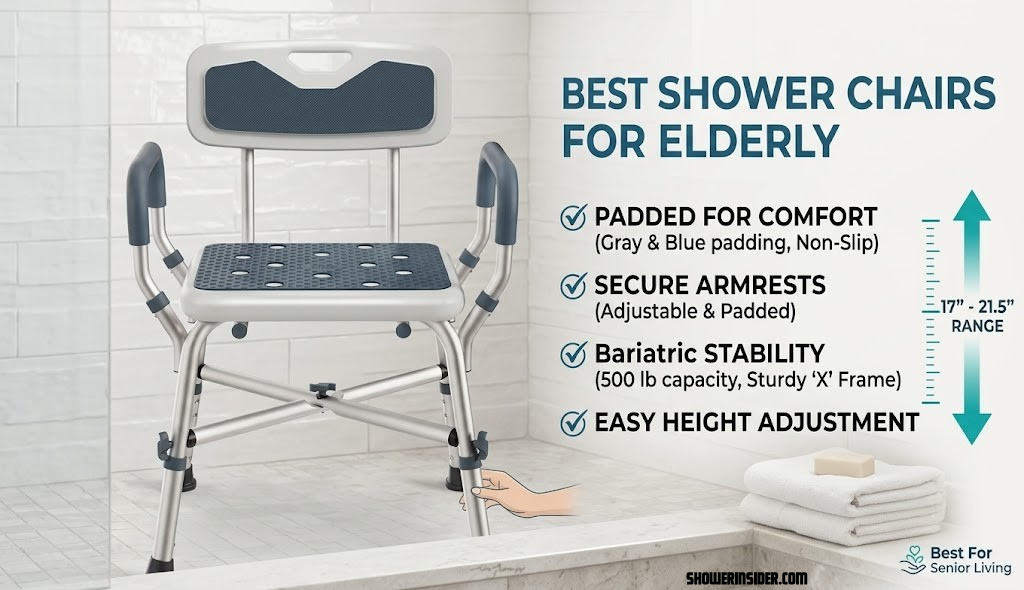
Falls in the bathroom send hundreds of thousands of older adults to the emergency room every single year, and a shower is one of the most common places it happens. A well-chosen shower chair changes that risk profile almost overnight — it gives tired legs somewhere to rest, gives shaky balance something to lean on, and gives caregivers one less thing to worry about. This guide walks through everything you need to know before you buy one, plus in-depth reviews of five chairs that consistently show up as favorites among seniors, caregivers, and physical therapists.
Why Shower Chairs Matter for Elderly Safety
Ask any occupational therapist which room in the house worries them most for an older client, and the bathroom almost always comes up first. Tile and porcelain get slick the moment they’re wet, grab points are scarce, and the simple act of standing on one leg to wash the other foot becomes a genuine balance test. For someone with arthritis, neuropathy, low blood pressure, or simply the reduced muscle strength that comes with age, that combination is a recipe for a fall — and falls in the shower tend to happen fast, with little warning and nothing soft to land on.
A shower chair addresses the root of the problem rather than patching around it. Instead of asking someone to balance on wet feet while washing, rinsing, and reaching for shampoo, it gives them a stable, elevated seat to work from. Legs get a rest, hands stay free for grab bars or washcloths instead of the wall, and the whole routine slows down to a safer pace. It’s a small piece of equipment, but the effect on daily confidence is significant — many caregivers report that a shower chair is the single change that gets a reluctant parent or spouse showering independently again.
There’s also a secondary benefit that’s easy to overlook: energy conservation. Standing through an entire shower is tiring, even for someone in reasonably good health, and for a person managing a chronic condition or recovering from surgery, that fatigue can linger for the rest of the day. Sitting through the shower routine preserves energy for the things that matter more — a walk outside, time with grandchildren, or simply feeling less wiped out by early afternoon.
If bathroom safety is a broader concern in your household, it’s worth pairing a shower chair with a non-slip surface underfoot; our guide to the best shower mats for elderly users covers exactly what to look for there, and a shower chair plus a quality mat is one of the most cost-effective safety upgrades a bathroom can get.
The Real Statistics Behind Bathroom Falls
It’s not an exaggeration to say the bathroom is disproportionately dangerous compared to almost every other room in a home. The combination of hard, unforgiving surfaces (tile, porcelain, glass) with a constant source of moisture creates conditions that simply don’t exist elsewhere in the house. Add in the fact that many bathroom tasks require standing on one leg, reaching overhead, or bending at awkward angles, and it becomes clear why so many falls trace back to this single small room. Older adults are especially vulnerable not just because of reduced strength and balance, but because reaction time to a slip — the split-second correction that a younger body makes almost automatically — slows considerably with age.
What makes this particularly frustrating is that most bathroom falls are entirely preventable with basic equipment. Unlike falls that happen from unpredictable outdoor hazards, a slippery shower floor is a known, consistent risk that can be planned around in advance. A shower chair, paired with a few other targeted upgrades, effectively removes the riskiest moments from the routine altogether.
The Psychological Side of Losing Shower Independence
Beyond the physical safety argument, there’s an emotional dimension to this conversation that deserves attention. For many older adults, the shower is one of the last truly private, independent daily rituals they still manage entirely on their own. Needing help with bathing can feel like a significant loss of dignity, and it’s often one of the first things families notice when a loved one starts needing more support. A shower chair can delay or entirely prevent that transition by making the task safe enough to continue doing solo. That’s not a small thing — it often means the difference between someone feeling capable and independent versus feeling like they’ve become a burden on the people around them.
Caregivers benefit just as much from this shift. Constantly worrying about whether a parent or spouse is safely showering unsupervised creates a low hum of anxiety that builds over time. Knowing there’s a stable seat in place, with armrests to lean on and a level, secure base, takes a meaningful amount of that worry off the table.
Who Benefits Most From a Shower Chair
While this guide focuses specifically on elderly users, it’s worth noting the overlap with other groups who benefit from the same equipment: people recovering from hip or knee surgery, individuals managing chronic pain conditions like fibromyalgia or severe arthritis, anyone with vertigo or inner ear balance disorders, and people managing low blood pressure that can cause lightheadedness when standing for extended periods in a hot shower. If any of these situations sound familiar for someone in your household, the case for a shower chair only gets stronger.
A Small Investment With an Outsized Return
Compared to many other home safety upgrades, a shower chair sits at a genuinely accessible price point relative to the risk it addresses. A full bathroom remodel with a curbless walk-in shower can run into the thousands of dollars, and while that’s a worthwhile investment for households that can manage it, a quality shower chair delivers a meaningful chunk of that same safety benefit for a fraction of the cost and with essentially no installation hassle. That makes it one of the easiest recommendations in the entire category of aging-in-place home modifications.
Types of Shower Chairs for Seniors
Not every shower chair is built the same way, and the “best” one really depends on the bathroom layout, the user’s mobility level, and whether a caregiver is involved. Here’s a rundown of the main categories you’ll come across while shopping.
Standard Shower Stools
These are the simplest option: four legs, a flat or slightly contoured seat, no back, no arms. They’re compact, affordable, and easy to store, which makes them a reasonable choice for someone who is fairly steady but just wants somewhere to sit for part of the routine, like shaving legs or washing feet.
Shower Chairs with Backs and Armrests
This is the category most elderly users end up choosing, and for good reason. A backrest supports posture during a longer shower, while armrests give something solid to push against when standing back up — often the riskiest moment of the whole routine. Many of the models later in this guide fall into this category.
Transfer Benches
A transfer bench extends over the edge of the tub, with two legs inside the tub and two outside on the bathroom floor. This lets someone sit down outside the tub, then slide across the bench into the shower or bath without ever having to lift a leg over a high tub wall — a huge advantage for anyone with hip replacements, severe arthritis, or significant balance concerns.
Wall-Mounted Fold-Down Seats
These attach directly to the shower wall and fold flat when not needed, which is popular in smaller bathrooms or shared households where a permanent freestanding chair would get in the way. They require drilling into the wall, so they’re best suited to a more permanent living situation.
Rolling Shower Chairs
Built with locking wheels, rolling shower chairs are designed for users with more significant mobility limitations, often used alongside a caregiver. They allow someone to be wheeled directly into the shower stall rather than transferred from another surface.
For households weighing a bigger bathroom overhaul rather than just adding a chair, it’s worth reading through our guide on tub-to-shower conversions, since a curbless walk-in shower pairs extremely well with any of the seat types above.
Corner Shower Seats
Designed specifically for corner-style shower stalls, these seats are typically triangular or fan-shaped to fit snugly into the corner without taking up much floor space. They’re a good option for smaller bathrooms where a standard rectangular chair would eat into valuable standing room, though they’re less common than the styles above and offer fewer adjustable features.
Bariatric Shower Chairs
Built with reinforced frames and wider seats, bariatric shower chairs are rated for higher weight capacities — often 400 to 500+ lbs — and use a wider stance for extra stability. If weight capacity is a genuine concern for the intended user, it’s worth looking specifically at bariatric-rated models rather than assuming a standard chair will do.
Padded vs. Unpadded Seats
Padding adds comfort, particularly for users who spend longer stretches in the shower or who have thinner body composition and feel pressure points on a hard plastic seat. The tradeoff is that padded seats can trap more moisture and generally require slightly more attention during cleaning to prevent mildew from developing in the padding material itself.
How to Decide Which Type Fits Your Situation
The decision usually comes down to answering three questions honestly: How much support does the user currently need to stand up and sit down safely? Is the bathroom set up around a tub, a walk-in stall, or both? And how much storage space is realistically available when the chair isn’t in use? Walking through those three questions before shopping saves a lot of returns and second-guessing later.
Key Features to Look For
Once you’ve settled on a general chair type, the details start to matter a lot more than they might seem to at first glance. Here’s what separates a genuinely useful shower chair from one that ends up pushed into a closet after a few uses.
Weight Capacity
Always check the manufacturer’s stated weight limit and choose with a comfortable margin above the user’s actual weight — not right at the edge of it. A chair rated at 300 lbs used by someone who weighs 290 lbs doesn’t leave room for the extra force generated when standing up or shifting position.
Adjustable Height Legs
Individually adjustable legs let the chair sit level even on a sloped shower floor (which is extremely common, since showers are built to drain), and let you match seat height to the user’s knee height for the safest, most comfortable sit-to-stand angle.
Drainage Holes in the Seat
A solid seat pan traps water and takes forever to dry, which invites mildew. Seats with drainage holes or a slatted design let water pass straight through, keeping the chair drier and more hygienic between uses.
Non-Slip Rubber Feet
Rubber tips on the legs stop the chair from sliding on a wet floor — a feature that should be considered mandatory, not optional, for any chair used by an older adult.
Backrest and Armrests
As covered above, both dramatically improve safety and comfort. If there’s any doubt about which to choose, err toward more support rather than less — it’s much easier to ignore an armrest you don’t need than to wish for one that isn’t there. Our dedicated roundup of best shower chairs with arms goes deeper on this specific style if armrests are a priority for you.
Rust-Resistant Materials
Aluminum and certain treated plastics resist corrosion far better than basic steel frames, which matters enormously in a wet environment used daily for years. A rusting frame isn’t just unsightly — it eventually weakens structurally.
Tool-Free Assembly
Many seniors and family caregivers appreciate a chair that snaps together without tools, especially if it needs to be folded down for storage or travel.
Seat Shape and Contouring
A flat seat is simple but can create pressure points during longer showers, especially for users with less natural padding. A contoured seat, shaped slightly to follow the curve of the body, tends to feel more comfortable over time and can reduce the tendency to slide forward, which matters for anyone with reduced trunk strength.
Overall Footprint and Storage
Before buying, think honestly about where the chair will live when it’s not being used, if it’s being used at all. Some models fold flat against a wall or collapse down small enough to tuck behind a bathroom door, which matters a great deal in shared bathrooms or smaller homes where floor space is already tight.
Texture and Grip on the Seat Surface
A slightly textured seat surface helps prevent sliding, particularly once soap or shampoo runoff makes everything slicker. Completely smooth plastic seats can feel unexpectedly slippery once wet, even though they look perfectly stable when dry in the store or in product photos.
Noise and Squeaking Over Time
It’s a small detail, but worth mentioning: cheaper joints can develop squeaks after repeated wet-dry cycles. This doesn’t usually indicate a safety problem, but a small amount of silicone lubricant on joints (avoiding the seat surface itself) can quiet things down if it becomes bothersome.
Portability for Travel or Multiple Bathrooms
If the chair needs to move between bathrooms in the same house, or travel along on visits to family, lighter aluminum frames with simple fold-down mechanisms are worth prioritizing over heavier steel designs that are harder to lift and reposition.
Reading Reviews With a Critical Eye
When comparing chairs online, it helps to specifically look for reviews mentioning elderly parents, disability use, or long-term daily reliability rather than generic star ratings alone. A chair that’s popular for occasional use by a healthy adult taking a quick rinse after the gym may not have been tested the same way as one used every single day by someone who genuinely depends on it for stability. Reviews that specifically describe months or years of continuous use tend to be far more reliable indicators of real-world durability than a handful of five-star ratings left within the first week of ownership.

Top Picks Comparison Table
Before diving into full reviews, here’s a quick side-by-side look at how our five picks stack up on the features that matter most.
| Product | Type | Weight Capacity | Armrests | Adjustable Height | Best For |
|---|---|---|---|---|---|
| Adjustable Shower Chair with Armrests | Chair with back & arms | Heavy-duty rated | Yes | Yes | All-around daily use |
| Medline Shower Chair with Armrests | Chair with back & arms | Standard duty | Yes | Yes | Trusted medical-brand reliability |
| HOMLAND Adjustable Shower Chair | Chair with back & arms | Heavy-duty rated | Yes | Yes | Budget-conscious buyers |
| Drive Medical Knock-Down Bench | Padded bench, no back | Standard duty | No | Yes | Tub users & extra seat width |
| Soundfuse Aluminum Shower Chair | Lightweight aluminum chair | Standard duty | Optional | Yes | Travel & easy storage |
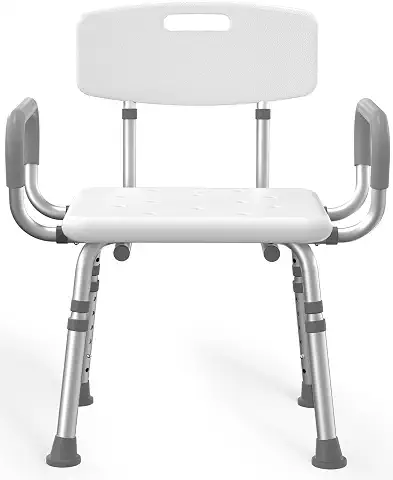
1. Adjustable Shower Chair with Armrests — Best Overall
This chair earns the top spot because it checks every box that matters for elderly and disabled users without asking for any compromise. The frame uses a rust-resistant build that holds up to daily wet exposure far better than basic steel, and every leg adjusts independently, so it sits level even on a shower pan with a noticeable slope toward the drain.
The wide, contoured seat is comfortable enough for a full shower routine, and the drainage design keeps standing water from pooling underneath, which cuts down on mildew smell over time. The armrests are positioned at a height that makes pushing up to stand genuinely easier rather than just being there for decoration, and the backrest offers real support for anyone who needs to lean back and rest partway through.
Pros
- Sturdy, rust-resistant frame construction
- Fully adjustable leg height for uneven floors
- Wide seat with good drainage design
- Supportive backrest and armrests
Cons
- Larger footprint than a basic stool
- Assembly required out of the box
Who This Chair Is Best For
This is the chair we’d recommend by default to most families researching options for the first time. It’s forgiving of imperfect bathroom conditions — an uneven floor, a slightly cramped stall, a user who needs real armrest support to stand — without asking the buyer to make trade-offs on any single feature. It’s equally suitable for someone in fairly good health who just wants a more comfortable, secure shower routine, and for someone managing more significant balance or strength limitations who genuinely depends on the armrests to get back on their feet safely.
What Sets It Apart From Cheaper Alternatives
The difference shows up most clearly after a few months of daily use. Cheaper chairs in this category often start to wobble at the joints or show early rust spots by that point, while this design’s rust-resistant frame and secure leg locks tend to hold their stability far longer. For a piece of equipment that’s relied on every single day, that long-term durability is arguably more important than any single standout feature.
2. Medline Shower Chair with Armrests — Best Trusted Medical Brand
Medline has built a reputation in the home medical equipment space over decades, and this shower chair reflects that experience. It’s a no-frills, dependable design: sturdy tubing, secure armrests, and a seat height that adjusts to fit most bathtub and shower stall depths.
What stands out most is the stability. The wide leg stance keeps the chair from tipping when someone leans to one side to reach a washcloth or grab a bar, which is a common failure point in cheaper chairs. It’s a solid pick for anyone who wants a name they already trust from other medical equipment purchases, like walkers or bathroom safety rails.
Pros
- Trusted, well-established medical equipment brand
- Wide, stable leg stance
- Simple, no-fuss adjustable height
Cons
- Fewer color/style options than newer brands
- Basic seat padding compared to premium models
Why the Brand Name Matters Here
Home medical equipment is one category where brand reputation genuinely correlates with manufacturing consistency. Medline has been supplying hospitals, rehab facilities, and home care agencies for a long time, which means their shower chairs are generally built to specifications that hold up under institutional-level daily use — a good proxy for how they’ll perform under years of home use as well.
Ideal Use Case
This chair suits households that already have other Medline or similar clinical-grade equipment at home, such as a hospital bed, walker, or transport wheelchair, and want a shower chair that matches that same level of dependable, no-surprises engineering.

3. HOMLAND Adjustable Shower Chair — Best Budget Pick
HOMLAND’s entry manages to hit most of the same feature points as pricier chairs — armrests, adjustable legs, a supportive back — while sitting at a noticeably friendlier price point. It’s a smart pick for families outfitting a bathroom for the first time or trying a shower chair without a big up-front commitment.
Build quality is a step below the top two picks, but it’s far from flimsy. The frame handles daily use well, and the rubber leg tips grip a wet shower floor reliably. If budget is the deciding factor, this is the one to start with.
Pros
- Most affordable of the full-featured chairs
- Still includes armrests and back support
- Good grip from rubber leg tips
Cons
- Slightly less refined build quality
- Less padding than premium options
Why It’s a Smart First Purchase
For families who aren’t yet sure how much a loved one will actually use a shower chair — perhaps mobility is declining gradually and it’s not clear yet how essential the equipment will become — this is a sensible way to introduce the idea without a large financial commitment. If it turns out the user needs a more heavy-duty option down the road, the lower up-front cost makes that eventual upgrade easier to justify.
What to Expect Long-Term
Expect solid performance for typical daily use, but keep an eye on the joints after a year or two of consistent wet exposure, as is true of most chairs in this lower price tier. Routine tightening of bolts, covered earlier in the maintenance section of this guide, goes a long way toward extending its usable lifespan.
4. Drive Medical Knock-Down Padded Bench — Best for Tub Users
Unlike the three chairs above, this Drive Medical option is a padded bench rather than a chair with a back. That makes it especially well suited to bathtub setups, where the wider seat surface makes transferring on and off easier, and the padded top adds comfort during longer showers or baths.
The “knock-down” design means it disassembles for flat storage or transport, which is genuinely useful for anyone who needs to travel with mobility equipment or store it away between uses in a shared bathroom. It lacks a backrest, so it’s a better fit for someone with reasonably good trunk stability who mainly needs help with balance rather than full postural support.
Pros
- Padded seat adds comfort for longer showers
- Disassembles flat for easy storage/travel
- Wide seat ideal for tub transfers
Cons
- No backrest for postural support
- No armrests included
Best Paired With
Because this bench doesn’t include armrests or a backrest, it works especially well when paired with well-positioned grab bars near the tub entry and beside the seating area, giving the user the postural and standing support the bench itself doesn’t provide directly.
A Note on Tub Transfers
The wider seat surface here genuinely changes the transfer experience compared to a standard chair. Rather than lifting a leg high over a tub wall while balancing on the other foot, the user can sit on the bench outside the tub and slide sideways into position, which is a meaningfully safer motion for anyone with hip replacements or significant joint stiffness.

5. Soundfuse Aluminum Shower Chair — Best Lightweight/Travel Option
The Soundfuse chair’s biggest selling point is its aluminum frame, which cuts weight dramatically compared to steel alternatives without sacrificing stability once it’s set up. That makes it an easy pick for anyone who needs to move the chair in and out of a shower stall regularly, take it along when visiting family, or simply prefers a chair that’s easier to lift and clean around.
Because it’s lighter, it’s worth double-checking the weight capacity against the intended user before buying, since lightweight frames sometimes carry slightly lower limits than heavier steel designs. For most users, though, it holds up well and offers a nice middle ground between a compact stool and a full-featured heavy chair.
Pros
- Lightweight aluminum frame, easy to move
- Corrosion-resistant for long-term daily use
- Compact enough for smaller bathrooms
Cons
- Check weight capacity carefully before buying
- Fewer premium comfort features than heavier chairs
Great for Multi-Generational or Shared Households
In homes where more than one person might need the chair at different times, or where it needs to be moved between an upstairs and downstairs bathroom, the light aluminum build here is a genuine practical advantage. It’s far easier for a family caregiver to relocate this chair single-handedly compared to a heavier steel-framed alternative.
A Word on Stability Despite the Light Weight
It’s a fair question to ask whether a lighter chair sacrifices stability, and the honest answer is: not meaningfully, once it’s assembled and its feet are set on a level, non-slip surface. The wide leg stance compensates well for the reduced frame weight, though as with any chair, a non-slip mat underneath adds an extra layer of security worth considering.

Setting a Realistic Budget
Shower chairs span a fairly wide price range, and it helps to understand what that spread actually reflects before assuming a higher price automatically means a better product.
Entry-Level Chairs
At the lower end, chairs are typically simpler in design — often lacking full height adjustability on every leg, or using thinner-gauge frame material. They can still be perfectly serviceable for lighter-duty use or as a starting point while a family evaluates longer-term needs.
Mid-Range Chairs
This is where most of the picks in this guide sit, offering the core combination of adjustable legs, armrests, a backrest, and rust-resistant construction that covers the needs of the large majority of elderly users without paying for unnecessary extras.
Premium and Specialty Chairs
Higher-priced options usually add features like extra-wide bariatric-rated frames, premium padding, rolling wheelbases for caregiver-assisted transport, or wall-mounted permanent installations. These make sense for specific situations — significant mobility limitations, higher weight capacity needs, or a bathroom being renovated from the ground up — but aren’t necessary for the average user.
Thinking About Cost Per Year of Use
It’s worth reframing the purchase decision around expected lifespan rather than sticker price alone. A well-built mid-range chair that lasts five years for roughly the same total cost as replacing two cheaper chairs over the same period is the better long-term value, even if the initial price tag looks higher.
Choosing the Right Size & Weight Capacity
Getting the sizing right matters just as much as picking a well-built chair. A seat that’s too small feels unstable and can leave hips unsupported; a seat that’s too large may not fit inside a smaller shower stall or tub at all.
Measure the Space First
Before ordering anything, measure the width and depth of the shower stall or tub, including the swing of the door if the enclosure has one. Compare that against the chair’s footprint, and make sure there’s still room to move around it comfortably.
Match Seat Height to the User
A good rule of thumb: when seated, the user’s knees should sit roughly level with their hips, or slightly lower. Too high, and the feet dangle without solid footing; too low, and standing back up becomes far harder on the knees and hips.
Weight Capacity Margin
As mentioned earlier, choose a chair rated well above the user’s current weight. A buffer of at least 50–75 lbs above actual body weight is a sensible minimum, since sitting down and standing up both generate more force than simply standing still.
If the household also uses a separate transfer bench with armrests as a preferred style, our dedicated review of shower chairs with arms narrows the field down further with size-specific notes.
Accounting for Growth Room and Future Needs
It’s worth thinking a step ahead when sizing a chair, particularly for someone whose mobility may continue to decline gradually. Choosing a chair with a bit more width and a slightly higher weight capacity than strictly necessary today can mean it still fits comfortably a year or two down the line, saving a second purchase down the road.
Double-Checking Doorway and Entry Clearance
Beyond the shower stall itself, make sure the chair can actually get through the bathroom doorway if it needs to be assembled inside a small space, and that there’s enough room to maneuver it into position without repeatedly bumping into fixtures. This sounds like a minor detail until it turns into a frustrating surprise on delivery day.
Installation & Safety Setup Tips
Even the best shower chair won’t do its job if it’s set up carelessly. A few minutes of setup care goes a long way toward making the chair genuinely safe day to day.
Level the Legs
Because shower floors are sloped to drain, always adjust each leg individually rather than assuming a uniform setting will work. Rock the chair gently once assembled to check for any wobble before it’s used for the first time.
Position Away from the Water Stream
Placing the chair slightly to the side of the direct water stream, rather than dead center, keeps water from pooling excessively around the front legs and helps the user stay a little more in control of temperature and spray direction.
Pair with Grab Bars
A shower chair works best as part of a broader safety setup, not as a stand-alone fix. Properly installed grab bars near the entry point and beside the seat give an extra point of stability during transfers in and out of the chair.
Check the Water Pressure
Weak water pressure can make rinsing shampoo or soap awkward for someone seated lower than a standing shower head position. If pressure has always felt underwhelming in your bathroom, this guide on how to increase shower water pressure is worth a look before or after adding a chair.
Consider the Shower Head Setup
A handheld shower head on a slide bar makes a huge difference once someone is seated, since it lets the user direct water exactly where it’s needed rather than relying on a fixed overhead spray. Pairing a new chair with an upgraded head from our best shower heads guide, or a combo unit from our best dual shower head combo roundup, is a common and worthwhile upgrade at the same time.
Test the Chair Before the First Real Shower
Once assembled, it’s worth doing a dry run: have the user sit down and stand back up a few times using the armrests, with a caregiver nearby, before ever turning the water on. This confirms the height feels right and that the standing motion feels stable, without the added complication of a wet floor and running water during that first test.
Mind the Door Swing and Curtain
In smaller shower stalls, double-check that a swinging door or a shower curtain doesn’t catch on the chair’s armrests or backrest. A curtain that clings to a wet chair frame during use can become an unexpected snagging hazard, so it’s worth arranging the curtain or door path with the chair in place before relying on the setup daily.
Check the Squeegee and Drying Routine
Keeping the floor around the chair as dry as reasonably possible between uses reduces slip risk further. A quick squeegee pass after each shower, covered well in our guide to best shower squeegees, helps keep both the floor and the chair’s legs drier and less prone to soap film buildup.
Protect the Caregiver’s Body Too
If a caregiver is regularly assisting with transfers in and out of the chair, it’s worth paying attention to their own posture and body mechanics as well. Bending and twisting repeatedly to help someone into a low seat takes a toll over months and years. Positioning the chair at a height that allows the caregiver to assist while keeping their back reasonably straight, rather than deeply hunched over, protects both people in the routine — not just the person being cared for.
Have a Plan for Emergencies
For users showering independently, it’s worth having a simple plan in place in case something goes wrong — a phone within reach outside the shower, a call button system, or a household norm of checking in after a set amount of time. A shower chair meaningfully lowers fall risk, but having a backup plan in place adds one more layer of peace of mind for everyone involved.
Cleaning & Maintenance
A shower chair sits in one of the wettest, soapiest environments in the home, so a bit of routine care keeps it safe and pleasant to use for years rather than months.
Wipe Down After Each Use When Possible
A quick wipe with a cloth after showering prevents soap scum and mineral buildup from settling into seams and joints, where it’s much harder to remove later.
Deep Clean Weekly
A mild soap solution or a diluted vinegar mix works well on most plastic and aluminum shower chairs. Avoid harsh abrasive scrubbers on padded or textured seats, since they can wear down grip texture over time. If hard water buildup becomes a recurring problem on the chair or the surrounding shower walls, our guide on removing hard water stains in the shower covers effective, non-abrasive methods.
Check Bolts and Joints Regularly
Vibration and repeated weight-bearing use can gradually loosen bolts on any chair with moving or adjustable parts. A monthly check-and-tighten routine keeps everything solid.
Watch for Rust or Corrosion
Even rust-resistant frames benefit from periodic inspection, especially around welds and joints. Catching early corrosion means it can usually be treated before it compromises structural integrity.
For broader upkeep of the shower itself alongside the chair, our general shower maintenance guide rounds out a full seasonal cleaning routine, and our piece on cleaning shower grout without scrubbing is especially handy since grout lines near the chair’s feet tend to collect grime fastest.
Drying the Chair Between Uses
Where space allows, letting the chair air dry rather than leaving it sitting in a puddle of standing water helps prevent mildew and slows mineral buildup on the legs and feet. If the bathroom stays humid most of the day, a few minutes with the door propped open or a fan running after showering makes a noticeable difference over weeks and months.
Replacing Worn Rubber Feet
The rubber tips on chair legs wear down gradually with daily use, and once they start to harden or crack, their grip on a wet floor weakens considerably. Most manufacturers sell replacement feet separately, and swapping them out periodically is a small, inexpensive way to keep the chair’s non-slip performance at its original level.
Storing the Chair When Not in Constant Use
For chairs used intermittently rather than daily, storing them fully dry in a well-ventilated spot prevents the kind of prolonged dampness that encourages mold growth, particularly in padded or textured seat models.
Shower Chair vs. Bench vs. Stool: Which Is Right for You?
| Feature | Shower Chair | Transfer Bench | Basic Stool |
|---|---|---|---|
| Backrest | Usually yes | Rarely | No |
| Armrests | Often included | Sometimes | No |
| Best for tub transfers | Limited | Excellent | Poor |
| Footprint | Moderate | Large | Small |
| Best user profile | Moderate mobility limits | Significant balance/hip issues | Mostly steady, occasional support |
If a walk-in shower stall is being used rather than a tub, teak-style benches are also worth a look for a warmer, more furniture-like feel; our best teak shower bench guide covers that style in depth for anyone weighing aesthetics alongside function.
When a Combination Approach Makes Sense
Some households end up using more than one seating solution depending on the task at hand. A full chair with a backrest might live in the main shower for daily use, while a simple stool sits nearby for quick tasks like shaving or applying lotion where full back support isn’t necessary. There’s no rule that says a single piece of equipment has to cover every situation.
Reassessing the Choice Over Time
Mobility needs aren’t static, and it’s worth periodically reassessing whether the current seating choice still fits. Someone who started with a basic stool a year ago may benefit from upgrading to a full chair with armrests as balance or strength changes, and someone recovering from a temporary injury may eventually be able to step back down from a transfer bench to a standard chair once healing is complete.
Tips for Caregivers and Family Members
If you’re setting up a shower chair for a parent, spouse, or client rather than for yourself, a few extra considerations are worth keeping in mind.
Involve Them in the Decision
Independence matters deeply to most older adults, and a chair that feels forced on them is less likely to get used consistently. Walking through a few options together, even informally, tends to produce much better buy-in than simply presenting a finished purchase.
Do a Trial Run Together
The first few uses of a new shower chair are the right time for a caregiver to be nearby, both to confirm the setup is stable and to help build confidence with the sit-to-stand motion using the armrests.
Watch for Related Sensitivities
If the person you’re caring for has a new tattoo, recent stitches, or another temporary condition, showering routines may need short-term adjustments regardless of the chair itself; our guides on showering with stitches and showering with a new tattoo cover those specific situations.
Think About Water Temperature Preferences
Some older adults gravitate toward warmer showers for joint comfort, while others find warmth lowers their blood pressure uncomfortably. Our comparison of cold showers versus hot showers is a useful reference if temperature preference is part of the conversation.
Recognize the Signs That More Support Is Needed
Even with a shower chair in place, it’s worth staying alert to signs that additional support has become necessary — extra time spent standing to steady balance before sitting, hesitation or visible anxiety before starting the shower, or gripping the chair or wall tightly during transfers. These signals often mean it’s time to revisit the setup, whether that means adding a second grab bar, switching to a bench-style seat for tub transfers, or having a caregiver present during bathing rather than nearby but out of the room.
Balancing Safety With Dignity
It’s worth acknowledging that conversations about bathroom safety equipment can feel uncomfortable for both the caregiver and the person receiving care. Framing a shower chair as a comfort upgrade — a chance to sit and relax rather than stand through the whole routine — tends to land better than framing it purely around fall risk or aging. Small language choices like this can make a real difference in how willingly the equipment gets adopted and used consistently.
Keep a Simple Routine Written Down
For caregivers who aren’t present for every shower, writing out a brief, simple routine — how to adjust the chair legs if needed, where the non-slip mat goes, which grab bar to use first — helps other family members or rotating aides maintain a consistent, safe setup even when the primary caregiver isn’t the one assisting that day.
Real-World Scenarios: Matching a Chair to the Situation
Sometimes it’s easier to picture the right chair by thinking through a specific situation rather than a list of abstract features. Here are a few common scenarios and how the options in this guide tend to map onto them.
Scenario: Recovering From Hip Replacement Surgery
Someone recovering from hip surgery typically has strict restrictions on hip flexion angles and can’t easily step over a tub wall for weeks or months. In this situation, a transfer bench like the Drive Medical Knock-Down Padded Bench tends to be the safest option, since it allows a seated slide transfer rather than any high-stepping motion.
Scenario: A Parent Living Independently With Mild Arthritis
For an older adult who’s still largely independent but dealing with joint stiffness and occasional balance concerns, a full-featured chair with armrests and a backrest — such as the Adjustable Shower Chair with Armrests or the Medline model — offers the daily reassurance of a stable seat without over-medicalizing the bathroom.
Scenario: A Shared Bathroom in a Multi-Generational Household
When a shower chair needs to be moved in and out of the way for other household members, a lightweight, easy-to-store option like the Soundfuse Aluminum Shower Chair minimizes the daily hassle of accommodating multiple users with different needs in the same space.
Scenario: Budget-Constrained First-Time Purchase
Families testing the waters with a shower chair for the first time, without full certainty about how much it will be used long-term, often do well starting with a more affordable option like the HOMLAND Adjustable Shower Chair before committing to a pricier upgrade later if needed.
Scenario: A Caregiver Assisting With Bathing
When a caregiver is directly involved in the bathing process rather than the user showering independently, a wider, sturdier chair with easy-to-grip armrests makes the assisted transfer safer for both parties, reducing strain on the caregiver’s back and joints as well as the user’s.
Quick Buying Checklist
Before finalizing a purchase, run through this short checklist to confirm the chair under consideration truly fits the situation:
- Measured the shower stall or tub width and depth against the chair’s footprint
- Confirmed the weight capacity comfortably exceeds the user’s actual weight
- Checked for individually adjustable legs to handle a sloped floor
- Verified the presence of rubber non-slip feet
- Decided whether a backrest and armrests are needed, based on the user’s balance and strength
- Considered assembly difficulty relative to who will be setting it up
- Thought through storage space when the chair isn’t in use
- Planned for companion upgrades like grab bars, a non-slip mat, or a handheld shower head
Working through each of these points takes only a few minutes but meaningfully lowers the odds of an unhappy return or a chair that ends up unused in a closet.
Common Mistakes to Avoid When Buying a Shower Chair
After all the research and comparison shopping, it’s easy to still get tripped up by a handful of avoidable mistakes. Here are the ones that come up most often.
Buying Based on Price Alone
The cheapest chair on the page isn’t necessarily a bad choice, but choosing purely on price without checking weight capacity, stability, and reviews specifically mentioning elderly or disabled use can lead to disappointment. A few extra dollars spent on a well-reviewed, purpose-built chair is almost always worth it compared to a generic option that wasn’t designed with safety as the priority.
Ignoring the Bathroom’s Actual Dimensions
It’s tempting to pick a chair based on looks or reviews without measuring the actual shower stall or tub first. A chair that looks reasonably sized in photos can turn out to be too wide for a smaller stall, or too tall to comfortably clear a low showerhead.
Skipping the Weight Capacity Check
This bears repeating because it’s so often overlooked: always verify the weight rating against the intended user’s actual weight, with a healthy buffer. Manufacturers test these ratings under controlled conditions, and real-world use — including the extra force from sitting down or standing up — deserves a margin of safety.
Not Considering Who Will Be Assembling It
Some chairs require more involved assembly than others. If the person setting it up has limited strength or dexterity themselves, a tool-free or minimal-assembly model may be worth prioritizing, even if it means giving up a slightly more feature-rich option.
Forgetting About the Rest of the Bathroom
A shower chair alone doesn’t solve every safety concern. Skipping companion upgrades like grab bars, a non-slip mat, and adequate water pressure means the chair is working harder than it needs to, and the overall safety improvement ends up smaller than it could be.
Not Testing Stability Before Relying on It Fully
Once a new chair is assembled, it’s worth having a caregiver or family member nearby the first several times it’s used, simply to confirm there’s no unexpected wobble and that the user feels genuinely confident sitting down and standing back up.
Choosing Style Over Substance
A sleek-looking chair with minimal armrest coverage or a narrow seat might look more modern in photos, but function should always come before appearance for equipment that’s directly tied to daily safety. If a choice comes down to a nicer-looking chair versus one with better support features, the support features should win.
Assuming One Chair Fits Every Household Member
In households where more than one person might use the same shower chair — a spouse, a visiting parent, rotating caregivers — it’s worth confirming the chair’s weight range and seat width accommodate everyone who might realistically sit in it, not just the primary intended user.
Frequently Asked Questions
What is the best type of shower chair for an elderly person with balance problems?
A chair with both a backrest and armrests is generally the safest choice for someone with balance concerns, since it offers support in three directions — behind, on both sides, and underneath. For anyone with significant hip or knee limitations, a transfer bench that spans the tub wall may be an even better fit, since it removes the need to step over a tub edge entirely.
How much weight can a shower chair typically hold?
Weight capacities vary widely by model, typically ranging from around 250 lbs on lighter aluminum designs up to 400 lbs or more on heavy-duty steel frames. Always check the specific listing rather than assuming, and choose a model with a comfortable margin above the intended user’s weight.
Do shower chairs work in both showers and bathtubs?
Standard shower chairs with four legs can sit inside most walk-in showers and many bathtubs, provided the tub is wide enough. Transfer benches are specifically designed for bathtubs, since two legs rest outside the tub for a seated transfer, while the other two sit inside.
Are shower chairs covered by insurance or Medicare?
Basic shower chairs are typically classified as a convenience item rather than durable medical equipment, so standard Medicare usually doesn’t cover them, though some Medicare Advantage plans or supplemental insurance policies may offer partial reimbursement. It’s worth checking directly with the specific plan, since coverage rules vary.
How do I stop a shower chair from sliding?
Rubber non-slip tips on all four legs are the first line of defense, and nearly every quality chair includes them. A textured non-slip mat underneath the chair adds another layer of grip, particularly on very smooth tile or fiberglass shower pans.
Should the shower chair have a backrest?
For most elderly users, yes. A backrest supports posture during a longer shower and reduces the risk of leaning too far and losing balance. The main exception is someone with strong trunk stability who just wants a simple stool for brief tasks like foot washing.
How often should a shower chair be replaced?
With regular cleaning and periodic bolt checks, a good quality shower chair can last several years. Replace it sooner if you notice cracking in the seat, rust weakening any joints, or wobbling that adjusting the legs doesn’t fix.
Can a shower chair be used by someone in a wheelchair?
Rolling shower chairs are specifically designed for this purpose, allowing a caregiver to wheel someone directly from a bedroom into the shower stall. Standard shower chairs generally require the user to transfer independently or with assistance from a wheelchair to the seat.
What’s the difference between a shower chair and a shower bench?
A shower chair typically has four legs and often includes a backrest and armrests, while a bench is usually longer, wider, and designed either as a standalone seat or as a transfer bench that spans a tub’s edge. Benches generally suit users who need more surface area or a tub transfer solution.
Do shower chairs come in different sizes for smaller bathrooms?
Yes, many manufacturers offer compact or narrower models specifically for smaller shower stalls. Measuring the available space before ordering is the best way to avoid choosing a chair that doesn’t comfortably fit.
Is it safe to use a shower chair every day?
Yes, daily use is exactly what most shower chairs are designed for. Regular wipe-downs and periodic deeper cleaning, as covered earlier in this guide, keep a daily-use chair both hygienic and structurally sound.
What accessories pair well with a shower chair?
A handheld shower head on a slide bar, properly placed grab bars, and a non-slip mat are the three most common and useful pairings. Together with a well-chosen chair, they form a complete bathroom safety setup rather than a single isolated fix.
Can a shower chair be used outdoors, like for a portable camping shower?
Standard shower chairs designed for home bathrooms aren’t typically built for outdoor or portable use, though a lightweight aluminum model could be repurposed carefully for something like a portable shower tent setup if the ground is level and stable. For genuine outdoor or travel use, it’s worth checking that the chair’s feet won’t sink into soft or uneven ground.
How long does it typically take to get used to using a shower chair?
Most users adjust within the first week of regular use, and many report feeling noticeably more confident in the shower almost immediately simply because they’re no longer standing unsupported. A short adjustment period for finding the ideal seat height and position is normal and expected.
Final Verdict
A shower chair is one of the most affordable, highest-impact upgrades a household can make for an aging parent, spouse, or for anyone managing reduced mobility. It won’t solve every bathroom safety concern on its own, but paired with grab bars, a non-slip mat, and a shower head that’s easy to direct while seated, it turns one of the riskiest daily routines into a genuinely manageable one.
For most households, the Adjustable Shower Chair with Armrests is the strongest all-around pick thanks to its sturdy build and fully adjustable legs, while the HOMLAND Adjustable Shower Chair is the smart choice if budget is the deciding factor, and the Drive Medical Knock-Down Padded Bench stands out specifically for households using a bathtub rather than a walk-in shower.
Whichever model fits your bathroom and your needs best, don’t wait for a fall to prompt the purchase — a shower chair is far cheaper and far less disruptive to add proactively than to deal with the aftermath of an avoidable accident.
Take a few minutes to measure the bathroom, confirm the weight capacity that fits your situation, and decide how much armrest and backrest support the intended user genuinely needs. Getting those three details right up front makes almost any of the five chairs in this guide a solid, safe choice for years of daily use. And remember that the chair itself is only one part of the picture — grab bars, a non-slip mat, and a shower head that’s easy to direct while seated round out a bathroom setup that genuinely reduces risk rather than just looking safer on paper.
Bathroom safety upgrades like this one tend to pay for themselves many times over, not in dollars but in confidence — the confidence to keep showering independently, and the peace of mind for family members who no longer have to worry quite so much every time the water turns on.