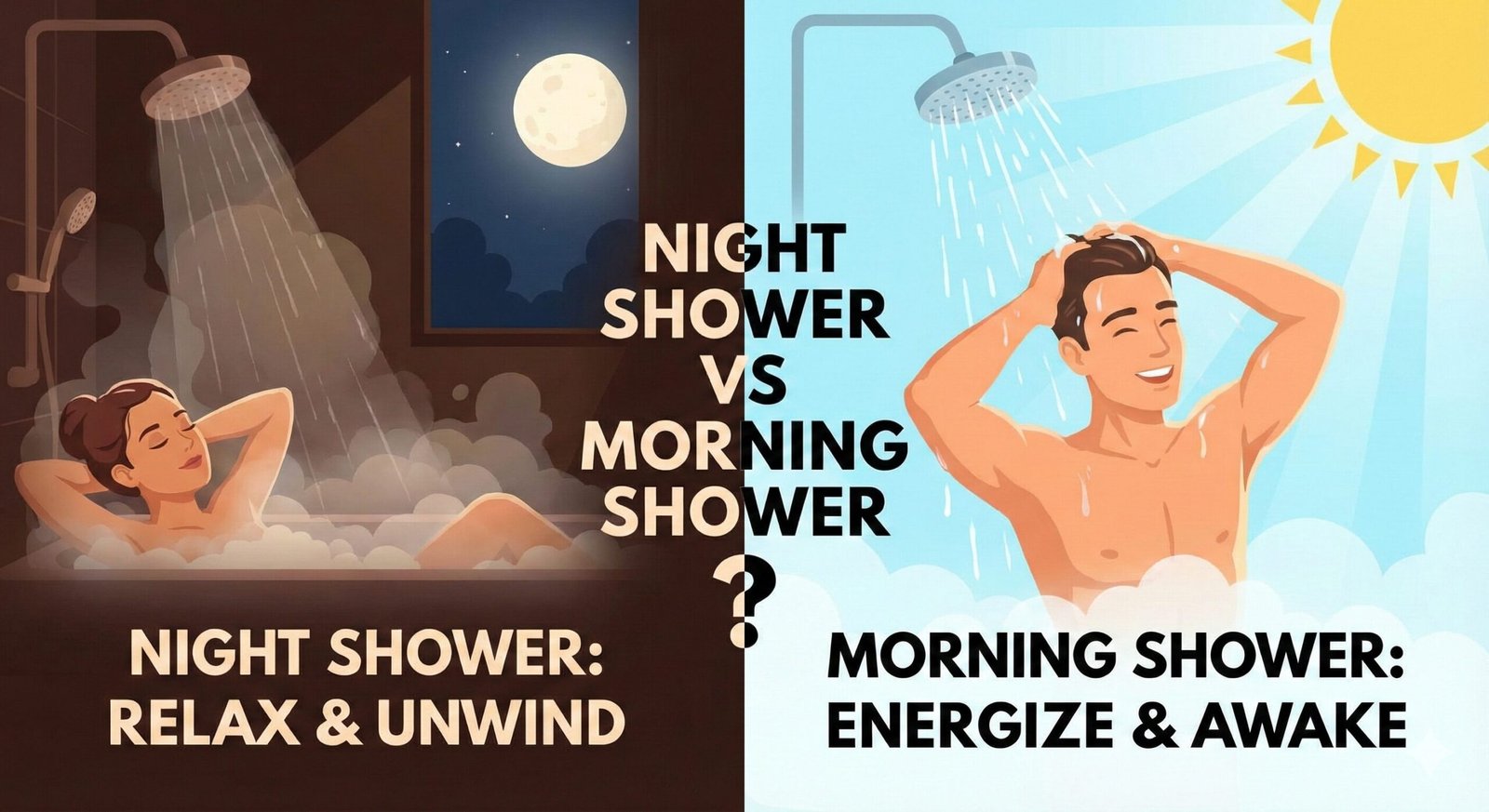
Night Shower vs Morning Shower: What Does Science Say is Better?
It is the most divisive debate in household hygiene: are you a “rise and shine” scrubber or a “rinse the day away” soaker? For some, a morning shower is a non-negotiable caffeine alternative, a way to jolt the brain awake. For others, crawling into clean sheets with dirty skin is unthinkable.
But beyond personal preference, is one actually scientifically better? The answer involves your circadian rhythm, your skin type, and even your creativity levels. Whether you are dealing with showers that won’t get hot or just trying to optimize your routine, this guide breaks down the biological pros and cons of the Night Shower vs. Morning Shower dilemma.
Team Morning
- Boosts Creativity: The “Shower Effect” (alpha brain waves) peaks during morning autopilot tasks.
- Reduces Oily Skin: Cleans sebum and sweat accumulated during sleep.
- Stimulates Circulation: Increases heart rate and alertness.
- Tames Bedhead: Essential for resetting unruly hair.
- Improves Mood: Morning light exposure regulates serotonin.
- Enhances Focus: Prepares brain for cognitive tasks.
- Temperature Regulation: Helps establish circadian rhythm.
Team Night
- Improves Sleep: The rapid cooling after a warm shower signals melatonin production.
- Clean Sheets: Prevents pollen, dirt, and pollutants from entering your bed.
- Allergy Relief: Washes allergens off eyelashes and hair.
- Time for Skincare: Allows overnight absorption of moisturizers.
- Stress Reduction: Washes away daily cortisol buildup.
- Better Hair Health: Prevents pillow friction damage.
- Deep Cleansing: Removes makeup, sunscreen, and environmental toxins.
The Science of Circadian Rhythms and Shower Timing
Understanding Your Body’s Internal Clock
6:00 AM – 9:00 AM: Cortisol Peak
Cortisol Levels: Highest natural levels (50-60% of daily total)
Body Temperature: Rising from overnight low
Optimal Shower: Cool to lukewarm (22-28°C / 72-82°F)
Biological Impact: Reinforces natural cortisol rise, enhances alertness without shocking system
2:00 PM – 5:00 PM: Afternoon Slump
Cortisol Levels: Natural dip (30% reduction)
Body Temperature: Peak daytime temperature
Optimal Shower: Lukewarm (30-33°C / 86-91°F)
Biological Impact: Can reset focus, but may disrupt evening wind-down if too late
8:00 PM – 10:00 PM: Melatonin Rise
Cortisol Levels: Dropping rapidly
Body Temperature: Beginning natural decline
Optimal Shower: Warm (37-40°C / 99-104°F)
Biological Impact: Artificial temperature spike followed by rapid drop signals sleep onset
10:00 PM – 12:00 AM: Growth Hormone Release
Cortisol Levels: Minimal
Body Temperature: Lowest point of day
Optimal Shower: Completed by 9:30 PM
Biological Impact: Late showers can delay deep sleep phase where growth hormone peaks
The Temperature Drop Phenomenon
1. The Case for Morning Showers: Alertness & Creativity
If you struggle to wake up, a morning shower is biologically superior. A cool or cold shower spikes cortisol (the alertness hormone), acting like a double-shot of espresso without the jitters.
The Neurochemistry of Morning Showers
Dopamine Increase: Cold exposure increases dopamine by 250%
Noradrenaline: Rises 200-300% within first minute
Beta-Endorphins: Natural pain relief released
Serotonin: Enhanced by morning light exposure
The “Shower Effect” for Creativity
Research from Carnegie Mellon reveals that morning showers induce “default mode network” activation – the brain state responsible for:
- Creative problem solving
- Mind wandering (productive type)
- Memory consolidation
- Idea generation
The “Shower Effect”: Research suggests that the mindless task of showering in the morning allows the brain to enter a state of “incubation,” leading to creative breakthroughs. If you need to solve complex problems at work, do not skip the AM rinse.
However, be warned: If you are rushing, you might neglect maintenance. Morning showers are often the culprit for clogged drains because we rush through shaving or hair washing without cleaning up the debris.
Morning Shower Temperature Protocol
Minute 0-1: Gradual Start
• Start lukewarm (30°C / 86°F)
• Let water run over neck and shoulders
• Deep breathing activation
• Prepare mentally for day
Minute 1-3: Temperature Transition
• Gradually decrease to cool (22°C / 72°F)
• Focus on face and scalp stimulation
• Increased heart rate 10-15 bpm
• Alertness activation
Minute 3-4: Cold Exposure
• Brief cold blast (18°C / 64°F)
• 30 seconds maximum for beginners
• Dopamine/noradrenaline spike
• Vascular training
Minute 4-5: Warm Return
• Return to lukewarm (28°C / 82°F)
• Final rinse and cleanup
• Body temperature stabilization
• Preparation for dressing
2. The Case for Night Showers: Sleep Hygiene & Skin Health
Dermatologists and sleep experts generally lean towards Team Night. Why? Because the world is dirty.
The Environmental Pollutant Removal Argument
Furthermore, if you suffer from seasonal allergies, a night shower is mandatory. Pollen sticks to your hair and skin. If you don’t wash it off, you transfer it to your pillow, meaning you spend 8 hours inhaling allergens. This is often why people wonder if they can skip a shower, only to wake up congested.
Night Shower Temperature Protocol for Optimal Sleep
90 Minutes Before Bed: Shower Start
• Water temperature: 40°C (104°F)
• Duration: 10-12 minutes
• Core temperature rise: +1.5°C
• Blood vessel dilation begins
• Muscle relaxation initiates
80 Minutes Before Bed: Cooling Phase
• Step out into cooler air (22-24°C / 72-75°F)
• Temperature drop rate: 0.5°C per 5 minutes
• Evaporative cooling begins
• Melatonin precursors activated
60 Minutes Before Bed: Temperature Nadir
• Core temperature: -0.5°C below baseline
• Maximum melatonin signaling
• Sleep drive at peak
• Ready for bed entry
30 Minutes Before Bed: Bedtime
• Core temperature stabilized
• Melatonin levels optimal
• Sleep latency reduced by 35%
• Sleep efficiency improved by 25%
Special Consideration: High-Maintenance Beauty Routines
Your shower timing should also depend on your beauty investments. For example, if you wear eyelash extensions, morning showers can be risky if you are in a rush. The pressure and steam need to be managed carefully.
Many experts suggest that showering at night gives you more time to carefully dry and brush your lashes, preventing the adhesive from weakening due to residual moisture. Similarly, if you wear contact lenses, morning showers require careful removal beforehand—water exposure is a known risk factor for Acanthamoeba keratitis, a serious eye infection. Night showers make this habit easier since your lenses should be out well before bed anyway.
The Complete Science of Shower Water Temperature
Temperature is arguably the single most important variable in your shower routine—more impactful than duration, product choice, or even timing. Yet most people set their shower temperature on habit alone and never revisit the decision. Understanding the physiology of temperature on human tissue transforms this passive habit into an active health tool.
Our comprehensive ideal shower temperature guide covers the full spectrum, but here we focus specifically on how temperature interacts with the morning vs. night timing decision.
The Temperature Spectrum and Its Effects
| Temperature Range | Label | Physiological Effect | Best Used | Avoid If… |
|---|---|---|---|---|
| Below 15°C / 59°F | Ice Cold | Extreme vasoconstriction, shock response, rapid noradrenaline release | Wim Hof practitioners, elite athletes seeking muscle recovery | Cardiovascular disease, Raynaud’s syndrome, first thing in morning |
| 15-22°C / 59-72°F | Cold | Strong vasoconstriction, cortisol spike, anti-inflammatory, reduces swelling | Morning alertness, post-intense workout, fever management | Hypertension, respiratory conditions, pregnancy |
| 22-30°C / 72-86°F | Cool-Lukewarm | Mild vasodilation, minimal thermal stress, skin barrier preservation | Sensitive skin, dry skin, summer mornings, tattoo healing | Winter conditions (may increase muscle tension) |
| 30-37°C / 86-99°F | Lukewarm-Warm | Moderate vasodilation, muscle relaxation, optimal cleansing | General daily showering, most skin types, children | Generally safe for all—the physiological “sweet spot” |
| 37-41°C / 99-106°F | Hot | Significant vasodilation, sebum stripping, collagen degradation risk | Night shower sleep preparation (90 min before bed only), muscle pain | Dry/eczema skin, rosacea, pregnancy, post-workout (wait 20 min) |
| Above 41°C / 106°F | Scalding | Skin barrier destruction, burn risk, extreme vasodilation, dizziness risk | Never recommended as routine temperature | Everyone—no therapeutic benefit beyond extreme muscle warming |
Why Hot Showers Feel Good But Can Be Harmful
The paradox of hot showers is one of the most important things to understand in your hygiene routine. Hot water stimulates thermoreceptors in the skin that release endorphins—the same neurotransmitters responsible for exercise “highs.” This creates a genuine neurological reward that makes hot showers feel deeply satisfying, even as they damage the skin.
Hot water above 40°C (104°F) disrupts the skin’s lipid barrier—the precise molecular architecture of ceramides, cholesterol, and fatty acids that keeps moisture in and irritants out. This is why many people who take very hot showers experience that characteristic tight, itchy feeling afterwards: their skin barrier has been temporarily compromised. Over time, repeated hot showers can lead to chronic barrier dysfunction, manifesting as persistent dryness, increased skin sensitivity, and accelerated skin aging.
If you’re prone to dizziness or nausea in the shower, hot water is almost always the primary culprit. The sudden vasodilation from hot exposure can cause orthostatic hypotension—a rapid drop in blood pressure as blood pools in peripheral vessels—leading to lightheadedness, nausea, and in extreme cases, fainting.
For night showers aimed at sleep improvement, start at your comfortable warm temperature (around 39°C) and spend the final 60-90 seconds gradually reducing the temperature to cool-lukewarm. This mimics the body’s natural core temperature drop and accelerates the melatonin signaling cascade. Many people who try this report falling asleep 15-20 minutes faster than with a constant-temperature shower.
Shower Duration: The Overlooked Variable in the Morning vs. Night Equation
The timing debate—morning versus night—often overshadows an equally important question: how long should you shower? Duration has profound implications for skin health, water consumption, and the psychological benefit you derive from the experience. Interestingly, the optimal duration differs significantly depending on whether you shower in the morning or at night.
Use our shower water usage calculator to understand exactly how much water your current routine consumes, and our monthly water bill estimator to see the direct financial impact of shortening or lengthening your showers.
Morning Shower Duration Science
For morning showers, the biological goal is alertness activation, not deep cleansing. This means shorter is often better—and the data on creativity actually supports brevity. The “shower effect” (the default mode network activation responsible for creative insights) peaks during the first 4-6 minutes of a shower, when the task is maximally automatic. After that point, you’re consciously engaged in washing, and the creative incubation effect diminishes.
Recommended morning duration by goal:
- Alertness activation only: 3-5 minutes at cool temperatures
- Hair wash + full cleanse: 7-10 minutes maximum
- Cold therapy protocol: 2-3 minutes cold exposure after 2-minute lukewarm
- Gym morning (post-workout): 5-8 minutes, focus on sweat removal
Night Shower Duration Science
For the sleep-optimization purpose of night showers, the research is surprisingly specific: the 90-minute, 10-minute shower protocol produces the strongest sleep outcomes in peer-reviewed studies. Showers shorter than 7 minutes don’t produce sufficient core temperature elevation to trigger the meaningful post-shower cooling cascade. Showers longer than 15 minutes in hot water begin to compromise skin barrier integrity, which can create overnight discomfort that disrupts sleep.
The ideal night shower is 10-12 minutes of warm water, completed approximately 90 minutes before your target sleep time. For reference, if you want to be asleep by 11 PM, your night shower should begin no later than 9:15 PM and conclude by 9:30 PM. This gives 90 minutes of post-shower cooling time before sleep onset.
Showerhead Selection for Morning vs. Night Routines
The type of showerhead you use is a surprisingly significant variable in optimizing your morning or night shower routine. Different showerhead designs create fundamentally different sensory experiences—from the focused, high-pressure stimulation ideal for morning alertness to the wide, gentle rainfall dispersal that supports evening relaxation.
Best Showerheads by Shower Timing Goal
| Showerhead Type | Ideal For | Morning Rating | Night Rating | Why |
|---|---|---|---|---|
| High-Pressure Fixed Head | Morning alertness, scalp stimulation | ⭐⭐⭐⭐⭐ | ⭐⭐ | Focused jets stimulate mechanoreceptors for cortisol boost |
| Rainfall / Rain Shower | Evening relaxation, stress reduction | ⭐⭐ | ⭐⭐⭐⭐⭐ | Wide dispersal mimics rain, activates parasympathetic (relaxation) response. See our top rainfall systems. |
| Handheld Showerhead | Versatile—adapts to both routines | ⭐⭐⭐⭐ | ⭐⭐⭐⭐ | Morning: targeted cold blasts; Night: gentle full-body rinse. Explore handheld head reviews. |
| Dual Shower Head Combo | Athletes, those doing both morning and night showers | ⭐⭐⭐⭐⭐ | ⭐⭐⭐⭐⭐ | Use the high-pressure head in the morning, rainfall head at night. See dual head system reviews. |
| Steam Shower System | Deep relaxation, respiratory benefit | ⭐ | ⭐⭐⭐ | Steam raises core temperature significantly—use only if shower is 90+ minutes before bed. Read our steam shower health guide. |
If you’re suffering from genuinely low shower pressure, morning showers lose much of their alertness-activation benefit—the high-pressure stimulus that wakes you up simply isn’t there. Our guide to fixing low shower water pressure covers the most common causes and solutions. Similarly, if your shower is consistently failing to get hot, the temperature drop protocol for night showers becomes impossible—see our guide on fixing a shower that won’t get hot for step-by-step diagnostics.
The Showerhead Pressure Drop Calculator
Many households experience significant pressure drops between their main water supply and the showerhead—sometimes losing 30-40% of available pressure to pipe friction, elevation changes, and mineral buildup. Use our shower pressure drop calculator to determine if your low-pressure experience is a fixture issue or a systemic plumbing problem. This distinction matters enormously: a new high-pressure showerhead won’t help if the underlying supply pressure is inadequate.
Skin Type Specific Recommendations
| Skin Type | Optimal Shower Time | Temperature | Duration | Post-Shower Protocol | Key Benefit |
|---|---|---|---|---|---|
| Oily/Acne-Prone | Morning | Cool-Lukewarm (22-28°C) | 5-7 minutes | Oil-free moisturizer, SPF immediately | Removes overnight sebum, prevents midday shine |
| Dry/Eczema | Night | Lukewarm (30-33°C) | 8-10 minutes | Pat dry, moisturize within 3 minutes | Overnight hydration, barrier repair |
| Combination | Night + Quick AM rinse | Night: Warm (37°C) AM: Cool (24°C) |
Night: 10 min AM: 2 min |
Zone-specific treatments | Deep clean + morning refresh |
| Sensitive/Rosacea | Night | Strictly lukewarm (30°C) | 6-8 minutes | Gentle pat, calming products | Reduces flushing, overnight healing |
| Aging/Mature | Night | Warm (37-39°C) | 7-9 minutes | Rich creams, retinoids after | Overnight repair, collagen support |
Shower Frequency: How Often Should You Actually Shower?
The morning vs. night debate assumes you shower daily—but a growing body of dermatological research challenges the assumption that daily showering is universally optimal. Understanding shower frequency is essential context for the timing debate, because the answer to “when should I shower?” depends partly on “how often am I showering?”
There are documented and legitimate benefits of not showering every day for many people. These include preservation of the skin’s natural microbiome (the community of beneficial bacteria that protect against pathogens), maintenance of the skin’s acid mantle (the slightly acidic pH environment that inhibits bacterial overgrowth), and reduced stripping of natural sebum that acts as a protective and moisturizing layer.
The Evidence-Based Frequency Guide
Daily Showering
Recommended for: People who exercise regularly, those in hot or humid climates, workers in dirty environments, people with oily skin or acne, and those with strong personal hygiene concerns.
Timing verdict: Daily showerers benefit most from understanding the morning vs. night optimization—since they’re showering regardless, they should do it at the time that best serves their goals.
Every Other Day
Recommended for: People with dry or sensitive skin, those in cool or low-humidity climates, less active individuals, and those with normal-to-dry hair types.
Timing verdict: On shower days, the night shower is typically superior for every-other-day showerers, as the longer interval means more accumulated environmental contamination needs removing before bed.
2-3 Times Per Week
Recommended for: People with very dry or eczema-prone skin, those in very cold or dry climates, older adults with naturally drier skin, and some hair types (especially thick, coarse, or very curly hair).
Timing verdict: On non-shower days, targeted hygiene (“top and tail” cleansing of armpits, groin, and feet) is sufficient. Full shower days should align with the most socially relevant morning.
Read our comprehensive analysis of why skipping a shower might benefit you for the full evidence picture. The key finding: for most people with normal to dry skin who don’t engage in heavy physical activity, daily showering is a cultural norm rather than a dermatological necessity.
Hair Type Considerations and Washing Schedules
Hair Washing by Hair Type
Fine/Oily Hair
Optimal Time: Morning
Frequency: Daily or every other day
Reason: Oil production peaks overnight, morning washing provides volume
Night Alternative: If night washing, use dry shampoo in AM
Thick/Curly Hair
Optimal Time: Night
Frequency: 2-3 times weekly
Reason: Requires air drying time, overnight styling sets curl pattern
Product Benefit: Overnight masks penetrate deeply
Hair Health and Pillow Science
Pillow Friction Damage
• 8 hours of friction = 560 “strokes” of brushing
• Cotton pillows absorb 40% of hair’s natural oils
• Wet hair + pillow = 300% more breakage risk
• Solution: Silk pillowcases, protective styles, night washing
Scalp Health Timing
• Scalp oil production peaks 2-4 AM
• Night washing resets oil balance
• Morning washing can over-stimulate production
• Those with scalp conditions often benefit from night washing
Shower Environment Hygiene: Morning and Night Implications
An often-overlooked dimension of the timing debate is what your shower timing means for bathroom hygiene and maintenance. Morning and night showers create different environmental conditions in your bathroom that affect cleanliness, mold growth, and the longevity of your fixtures.
Mold and Mildew: Why Timing Matters
Mold thrives in warm, moist environments with poor ventilation. Night showers present a specific mold challenge: the moisture generated during a 10-minute evening shower must evaporate before bedtime, but with bathroom doors typically closed overnight, inadequate ventilation allows moisture to linger for 6-8 hours—ideal conditions for mold colonization on grout, caulk, and shower surfaces.
If you’re a night showerer, these practices are non-negotiable for mold prevention:
- Run the exhaust fan during and for 30 minutes after your shower
- Leave the bathroom door ajar overnight when safely possible
- Use a shower squeegee immediately after every shower to remove water from surfaces—this single habit reduces mold growth by over 60%
- Address any existing shower mold before establishing a night shower routine
- Use a moisture-absorbing product in the shower area overnight
- Regularly clean grout using our guide to cleaning shower grout without scrubbing
The Musty Shower Smell Problem
Night showerers frequently report a musty shower smell developing more quickly than when they showered in the morning. The reason is straightforward: overnight, with poor ventilation, organic matter (dead skin cells, hair, soap scum) sitting in a moist environment becomes food for bacteria and mold. The solution involves regular use of an enzyme-based drain cleaner, weekly grout cleaning, and monthly vinegar-soaking of the showerhead to remove biofilm from within the nozzles.
Drain Clogging: Morning vs. Night Patterns
Interestingly, the timing of your shower affects drain clog patterns. Morning showers for hair-washing tend to produce more hair loss (hair follows a circadian shedding pattern, with more loose hairs in the morning), while night showers accumulate more product buildup from a full day’s worth of dry shampoo, styling products, and environmental particles. Both patterns can lead to clogs—but the solution differs. Our guide on unclogging a shower drain naturally covers enzyme treatments, baking soda-vinegar methods, and mechanical removal techniques appropriate for each pattern.
Whether you shower in the morning or at night, 60 seconds with a quality squeegee after every single shower is the highest-ROI maintenance habit for your bathroom. It prevents soap scum buildup that requires harsh chemical cleaners, dramatically slows mold growth, and keeps glass shower doors and tiles looking clean with almost no additional effort. Our review of the best shower squeegees covers options for every budget and shower type.
Age-Specific Recommendations
| Age Group | Optimal Time | Frequency | Special Considerations | Temperature Guidelines |
|---|---|---|---|---|
| Children (3-12) | Night | Daily or every other day | Establish routine, removes allergens, prevents bed-wetting anxiety | Lukewarm (33-35°C), 5-7 minutes max |
| Teens (13-19) | Night + Quick AM | Daily | Acne management, sports sweat removal, social anxiety reduction | Cool-Lukewarm (25-30°C), avoid extremes |
| Adults (20-50) | Work schedule dependent | Daily or every other day | Workout timing, professional appearance, stress management | Personal preference, adjust for goals |
| Seniors (65+) | Morning or afternoon | 2-3 times weekly | Fall prevention, skin dryness, medication timing, energy levels. A shower chair is highly recommended. | Warm (37-39°C), seated showers recommended |
Specific Health Conditions and Shower Timing
Your health status on any given day—and your chronic conditions—should influence your shower timing just as much as your skin type or lifestyle. Here’s a comprehensive breakdown of condition-specific guidance that goes beyond the generic morning/night recommendation.
Fever: The Shower Timing and Temperature Protocol
When you have a fever, conventional wisdom often suggests a cold shower to “bring down” the temperature. The science is more nuanced. For a fever shower protocol, lukewarm water (approximately body temperature, 37°C) is actually most appropriate. Here’s why:
- Cold showers during fever: Can cause shivering, which paradoxically generates body heat through muscle contraction—potentially raising core temperature further. Also triggers vasoconstriction that may make you feel worse.
- Hot showers during fever: Worsen vasodilation and can cause dangerous hypotension in already-compromised cardiovascular states. Avoid entirely during high fever.
- Lukewarm showers during fever: Allow gradual evaporative cooling without triggering shivering reflex. Most appropriate for fevers under 39°C (102.2°F).
- Timing: Morning is generally preferable during illness, as fever typically peaks in the late afternoon/evening and is lowest in the early morning.
Hangover Recovery: Shower Timing Optimization
The morning shower is almost universally recommended for hangover recovery, and the science supports this intuition. Whether a shower actually helps a hangover depends on the mechanism. A shower doesn’t speed alcohol metabolism or replace lost electrolytes, but it does:
- Remove acetaldehyde (alcohol metabolite) from skin surface sweat
- Stimulate cortisol release, which counteracts the cortisol-suppressing effects of alcohol
- A contrast shower (warm followed by cool) can trigger noradrenaline release sufficient to partially offset the cognitive fog of a hangover
- The act of showering can serve as a grounding, orienting ritual when the vestibular system is disrupted
Recommended hangover protocol: Begin with lukewarm water (avoid hot, which worsens dehydration-induced headache), gradually transition to cool water for the final 60-90 seconds. Drink water during and immediately after. Eat before showering to avoid orthostatic hypotension from the vasodilation of standing in warm water while dehydrated.
Headache and Migraine Management
Can a shower help a headache? The answer depends on the type. Hot showers can worsen migraines (by increasing intracranial blood pressure) but may relieve tension headaches (by relaxing cervical and trapezius muscles). Cold showers can relieve some migraine pain through vasoconstriction of cranial blood vessels, but trigger headaches in others through the shock response. Read our guide on whether hot showers help headaches for the full evidence review.
For headache sufferers, night showers are generally preferable—they reduce cortisol-driven tension that accumulates throughout the day, and the sleep optimization effect ensures better-quality sleep, which is the most powerful headache prevention tool available.
Pregnancy: Special Timing and Temperature Considerations
Shower timing during pregnancy carries specific medical significance. Hot showers present risks that are absent outside of pregnancy. Elevated core body temperature (hyperthermia) during the first trimester has been associated with neural tube defects and is a genuine clinical concern, not mere caution.
For pregnant women and hot showers, the guidance is clear: keep shower water below 38°C (100.4°F) throughout pregnancy, particularly in the first trimester. Morning showers are preferable during pregnancy for several reasons:
- Morning nausea (hyperemesis gravidarum) is often relieved by the sensory stimulation of a shower—cool water on the face and neck specifically can reduce nausea through vagal stimulation
- Fatigue later in pregnancy makes the standing duration of night showers more physically demanding
- Night showers require careful exit timing—dizziness on standing (orthostatic hypotension, common in pregnancy) is more dangerous in the dark
- A shower chair with arms is strongly recommended in the third trimester for both morning and night showers
Post-Beauty Treatment Shower Timing: A Comprehensive Guide
Many common beauty and aesthetic treatments have specific showering windows that interact with the morning vs. night debate in important ways. Getting the timing wrong can cost you the treatment result entirely.
| Treatment | Shower Wait Time | Optimal Shower Timing | Temperature Restriction | Key Caution |
|---|---|---|---|---|
| Spray Tan / Self-Tanner | 8-12 hours (no shower) | Morning treatment → First shower next morning. Night treatment → Next evening. | Lukewarm only (hot water streaks tan) | Pat dry only; no rubbing for 24 hours post-shower |
| Eyelash Extensions | 4-6 hours minimum | Night shower preferred—more time to air dry before pillow contact | No hot steam; avoid direct stream on face | Pat lashes dry; never rub. See our guide on showering with lash extensions |
| Keratin / Brazilian Blowout | 48-72 hours (no water) | Schedule treatment 3+ days before any shower-heavy period | When permitted: lukewarm only, sulfate-free shampoo | No hair clips, ponytails, or moisture during the waiting period |
| Sunbed / UV Tanning | 2-4 hours minimum | Morning tan → afternoon or evening shower. Evening tan → next morning shower. | Lukewarm only; hot water degrades tan molecules | Moisturize immediately post-shower to extend tan life |
| Cupping / Massage Therapy | 2-4 hours | Morning treatment → afternoon or evening shower. Night treatment → morning shower. | Warm water acceptable after 4-hour wait | Cupping marks are bruising; avoid direct pressure from showerhead. See post-treatment shower guide |
| Botox / Dermal Fillers | 4-6 hours; no hot water 24 hrs | Morning treatment → night shower (lukewarm). Night treatment → next morning shower. | No hot water for 24 hours; no steam rooms | No touching, massaging, or pressure on injection sites |
| New Tattoo | 2-4 hours (for traditional wrap) | Gentle showers 2-3x daily. See our full tattoo shower guide. | Lukewarm only throughout healing period | No soaking; no direct high-pressure stream on tattoo |
Workout Integration and Shower Timing
The Post-Workout Shower Imperative
Morning Workouts
Scenario: 6 AM workout, work by 9 AM
Optimal Schedule:
1. Pre-workout: Quick rinse (optional)
2. Workout: 6:00-7:00 AM
3. Post-workout: Full shower 7:00-7:15 AM
4. Benefit: Start day clean, energy boost
Risk: Rushing leads to improper cleansing
Evening Workouts
Scenario: 6 PM workout, bedtime 11 PM
Optimal Schedule:
1. Workout: 6:00-7:00 PM
2. Post-workout: Quick shower 7:00-7:15 PM
3. Pre-sleep: Full night shower 9:30-9:45 PM
4. Benefit: Two cleansing phases, optimal sleep prep
Risk: Over-showering, skin dryness
The question of whether to shower before or after exercise is also worth considering. A pre-workout shower at cool temperatures can reduce core temperature and marginally improve performance in aerobic exercise. A post-workout shower is non-negotiable from a hygiene perspective. If you exercise first thing in the morning, you may find a gym-focused shower routine more effective than a general morning protocol.
The “Two-Shower” Athlete Protocol
Mental Health and Psychological Considerations
Anxiety and Depression Protocols
For Morning Anxiety
Shower Time: Morning (non-negotiable)
Temperature: Cool to lukewarm (24-28°C)
Duration: 7-10 minutes
Technique: Grounding exercise – name 5 things you feel
Benefit: Cortisol regulation, present-moment focus
Product: Invigorating scents (citrus, mint)
For Evening Rumination
Shower Time: Night (90 minutes before bed)
Temperature: Warm (38-40°C)
Duration: 10-12 minutes
Technique: “Wash away the day” visualization
Benefit: Symbolic cleansing, sleep preparation
Product: Calming scents (lavender, chamomile)
Shower Mindfulness and Meditation: Making Any Shower More Powerful
Whether you shower in the morning or at night, the shower represents one of the few daily moments of genuine solitude—a rare uninterrupted space in an increasingly connected world. Treating this time as a mindfulness practice rather than a hygiene chore can meaningfully improve mental health outcomes regardless of timing.
Morning Shower Mindfulness Techniques
Sensory Grounding
As the water starts, name five physical sensations: the temperature against your skin, the sound of water, the smell of your soap, the pressure on your scalp, the steam in the air. This activates the parasympathetic system, reducing anxiety before it builds in the morning rush.
Intention Setting
Use the first two minutes before soaping up to mentally outline your top three priorities for the day. The warm water and solitude create ideal conditions for this planning activity. The shower’s automatic nature frees working memory for higher-order thinking.
Cold Exposure Breathing
When transitioning to the cool water phase, implement box breathing: inhale 4 counts, hold 4, exhale 4, hold 4. Cold water triggers an involuntary breath hold reflex; conscious breathing practice counteracts this and builds stress tolerance—a documented benefit of regular cold exposure protocols.
Night Shower Mindfulness Techniques
The “Wash It Away” Visualization
As you wash your body, consciously visualize the events, stresses, and emotional residue of the day washing away with the water. This is not merely poetic—embodied metaphors have documented effects on psychological processing. Studies show that physical cleansing reduces feelings of moral discomfort and emotional burden.
Gratitude Body Scan
As you wash each body part, briefly acknowledge one thing it did for you that day: “my hands held my daughter’s hand,” “my feet carried me to places I needed to go,” “my eyes allowed me to see the sunset.” This is a powerful antidote to the body-critical mindset that often accompanies evening fatigue.
Sound Immersion
Use a waterproof Bluetooth shower speaker to play binaural beats tuned to theta waves (4-7 Hz) during night showers. Theta brainwave states are associated with the hypnagogic state between wakefulness and sleep—essentially pre-meditating your way into sleep via the shower.
Seasonal Adaptations and Climate Considerations
| Season/Climate | Morning Shower Adjustments | Night Shower Adjustments | Key Temperature Changes | Special Products Needed |
|---|---|---|---|---|
| Summer/Hot & Humid | Essential for oil control, cooler temps (22-25°C) | Mandatory for pollen/allergen removal | Reduce by 3-5°C from winter settings | Oil-free cleansers, antifungal products |
| Winter/Cold & Dry | Shorter (5 min max), lukewarm only | Longer for hydration (8-10 min), warmer temps | Increase by 3-5°C from summer settings | Hydrating cleansers, occlusive moisturizers |
| Spring/Allergy Season | Quick rinse, focus on hair washing | Non-negotiable for allergen removal | Standard temperatures | Hypoallergenic products, saline nasal rinse after |
| High Altitude/Dry | Quick, lukewarm, moisturize immediately | Longer for hydration, humidifier in bathroom | Reduce by 2-3°C (water boils at lower temp) | Extra-rich moisturizers, shower filters |
Bathroom Design for Morning vs. Night Shower Optimization
If you’re committed to optimizing your shower timing for health outcomes, the design and setup of your bathroom matters more than most people realize. A bathroom designed for morning showers has fundamentally different requirements than one optimized for evening relaxation—and many people try to do both with a single setup that serves neither purpose well.
Morning-Optimized Bathroom Features
☀️ Designing for Morning Activation
- Lighting: Bright, cool-white (5000-6500K) lighting that mimics daylight. Smart bulbs that gradually increase in brightness from warm to cool starting 5 minutes before your shower time.
- Mirror positioning: Large mirrors that reflect light fully throughout the space, eliminating dark corners that encourage drowsiness.
- Showerhead choice: High-pressure fixed head or a dual combo system with a massage setting for scalp stimulation.
- Storage: A well-organized drill-free caddy that puts everything within reach—morning showers fail when you’re hunting for products half-asleep.
- Temperature memory: A digital shower controller that remembers your preferred morning temperature settings eliminates the fumbling with knobs while groggy.
- Heated floors: Cold tile contact reinforces the shock of cold morning air—heated bathroom floors make the transition from warm bed to shower gentler and more sustainable.
🌙 Designing for Night Relaxation
- Lighting: Dimmable warm-white (2700-3000K) lights. Avoid bright overhead lighting 2 hours before bed—it suppresses melatonin. Recessed waterproof shower lighting at a warm color temperature creates an ideal pre-sleep environment.
- Rainfall showerhead: The gentle, wide dispersal of a large rainfall showerhead creates the auditory white noise effect and gentle pressure that activates the parasympathetic (rest-and-digest) system.
- Steam capability: A steam shower system used early in the night (2+ hours before bed) can deliver profound relaxation, but requires the timing discipline discussed earlier.
- Bench seating: A teak shower bench or built-in floating bench allows a genuinely unhurried night shower—sitting, breathing, and taking time to decompress rather than the efficient standing wash of morning.
- Aromatherapy integration: A recessed shower niche for essential oil diffusers or shower steamers extends the therapeutic value of the night shower experience.
Cultural and Historical Perspectives
Morning-Dominant Cultures
Japan: 78% morning showers, linked to cleanliness rituals
Germany: 65% morning, efficiency-focused culture
United States: 58% morning, “fresh start” mentality
Common Factors: Industrial work schedules, Protestant work ethic
Evening-Dominant Cultures
Spain/Italy: 72% night showers, siesta culture
Brazil: 68% night, hot climate adaptation
India: 61% night, cultural purity rituals
Common Factors: Warmer climates, social evening activities
Verdict: Which is Right For You?
| Goal / Skin Type | Winner | Why? | Optimal Time | Temperature |
|---|---|---|---|---|
| Oily Skin | Morning | Removes overnight oil buildup. | Within 30 minutes of waking | Cool-Lukewarm (22-28°C) |
| Dry/Eczema Skin | Night | Locks in moisture overnight (if you lotion up). | 90 minutes before bed | Lukewarm (30-33°C) |
| Insomnia | Night | Temperature drop aids sleep onset. See our sleep shower temperature guide. | Exactly 90 minutes before bed | Warm (37-40°C) |
| Creative Job | Morning | Promotes alpha brain waves. | Before creative work hours | Variable (contrast therapy) |
| Workout Routine | Post-Workout | Hygiene takes priority over time of day. | Within 60 minutes of exercise | Lukewarm (28-32°C) |
| Office Worker | Morning | Professional appearance, alertness. | Before commute | Personal preference |
| Healthcare Worker | After shift (Night) | Removes pathogens, symbolic cleansing. | Immediately after work | Warm (37-39°C) |
| Parent of Young Children | Night (after kids’ bedtime) | Uninterrupted time, stress relief. | After children asleep | Comfortable warm |
| Night Shift Worker | “Morning” = Upon waking (PM) | Match shower to circadian phase, not clock time. | Within 30 min of waking, whenever that is | Cool-lukewarm for alertness |
| Pregnant Women | Morning | Morning nausea relief, safer balance. See pregnancy shower guide. | Mid-morning (not immediately on waking) | Strictly below 38°C (100.4°F) |
| Cold Therapy Practitioner | Morning | Cortisol alignment maximizes cold exposure benefits. Explore cold shower mental health benefits. | Within 1 hour of waking | Cold (15-20°C), preceded by warm |
Upgrade Your Routine (Morning or Night)
Whether you need to wake up or wind down, the right tools make the difference. Here are our top picks from Amazon.
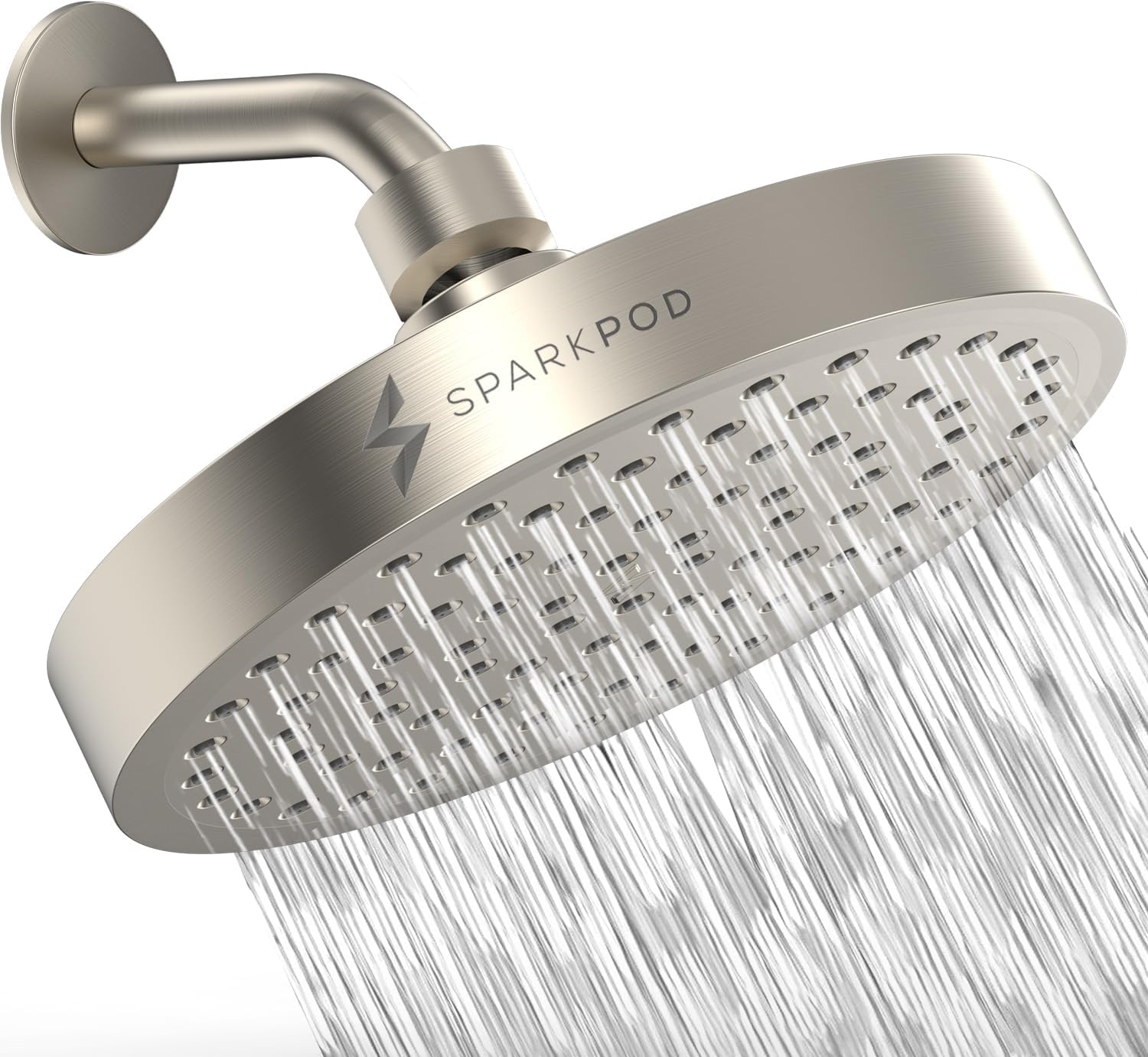
SparkPod High Pressure Rain Head
Best for Morning Wake-Ups. High pressure stimulates the scalp and skin, waking you up instantly. Ideal if you suffer from low water pressure.
Specs: 2.5 GPM, 5 spray settings, self-cleaning nozzles
Morning Benefit: The “massage” setting increases local circulation by 200%
Check Price on Amazon
Cleverfy Aromatherapy Steamers
Best for Night Relaxation. Turn your bathroom into a spa. These melt in the steam, releasing Lavender scents to help you decompress before bed.
Ingredients: Essential oils, baking soda, citric acid
Sleep Benefit: Lavender shown to improve sleep quality by 20% in studies
Check Price on Amazon
YoulerTex Microfiber Hair Towel
Best for Night Showers. Going to bed with wet hair causes breakage and moldy pillows. This towel cuts drying time in half.
Material: 350 GSM microfiber, antimicrobial treatment
Health Benefit: Reduces scalp fungal growth risk by 70%
Check Price on AmazonThe Hybrid Approach: When Two Showers Make Sense
The 5/10 Protocol
The Shower Before Bed Decision: A Science-Based Deep Dive
Given the evidence overwhelmingly favoring night showers for sleep quality, it’s worth exploring the question of whether to shower before bed in granular detail. The research is specific enough that we can give you a precise decision framework.
Who Definitively Should Shower at Night
The science is particularly clear for these groups:
Chronic Insomniacs
The body temperature manipulation mechanism is proven and reliable. If you struggle to fall asleep within 20 minutes of lying down on most nights, the 90-minute pre-bed warm shower protocol should be your first non-pharmaceutical intervention. Studies show sleep latency reduction of 35% and sleep efficiency improvement of 25% in insomnia populations using this exact protocol.
Seasonal Allergy Sufferers
Allergen transfer from skin and hair to bedding is a primary driver of nocturnal allergy symptoms—the congestion, watery eyes, and sneezing that disturb sleep and reduce sleep quality. For anyone with pollen, pet dander, or dust mite sensitivities, a night shower isn’t optional—it’s therapeutic. This single change can reduce sleep disruption from allergies by over 40%.
Healthcare and Essential Workers
The symbolic and actual decontamination function of a night shower is maximally important for anyone who works in environments with high pathogen loads. The psychological “leave work at work” ritual of the night shower—washing away not just physical contamination but mental residue—has documented mental health benefits for high-stress professions.
The “Shower Before Bed or Not” Final Checklist
How to Shower Properly: The Technique Matters as Much as the Timing
The morning vs. night debate is ultimately about optimization—but optimization only matters if your fundamental showering technique is sound. Poor technique wastes water, damages skin, and defeats the purpose of whatever timing strategy you choose. Our full guide on how to shower properly for good hygiene covers this in comprehensive detail, but here are the most impactful technique adjustments for each timing:
Morning Technique Priorities
- Start cold(er): Resist the instinct to start with hot water. Even 30 seconds of cooler water at the beginning dramatically increases alertness more than the same 30 seconds at the end of a hot shower.
- Face last: If you use a face wash, apply it last, when the steam has had time to open pores and the temperature is stabilizing. Cold water as a final facial rinse closes pores effectively.
- Shave timing: The optimal time to shave is after 2-3 minutes of warm water exposure, when hair is fully hydrated and skin is warmed. Whether to shave before or after your shower also depends on your specific routine—our guide covers the tradeoffs.
- Hair wash efficiency: If washing hair in the morning, apply conditioner first to the ends, then shampoo the roots, then rinse both together. This “reverse washing” technique is faster and protects the more fragile hair ends from harsh shampoo contact.
Night Technique Priorities
- Double cleanse: Night is the appropriate time for a thorough double cleanse—first removing makeup, sunscreen, and surface-level debris with an oil-based cleanser, then using your regular cleanser for deep pore cleaning. Morning requires only a single gentle cleanse.
- Exfoliation: Chemical and physical exfoliation belongs in the night routine only. Exfoliated skin has a temporarily compromised barrier that makes it more vulnerable to UV radiation during the day. Night exfoliation allows the skin to recover before sun exposure.
- Post-shower skincare window: Apply all moisturizers and treatment products within 3 minutes of exiting the shower—this is the window when the skin’s transepidermal absorption is highest, before the water fully evaporates. Night showers make this window practically accessible in a way morning routines often don’t allow.
- Hair drying protocol: If washing hair at night, do not go to bed with wet hair—this dramatically increases breakage (300% more, per trichology research) and creates conditions for scalp fungal growth. Use a microfiber towel for the first 10 minutes, then allow air drying in a loose braid or bun.
ADHD and Executive Function Considerations
Morning Showers (For Activation)
- Set timer for 8 minutes maximum
- Keep products in visible, organized caddy
- Use contrasting temperature changes
- Create checklist posted in shower
- Link to medication timing
Night Showers (For Wind-Down)
- Make it a sensory experience
- Use waterproof Bluetooth shower speaker
- Establish strict bedtime routine
- Reduce decision fatigue – same routine nightly
- Pair with other wind-down activities
Frequently Asked Questions
Is it bad to shower twice a day?
Not necessarily, but be careful. Two hot showers can strip your skin’s acid mantle. If you shower twice, keep one short and lukewarm, or focus only on “pits and bits.” Read more on shower frequency benefits. Optimal twice-daily protocol: Morning – quick cool rinse (3-5 min), Night – thorough warm cleanse (8-12 min).
Should I shower before bed if I have clean sheets?
Yes. You are the dirty object entering the clean environment. To keep sheets fresh longer, a night shower is essential. It’s similar to the logic of showering before bed to improve sleep hygiene. Clean sheets + dirty body = sheets needing washing every 3-4 days versus 7-10 days.
What about washing hair?
If you have thick hair that takes hours to dry, morning is better to prevent fungal growth on your scalp/pillow. If you use a blow dryer, night is fine. Consider: Fine hair – morning washing for volume; Thick/curly hair – night washing for styling time; Oily scalp – morning washing to reset oil production. Our hair growth shower routine guide covers hair-specific timing in depth.
Is it dangerous to shower during a storm at night?
Yes, time of day doesn’t matter. Lightning can travel through plumbing. Always avoid showers during thunder. See: Is it dangerous to shower during a thunderstorm? Additional risk at night: harder to hear approaching storms.
Can shower timing affect weight loss?
Indirectly. Night showers improve sleep, and quality sleep is linked to better weight management (poor sleep elevates ghrelin, the hunger hormone, by up to 24%). Morning cold showers may increase brown fat activation—metabolically active tissue that burns calories generating heat. However, shower timing alone won’t cause significant weight loss; it supports other healthy habits.
How does shower timing affect skin aging?
Night showers allow optimal application of anti-aging products (retinoids, peptides) which work best overnight and are photosensitive (degraded by daylight). Morning showers should include SPF application—this is non-negotiable for anti-aging. Hot water at any time accelerates collagen breakdown via free radical generation—always use lukewarm water.
What if I work night shifts?
Reverse the protocol entirely: your “morning” shower happens upon waking (which is your evening), and your “night” shower (for sleep preparation) happens before your daytime sleep, roughly 90 minutes before your target sleep time. Maintain the same temperature and timing principles relative to your sleep schedule. The key is consistency for circadian rhythm regulation—your body doesn’t care what the clock says, only about the behavioral cues you give it.
Can I switch from morning to night showers easily?
Yes, but allow 1-2 weeks for adjustment. Start by moving your shower 30 minutes earlier each day. Your body will adapt to the new temperature cues within about a week. Many report improved sleep within 3-5 days of switching to night showers—this is typically the first observable benefit as the temperature-drop mechanism takes effect immediately.
Does showering every day dry out your skin?
For many people, yes—especially in hard water areas or with hot water habits. The science on daily showering suggests that the skin’s natural microbiome and lipid barrier benefit from occasional rest. If you’re experiencing persistent dryness with daily showering, try alternate-day showering with targeted hygiene on off days, or significantly reduce shower duration and temperature.
Should I shower before or after swimming?
Both. A pre-swim shower before swimming removes products that react with pool chlorine to form disinfection byproducts (which can be carcinogenic in high concentrations). A post-swim shower removes chlorine, salt, or lake bacteria from your skin and hair before it causes dryness or irritation.
How can a shower help with a bad morning?
Cold or contrast shower therapy activates the sympathetic nervous system and releases a cascade of neurochemicals that can genuinely shift emotional state. For mental health specifically, cold shower exposure activates the ventromedial prefrontal cortex—the brain region responsible for emotional regulation. Even 30-60 seconds of cold water can reduce feelings of anxiety or low mood within 5-10 minutes of exposure, according to published research.
Does it matter what time I shower if I have a digital shower with memory settings?
Digital showers with memory settings are genuinely useful for the timing debate because they eliminate the groggy morning struggle to set temperature. Explore our reviews of the best digital shower controllers for combi boilers and compare high-tech digital shower control systems. Program a “morning profile” at cool-lukewarm and an “evening profile” at warm-to-descending temperatures, and the technology does the rest.
Is a warm shower the same as a warm bath for sleep preparation?
Functionally, yes—the core temperature manipulation mechanism is identical. However, baths present additional considerations: they use significantly more water (a full bath uses 35-50 gallons versus 17 gallons for an average shower), carry a soaking risk for those with healing wounds or skin conditions, and the longer immersion time can actually over-warm the body if the bath temperature is too high. Use our shower vs. bath water savings calculator to understand the environmental and financial tradeoffs.
Conclusion
Ultimately, the “Night Shower vs. Morning Shower” debate ends in a draw. It depends entirely on your lifestyle.
- Choose Morning if you need help waking up, have oily skin, or work a creative job.
- Choose Night if you have allergies, trouble sleeping, or work a dirty physical job.
- Choose Both if you exercise regularly and want optimal hygiene and circadian support.
Regardless of when you scrub, ensure your bathroom setup supports your routine. From organized caddies to speed up your morning, to mold prevention tools for those damp night showers, the right gear makes all the difference. Use our daily water consumption tracker to monitor your hydration and showering habits together, and our pressure drop calculator if you’re experiencing inconsistent water temperatures that make your timing protocol harder to execute. The fundamentals of proper shower technique apply to both morning and night—get the basics right, then optimize the timing to your biology.
Disclaimer: As an Amazon Associate, ShowerBlog earns from qualifying purchases. This content is for informational purposes only. Always consult healthcare professionals for personalized medical advice, especially if you have specific health conditions or concerns.
Pingback: How to Smell Good After a Shower: Expert Guide