
Can You Shower With Earrings? What Is Safe, What Is Not, and How to Protect Your Jewelry
Table of Contents
- The Quick Answer: Can You Shower With Earrings?
- What Water, Soap, and Steam Actually Do to Earrings
- Material-by-Material Guide: What Handles the Shower and What Does Not
- Showering With a Brand-New Piercing
- Healed Piercings: Leave Them In or Take Them Out?
- Gemstones, Pearls, and Glued Settings
- Plated, Costume, and Fashion Jewelry: Why They Fall Apart in the Shower
- The Real Risks of Showering With Earrings
- Safer Shower Habits If You Keep Your Earrings In
- How to Clean and Care for Earrings You Wear in the Shower
- Choosing Shower-Friendly Earrings: A Practical Buying Guide
- Special Situations: Sleeping, Swimming, Gym, Hot Tubs, Kids, and Travel
- Frequently Asked Questions
- Final Thoughts
You step into the bathroom, the water is just the right temperature, and then you catch your reflection and notice you are still wearing your earrings. Do you stop, fiddle with the tiny backs, and set them on the edge of the sink where they might roll straight down the drain? Or do you just hop in and hope for the best?
It is one of those small daily questions that almost nobody talks about, yet nearly everyone with pierced ears has wondered about it at least once. The honest answer is not a flat yes or a flat no. It depends on what the earrings are made of, how old the piercing is, how hard your water is, and how much you care about the jewelry still looking the way it did the day you bought it.
This guide walks through all of it in plain language. You will learn what water, soap, and steam actually do to different metals and stones, when it is perfectly fine to keep your studs in, when you should take them out, and what to do if a piercing is still new. By the end you will have a simple routine that keeps your ears comfortable and your jewelry sparkling, without turning your morning into a chore.
The Quick Answer: Can You Shower With Earrings?
Let us start with the part most people came here for. Yes, in many situations you can shower with earrings on, and nothing dramatic will happen. Water alone is not the enemy of most jewelry that is built to be worn every day. Solid gold, implant-grade titanium, surgical stainless steel, and platinum all handle a rinse without complaint. If you wear a simple pair of studs in healed ears, you can lather up and rinse off without a second thought.
The trouble starts with everything that comes along with the water. Shampoo, conditioner, body wash, shaving cream, and the minerals in your tap water all leave residue. Over weeks and months that residue builds up on metal and in the little crevices around stones. It dulls the shine, can irritate sensitive earlobes, and in some cases speeds up the wear on plating and delicate settings.
So the better question is not really “will water hurt my earrings?” but “which earrings can handle my shower, and which ones deserve a break?” Here is a simple way to sort them.
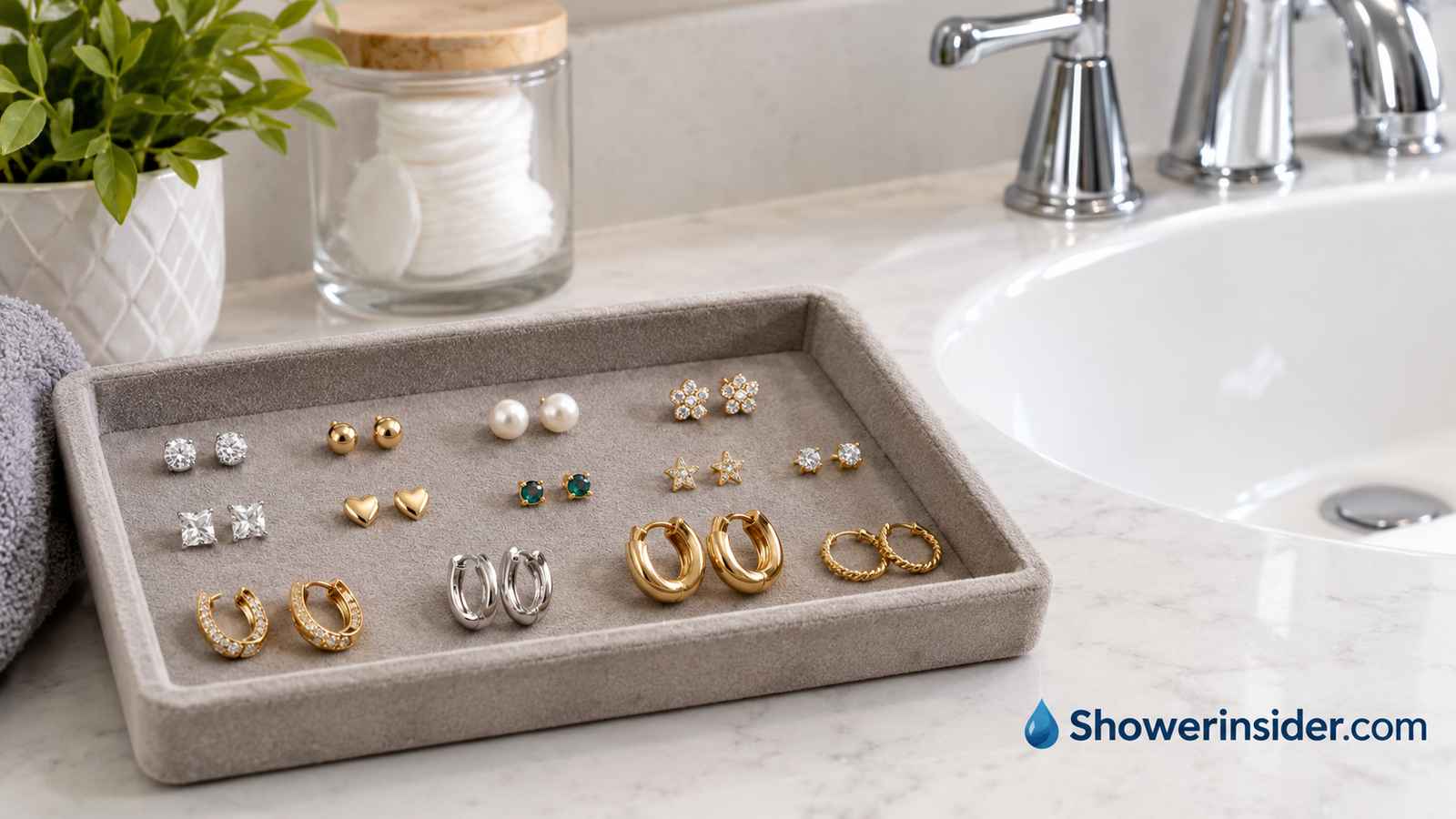
- Usually fine: solid 14k or 18k gold, platinum, implant-grade titanium, and quality surgical stainless steel studs or small hoops.
- Use caution: sterling silver, which tarnishes faster when it sits damp, and anything with small gemstones set in prongs.
- Take them off: gold-plated or silver-plated costume pieces, pearls, opals, turquoise, coral, glued crystals, wooden or leather earrings, and anything dangly that can snag on a washcloth.
- Special rules: brand-new piercings, which you should not remove early and should clean exactly as your piercer instructs.
If you only remember one thing, remember this: the more expensive and solid the piece, the more forgiving it is. The cheaper and more decorative it is, the more likely a shower will shorten its life. The rest of this article explains the reasons behind each of those rules so you can make smart calls for your own collection. If you are curious about how other small accessories fare in the bathroom, our guide on whether you can shower with a Fitbit covers a similar everyday dilemma.
Ready to shop smarter? Browse popular options on Amazon.
Waterproof jewelry cleaning kit on AmazonWhat Water, Soap, and Steam Actually Do to Earrings
To understand why some earrings survive years of showers and others look tired after a month, it helps to picture what is really happening on and around the metal.
Plain water is mostly harmless
Clean water running over solid metal does very little. Gold does not rust. Platinum does not rust. Titanium forms a thin protective oxide layer that actually helps it resist corrosion. Stainless steel is designed to stay stable in damp environments, which is why it shows up in kitchens, hospitals, and watches. If water were the only factor, this article would be about two paragraphs long.
Soap leaves a film
Most body washes, shampoos, and conditioners are not rinsed away perfectly from tiny spaces. Soap film clings to the back of a stud, the hinge on a hoop, and the underside of a setting. It is slippery when wet and sticky when dry, which means it traps dust and skin oils. That film is the grey, cloudy look you sometimes see on earrings that were never actually dirty in an obvious way.
Hard water leaves minerals
If you live somewhere with hard water, calcium and magnesium deposits dry on every surface they touch, including your jewelry. You probably already see the effect on your faucets and glass shower door. The same chalky buildup can settle into earring backs and around stones. If this sounds familiar, our walkthrough on removing hard water stains from shower glass explains how stubborn those deposits can be, and a shower head with a filter can reduce what reaches your skin and your jewelry in the first place.
Heat and steam open things up
A hot shower fills the bathroom with warm, humid air. That moisture lingers on metal and in crevices long after you step out. Warm, damp, closed-in spots are exactly where bacteria and mildew like to settle, which matters if the earring sits inside a piercing channel. Steam also softens some adhesives, so glued crystals can loosen over time. If you enjoy long, steamy sessions, you may want to read about steam showers and your health and keep the heat in mind when you decide what to wear.
Chemicals in the water supply
Municipal water often contains chlorine or chloramine to keep it safe to drink. At shower concentrations this is low, but over many months it can contribute to dulling certain metals and can break down some finishes faster than you would expect. Sterling silver and plated pieces tend to show this first.
The mechanical part
There is also a very simple physical risk: you are moving, washing your hair, and scrubbing your face. Hoops can catch in hair or on a washcloth. Dangling earrings swing into your fingers. Small backs can loosen as you rub your ears with soapy hands. Not every risk is chemical. A lot of lost earrings disappear because of ordinary motion in a slippery space.
Put all of this together and you get the real picture. A single shower will not ruin a good pair of earrings. Daily showers, month after month, slowly add up, and the difference between jewelry that lasts for decades and jewelry that looks worn out in a season is often the material and the care routine.
Ready to shop smarter? Browse popular options on Amazon.
Hard water and shower filter picks on AmazonMaterial-by-Material Guide: What Handles the Shower and What Does Not
The material is the single biggest factor in whether your earrings can handle a shower. Here is a breakdown of the most common options, in plain terms, followed by a quick comparison table you can screenshot for later.
Solid gold (10k, 14k, 18k, 24k)
Solid gold does not rust or tarnish. Higher karat gold is softer and more resistant to discoloration, while lower karat gold contains more of other metals that can, in rare cases, react over time. For everyday showering, 14k and 18k are a sweet spot. A rinse with water and mild soap will not harm them. The only real concerns are soap buildup and, for earrings with stones, the settings.
Gold vermeil and gold filled
Gold filled pieces have a thick layer of gold bonded over a base metal and can handle moisture much better than thin plating. Vermeil is sterling silver with a gold layer, and its durability depends on how thick that layer is. Regular showering can wear either one down faster than solid gold, but gold filled generally holds up well.
Gold plated and silver plated
Plating is a very thin layer of precious metal over a base such as brass or copper. Water, soap, sweat, and friction wear it away, and once it chips, the base metal underneath can turn your skin green or cause irritation. These are the earrings most worth removing before you shower.
Sterling silver
Sterling silver is 92.5 percent silver, mixed with other metals for strength. It reacts with sulfur compounds and moisture in the air, which causes tarnish, the dark or yellowish film you may have noticed. Showering does not destroy it, but constant dampness and soap residue speed up tarnishing. If you wear silver in the shower often, plan on polishing it more regularly.
Surgical stainless steel
Good stainless steel is tough and handles water well. The catch is that not all steel is equal, and some contains small amounts of nickel, which can irritate people with a nickel sensitivity. Look for clearly labeled, high-quality grades if you are sensitive.
Titanium
Implant-grade titanium is lightweight, nickel-free, and extremely resistant to corrosion. It is one of the most shower-friendly materials available, and it is the usual go-to for new and sensitive piercings. If you want one pair you never have to worry about, this is often it.
Platinum
Platinum is dense, durable, and does not tarnish. It is more expensive, but it handles daily exposure to water extremely well.
Niobium
Niobium is another hypoallergenic metal that is popular for sensitive ears. It behaves similarly to titanium in water and is a good choice for people who react to nickel.
Acrylic, glass, and silicone
These are generally unbothered by water, though acrylic can scratch and some cheap acrylic is not ideal for long-term wear in a piercing. Glass is smooth and easy to clean, and silicone is flexible and comfortable, which is why it often appears in sleeper-style or retainer jewelry.
Wood, leather, and fabric
These simply do not like getting wet. Wood can swell and crack, leather can stiffen and warp, and fabric absorbs soap and stays damp. Always take these off.
| Material | Shower-friendly? | What to watch for |
|---|---|---|
| Solid gold (14k–18k) | Yes | Soap film on settings |
| Platinum | Yes | Occasional cleaning only |
| Implant-grade titanium | Yes | Almost nothing |
| Surgical stainless steel | Yes, quality grades | Nickel content in cheaper steel |
| Niobium | Yes | Minimal |
| Gold filled | Mostly yes | Gradual surface wear |
| Sterling silver | Sometimes | Faster tarnish when damp |
| Gold or silver plated | No | Plating wears off, skin reactions |
| Wood, leather, fabric | No | Swelling, warping, mildew |
| Costume or fashion jewelry | No | Color change, corrosion, glue failure |
Before you make a purchase for the sake of your shower routine, it also helps to know a bit about the broader habit. Our article on the best shower routine for healthy skin pairs nicely with this guide, since the products you use on your skin are the same ones touching your jewelry.
Ready to shop smarter? Browse popular options on Amazon.
Solid gold and titanium studs on AmazonShowering With a Brand-New Piercing
This is where the conversation changes. Everything above assumes your ears are fully healed. If your piercing is new, the rules are different, and the stakes are higher.
Do not take new earrings out to shower
A fresh piercing is basically a small wound with a tube of healing tissue forming around the jewelry. If you remove the earring, the hole can start to close surprisingly fast, sometimes within minutes to hours in very new piercings. Reinserting jewelry can also tear delicate tissue and introduce bacteria. For this reason, piercers almost always tell you to leave the starter jewelry in for the full healing period.
Healing times vary
Earlobes tend to heal in roughly a couple of months, while cartilage piercings often need much longer, sometimes six months to a year or more. Everyone is different, and a piercing that looks fine can still be tender inside. Always follow the timeline your piercer gives you rather than a generic estimate.
Water is generally fine, soap needs care
Letting clean shower water run over a new piercing is typically fine, and many piercers say a gentle shower is a good time to rinse it. What you want to avoid is letting shampoo, conditioner, or heavy body products sit in the piercing, because they can irritate healing skin. Rinse thoroughly and pat the area dry with a clean paper towel or a fresh cotton pad rather than a bath towel that might carry bacteria and snag on the jewelry.
A simple aftercare rhythm
- Wash your hands before you touch your ears, every time.
- Rinse the area with clean water at the end of your shower to remove product.
- Use a sterile saline wound wash if your piercer recommends it, and follow their directions.
- Pat dry gently. Do not twist, spin, or pick at the jewelry.
- Skip harsh products like rubbing alcohol or hydrogen peroxide unless your piercer specifically tells you to use them.
Watch for warning signs
Some redness, mild swelling, and tenderness are normal early on. Contact your piercer or a healthcare professional if you notice spreading redness, significant heat, thick or foul-smelling discharge, fever, or severe pain. This article is general information, not medical advice, and a professional is always the right call when something looks off.
If you have other recent body modifications, the same logic applies across the board. We cover similar ground in our guides on showering with a nose piercing, showering with a new tattoo, and showering with stitches, because the question of how much water and soap a healing area can handle comes up again and again.
Ready to shop smarter? Browse popular options on Amazon.
Sterile saline piercing aftercare spray on AmazonHealed Piercings: Leave Them In or Take Them Out?
Once your ears have fully healed, you have a lot more freedom. Still, “you can” and “you should” are not always the same thing. Here is how to think about it.
The case for leaving them in
If your earrings are small, solid-metal studs, taking them out every day is mostly unnecessary. Constant removal means constant handling, more chances of dropping a tiny back, and, if you have multiple piercings, more opportunities to nick the piercing channel with a blunt post. Many people with healed lobes wear the same studs for weeks or months with no problems at all.
The case for taking them out
Removing earrings before a shower gives you the chance to clean both the jewelry and the piercing thoroughly. It also protects delicate pieces and prevents mishaps with hair. Taking them off makes the most sense when:
- The earrings are plated, glued, wooden, or contain porous stones.
- They are long, dangly, or large hoops that can catch on hair or towels.
- You use a lot of hair product, dry shampoo, or heavy conditioner.
- You have very hard water that leaves visible deposits.
- You are prone to irritation, itching, or redness around your lobes.
- The jewelry is sentimental or expensive and you would be devastated to lose it.
A middle path
Plenty of people split their collection into two groups: a “forever pair” of simple, shower-safe studs that stay in for daily life, and a “going out” collection that is only worn for specific occasions. This keeps your piercing open and comfortable, makes your routine effortless, and protects the pieces you love most.
Do not let a piercing sit empty for long
Even healed piercings can shrink or close if left empty, especially cartilage and anything on the thinner side of the ear. If you take your earrings out for a shower and stay naked-eared for hours, you might find it difficult to put them back in later. If you are worried, wearing a clear retainer or a simple stud during the shower is a better option than skipping jewelry altogether.
Think about the whole ear, not only the lobe
Helix, tragus, conch, and daith piercings sit in folds where water and soap collect. Be extra thorough rinsing these areas, and make sure you are not trapping shampoo behind the jewelry. If your routine includes frequent washing, our overview of how often you should shower may help you decide how much daily exposure your jewelry actually gets.
Ready to shop smarter? Browse popular options on Amazon.
Piercing retainers and clear studs on AmazonGemstones, Pearls, and Glued Settings
Stones add sparkle, and they add complications. Different gems behave very differently around water, soap, and steam, so a little knowledge goes a long way.
Hard, durable stones
Diamonds, sapphires, and rubies are tough and generally fine with water. The weak point is not the stone itself but the setting. If prongs are loose, soap and moisture can work their way underneath, and a stone that already wobbles can be easier to lose. Check your prongs now and then by gently pressing on the stone, listening for any tiny rattle.
Cubic zirconia and moissanite
Both handle water well. They can get cloudy from soap film, but a quick clean brings the sparkle right back. Cheap settings are the usual concern here, not the stones themselves.
Pearls
Pearls are organic and quite delicate. Their surface is made of layers that can be damaged by acids, hairspray, perfume, and prolonged moisture. Water can also weaken the silk or glue used in some pearl jewelry. Always take pearl earrings off before showering, and wipe them with a soft cloth after wearing.
Opals, turquoise, coral, and amber
Opals contain water and can crack if exposed to heat or sudden changes. Turquoise and coral are porous and absorb soap and oils, which can discolor them. Amber is soft and can react to certain chemicals. None of these belong in the shower.
Emeralds and treated stones
Many emeralds are treated with oils or resins to improve their appearance. Hot water, steam, and strong soaps can affect those treatments over time. A jeweler can tell you whether yours are treated, but the safe approach is to keep them out of regular showers.
Glued crystals and resin pieces
Fashion earrings often use adhesive to hold crystals in place. Steam and hot water soften glue, and stones start falling out one by one. Resin, enamel, and painted earrings can chip or cloud. If an earring looks colorful and inexpensive, assume it is not built for the shower.
| Stone or finish | Safe in the shower? | Reason |
|---|---|---|
| Diamond, sapphire, ruby | Usually yes | Hard stones, but check the prongs |
| Cubic zirconia, moissanite | Usually yes | Durable, may cloud with soap film |
| Pearl | No | Delicate surface, weak threading or glue |
| Opal | No | Water content, heat sensitive |
| Turquoise, coral, amber | No | Porous or soft, absorbs products |
| Treated emerald | Better not | Treatments can be affected |
| Glued crystals, enamel, resin | No | Adhesive softens, finish chips |
When in doubt, ask the jeweler who sold you the piece. A quick question at the counter can save a stone you would otherwise lose down the drain.
Ready to shop smarter? Browse popular options on Amazon.
Jewelry polishing cloths on AmazonPlated, Costume, and Fashion Jewelry: Why They Fall Apart in the Shower
If you have ever bought a pair of trendy earrings that looked amazing for two weeks and then turned dull, brown, or green, you already know the story. Costume and fashion jewelry is made to look great at a low price, not to survive a decade of daily wear.
What plating really is
Plating is a microscopically thin coating of gold or silver on top of a cheaper metal. Even careful wear slowly rubs it away. Showering speeds that up because soap acts as a mild abrasive and moisture encourages the base metal to react. Once the coating wears through, the base metal is exposed to your skin.
The green ear problem
Copper in the base metal can react with sweat and moisture and leave a greenish tint on skin. It is harmless in most cases, but it is annoying, and it is a clear signal that the plating has failed. Nickel in the base is a more serious issue for people with sensitivities, since it can cause itching, redness, or rashes.
Ear infections and irritation
Jewelry made from unknown or low-grade metals is more likely to irritate piercings. Combine that with trapped moisture and you can end up with red, itchy, or sore earlobes. If you notice this pattern, switching to a hypoallergenic material usually helps.
How to extend the life of fashion earrings
- Take them off before you shower, swim, or exercise.
- Put them on last when getting ready, after hairspray and perfume.
- Wipe them with a soft, dry cloth after wearing.
- Store them in a dry pouch or box, away from humid bathrooms.
- Consider a clear nail polish coat on the posts only, if your skin tolerates it, and skip it on any part that touches the piercing channel in a new piercing.
Is it worth paying more?
If you wear earrings every day and shower with them, spending a little more on solid metal or gold-filled pieces tends to cost less over time than replacing cheap pairs again and again. Keep your fun, trendy styles for occasions when you will not be in water, and rotate a reliable basic pair for everyday use.
The same principle applies to many small bathroom-adjacent items. If you are wondering what else in your daily life takes a hit from moisture, you might enjoy reading about showering with contact lenses and showering with eyelash extensions, which are two more cases where a small detail changes how you wash.
Ready to shop smarter? Browse popular options on Amazon.
Hypoallergenic everyday earrings on AmazonThe Real Risks of Showering With Earrings
Now that you know what happens to the jewelry itself, let us look at what can happen to you and your piercings.
Losing an earring down the drain
This one is the most common and the most painful. A loosened back, a tiny post, and a wet hand are all it takes. If it goes down a shower drain, it may be recoverable with a trap or by taking apart the drain cover, but many people never see the earring again. A simple mesh hair catcher in the drain is a cheap safety net. If your drain is also slow, our guide to unclogging a shower drain naturally shows how to deal with the buildup that often hides tiny lost items.
Snagging on hair, towels, and washcloths
Hoops, chains, and dangling earrings can catch in wet hair. A tug in the shower can pull on a piercing and, in a worst-case scenario, tear an earlobe. It is rare, but it hurts. If you wear anything that dangles, take it off.
Trapped moisture and bacteria
Warm, damp spots are where bacteria thrive. If soap and water collect behind an earring back or around a thick post, the skin under it stays wet and irritated. That is one reason many people notice crusty or smelly buildup on earrings they never take off.
Skin irritation and allergic reactions
Soap residue plus metal plus friction can trigger redness, itching, or flaky skin. If you notice irritation specifically in the shower, try a different soap, a different earring, or taking jewelry out for a week to see what changes.
Plating loss and tarnish
As mentioned earlier, showering accelerates wear on plated and silver pieces. If you find yourself polishing more than you would like, the shower might be part of the reason.
Loosening of earring backs
Wet, soapy fingers do not grip well, and backs can slowly work loose. Screw-backs and locking backs are far more secure than simple friction backs. Rubber and silicone backs can degrade with exposure to hot water and soap, so check them periodically.
Hair damage
Rough edges on cheap earrings can catch and break strands of hair. This is a small thing but worth mentioning if you notice frayed hair near your ears.
Perspective: how worried should you be?
Most of these risks are minor and easy to manage. You are not putting yourself in danger by showering with a simple pair of studs. The point is to be aware of the trade-offs so you can pick the routine that matches your jewelry and your lifestyle. It also helps to keep your shower itself in good shape: our guides on shower maintenance and why shower head pressure drops cover the little problems that can make daily washing more annoying than it needs to be.
Ready to shop smarter? Browse popular options on Amazon.
Shower drain hair catchers on AmazonSafer Shower Habits If You Keep Your Earrings In
Maybe you have decided that your everyday studs are staying put. Good. A few small habits will keep both the jewelry and your ears in great shape.
Check the backs before you step in
Give each earring a gentle touch to make sure the back is snug. Not tight enough to pinch, but secure enough that it will not slide when you rub your ears. Locking or screw-on backs are worth the upgrade if you shower with earrings regularly.
Keep the water at a comfortable temperature
Very hot water is hard on glued settings, treated stones, and your skin. Warm is plenty. If you are curious how temperature and time fit into the bigger picture, take a look at our notes on how long a shower should be.
Wash around the earring, not on it
Use a bit of mild, fragrance-free cleanser on a fingertip, rinse well, and avoid scrubbing at the jewelry itself. Shampoo and conditioner should be rinsed away from your ears last, with the water running down and away.
Rinse thoroughly at the end
Spend an extra few seconds letting clean water flow over your ears and earrings. Soap left behind is what causes most of the dullness and irritation.
Dry properly
After you step out, pat your ears with a clean towel or a soft cloth. A hair dryer on a cool, low setting, held a distance away, can help dry the area behind the earring where moisture hides. Do not use hot air near your skin.
Watch hair care order
Hair treatments, oils, and dry shampoo are tougher on jewelry than plain water. Put your earrings in after styling, not before, to keep products from building up.
Skip the shaving drama
If you shave your face or neck in the shower, keep razors and sharp tools well clear of your jewelry. There is a good chance you have already wondered about the best timing; our article on shaving before or after a shower breaks that down, and it matters for earrings because shaving cream is a sticky film that clings to metal.
Think about what comes after the shower
If you are heading to a workout, a swim, or a massage, your jewelry plans change. We look at these cases in detail further down, and you can also check whether to shower before or after exercise and showering after a massage for more context on how those routines affect your body and what you wear.
A simple checklist
- Backs secure, posts straight, nothing loose or wobbly.
- Water warm, not scalding.
- Soap and shampoo rinsed completely from your ears.
- Ears and jewelry patted dry afterward.
- Jewelry cleaned on a regular schedule, not only when it looks dirty.
Ready to shop smarter? Browse popular options on Amazon.
Locking earring backs on AmazonHow to Clean and Care for Earrings You Wear in the Shower
Even the most shower-friendly earrings need regular cleaning. The goal is to remove soap film, skin oils, and mineral deposits before they harden or irritate your ears. Here is a gentle routine that works for most solid-metal jewelry.
Your weekly refresh
- Remove the earrings and wash your hands well.
- Fill a small bowl with warm water and a drop of mild dish soap.
- Let the earrings soak for a few minutes to loosen residue.
- Use a soft toothbrush to gently clean around posts, settings, and backs.
- Rinse under clean running water, with a stopper in the sink so nothing is lost.
- Pat dry with a soft cloth and let them air-dry completely before wearing again.
Cleaning by material
- Gold and platinum: warm soapy water and a soft brush are perfect.
- Sterling silver: use a silver polishing cloth for tarnish. Avoid soaking if there are glued stones.
- Titanium and steel: mild soap and water. Wipe dry.
- Gemstones: keep it gentle. Avoid ultrasonic cleaners for treated, fragile, or glued stones.
- Pearls: wipe with a soft damp cloth, then dry. Never soak.
What to avoid
Skip toothpaste, which can scratch metal. Avoid bleach, which can damage many metals and settings. Be careful with vinegar and lemon juice, since acids can harm some stones and finishes. Rubbing alcohol is fine for quickly sanitizing solid metal posts but can dry out and damage some gemstones and plastics.
Ultrasonic cleaners: helpful or risky?
Ultrasonic cleaners are great for sturdy gold, platinum, and diamond earrings with secure settings. They are not safe for pearls, opals, emeralds, glued stones, or anything with loose prongs. If you are not sure, hand cleaning is the safer route.
Clean the piercing, too
While your earrings are out, gently clean the skin around the piercing with mild soap and water, rinse, and dry. If you have a healed piercing and notice a faint smell or crust, that is usually dead skin and oil buildup and is a signal to clean more often.
Storage matters
Keep earrings in a dry place, away from steamy bathrooms. A small jewelry box with soft compartments, an anti-tarnish pouch for silver, and a dedicated dish by the sink for temporary storage while you wash will keep pieces from getting lost or scratched. Never leave tiny earrings loose on the edge of the sink. A small lidded dish costs very little and saves a lot of frustration.
Why a clean shower also helps
A grimy shower leaves its own residue on your skin and jewelry. If you stay on top of buildup with tips from our guides on cleaning a shower head with vinegar and choosing a shower squeegee, the water hitting your ears will be cleaner too.
Ready to shop smarter? Browse popular options on Amazon.
Ultrasonic jewelry cleaner on AmazonChoosing Shower-Friendly Earrings: A Practical Buying Guide
If you love the idea of never having to think about your earrings in the shower, it is worth investing in a few pairs designed for exactly that. Here is what to look for.
Start with the metal
Look for descriptions that name the exact material: “14k solid gold,” “implant-grade titanium,” “316L surgical stainless steel,” or “platinum.” Vague phrases like “gold tone” or “metal alloy” are a warning sign.
Prefer simple designs
Studs, small huggie hoops, and tiny balls are the easiest to wear in the shower. They have fewer crevices to trap soap and fewer places to snag.
Choose secure backs
Screw-back, threadless push-pin, and locking butterfly backs hold much better than basic friction backs. If the earrings come with flimsy backs, you can usually buy better ones separately.
Check the settings
If you want stones, look for bezel settings, which wrap fully around the stone, rather than a few thin prongs. Bezels protect stones better and trap less debris.
Look for nickel-free labeling
If you have sensitive ears, “nickel-free” and “hypoallergenic” claims are helpful, though not always regulated. Titanium, niobium, and high-quality gold are the safest bets.
Mind the post thickness and length
If you are buying for a healing piercing, a piercer will size the post correctly. For healed ears, ensure the post is comfortable and long enough to allow a little room for swelling and cleaning, without sticking out awkwardly.
Quick comparison of shower-friendly options
| Option | Best for | Pros | Cons |
|---|---|---|---|
| Titanium studs | Sensitive ears, new piercings | Light, nickel-free, durable | Fewer decorative styles |
| 14k gold studs | Everyday luxury | No tarnish, classic look | Higher price |
| Surgical steel huggies | Budget daily wear | Strong, affordable | Check nickel content |
| Platinum studs | Heirloom pieces | Exceptionally durable | Highest price |
| Gold-filled hoops | Style on a budget | Thick gold layer | Can wear over many years |
Pros of wearing earrings in the shower
- No need to fuss with tiny backs every day
- Keeps new piercings from closing
- Fewer chances to lose jewelry in the bathroom
- Convenient for people who want a low-effort routine
Cons of wearing earrings in the shower
- Soap and mineral buildup
- Faster wear on plated or silver pieces
- Possible irritation or trapped moisture
- Risk of snags and loose backs
One more helpful tip: if you are building a small capsule collection, pick a metal you love and stick with it for the daily set. Mixing a few well-chosen shower-safe pairs with a drawer of dress-up earrings gives you the best of both worlds. And if you spend lots of time in a steam-filled bathroom, a gentle approach to good shower hygiene will benefit your skin, your ears, and your jewelry all at once.
Ready to shop smarter? Browse popular options on Amazon.
Everyday solid gold hoops on AmazonSpecial Situations: Sleeping, Swimming, Gym, Hot Tubs, Kids, and Travel
Showering is only one of the many ways earrings meet water. Here is how other everyday situations compare.
Sleeping in earrings
Small flat-back studs are the most comfortable for sleeping. Hoops and dangly styles can snag on pillows and hair. If you sleep in earrings, make sure they are secure and comfortable, and clean them regularly since they spend many hours against your skin.
Swimming in pools
Chlorine is tougher on jewelry than ordinary tap water. It can dull gold and discolor silver, and it can weaken certain stones and settings. The same applies to hot tubs, where heat and chemicals work together. If you plan to swim, take your earrings out or wear a simple, solid-metal pair you are comfortable cleaning afterward. Our article on showering before a swim adds helpful context.
Ocean and salt water
Salt is abrasive and encourages corrosion. Rinse your earrings well in fresh water after any ocean swim and dry them completely.
Working out
Sweat contains salts that can tarnish silver and irritate piercings. Hoops can snag on clothing and equipment. If you train often, a pair of small studs is much safer than anything long or heavy. You can learn more about timing your wash and workout in our shower routine for gym goers.
Bath bombs, steamers, and scented products
Fizzy bath and shower products, especially those with oils or dyes, can leave residue and may discolor delicate jewelry. If you enjoy those products, you might like reading about using bath bombs in the shower and how long shower steamers last, and consider removing your earrings first.
Children and babies
For kids with new or healed piercings, follow the piercer or doctor’s instructions, and choose soft, secure, hypoallergenic jewelry. Small earrings can be a choking hazard if they come loose.
Camping and travel
Camp showers and portable setups often involve cold water, unfamiliar surfaces, and very easy-to-lose small objects. Bring a small lidded dish or pouch for your earrings, and make sure it is somewhere secure. If you are packing for the outdoors, our guides on camping shower setups and the best camping shower bags are good places to start.
When you are sick or recovering
If you have a cold, a fever, or a medical procedure on the horizon, you may be told to remove all jewelry. Hospitals and surgical teams often ask for this because jewelry can interfere with equipment and swelling. Follow medical guidance first. Our article on how long after treatment you can shower and the roundup on showering after 20 different situations can help you plan.
Special occasions
If you are getting ready for an event and want your earrings to look their best, shower first, let your hair and skin dry, and put your earrings on last. It keeps them clean and spares them from steam, product, and moisture.
Ready to shop smarter? Browse popular options on Amazon.
Travel jewelry organizer case on AmazonFrequently Asked Questions About Showering With Earrings
Can you shower with earrings in?
Yes, most people can shower with solid-metal earrings in a healed piercing without any problem. Plated, glued, porous, or delicate pieces are better removed. A fresh piercing should generally stay in and be cleaned as your piercer instructs.
Will showering ruin my gold earrings?
Solid gold handles water very well. Over time soap film and mineral deposits can make it look dull, but a gentle cleaning restores the shine. Gold-plated pieces are a different story and can lose their coating faster with daily showers.
Is it okay to shower with sterling silver earrings?
It will not ruin them, but dampness and soap can speed up tarnishing. If you wear silver in the shower regularly, polish it more often and dry it well after washing.
Should I take out new piercings to shower?
No, in most cases you should leave starter jewelry in for the entire healing period. Removing it can cause the hole to close or irritate the tissue. Rinse gently, avoid trapping soap, and follow your piercer’s aftercare directions.
Can water cause an ear piercing infection?
Clean shower water is generally not the problem. Infections are more often linked to dirty hands, harsh products, poor-quality jewelry, or leaving moisture and debris trapped. If you see spreading redness, heat, pain, or unusual discharge, contact a healthcare professional.
Why do my earrings turn green or black after showering?
Green usually means a copper-based metal under thin plating is reacting with moisture. Black or dark grey is typically tarnish on silver or a reaction on low-grade alloys. Switching to titanium, gold, or high-quality steel usually fixes the issue.
Is it safe to wear hoops in the shower?
Small, snug huggie hoops are usually fine. Large or loose hoops can snag on hair, towels, or washcloths, so it is wiser to remove them.
Can I wear pearl earrings in the shower?
It is best not to. Pearls are delicate and can be damaged by moisture, soap, and heat. Remove them first and wipe them with a soft cloth afterward.
How often should I clean earrings I wear every day?
About once a week is a good rhythm for most people. If you use lots of hair products, have hard water, or notice buildup sooner, clean them more often.
What happens if I lose an earring down the drain?
Stop the water and avoid running it more. Check the drain cover, remove it if possible, and look in the trap. A hair catcher or drain stopper helps prevent future losses. For metal in a sealed pipe, a plumber can sometimes help.
Are hypoallergenic earrings worth it for showering?
If your ears get itchy or red, yes. Materials like titanium, niobium, and high-quality gold are less likely to cause reactions, especially when exposed to soap and moisture day after day.
Can I sleep and shower in the same earrings every day?
Many people with healed ears do, as long as the earrings are simple, solid, and cleaned regularly. If you notice irritation, take them out for a few days and switch materials.
Final Thoughts: A Simple Rule You Can Live By
So, can you shower with earrings? In most cases, yes, as long as they are the right earrings. Solid gold, platinum, titanium, and quality steel are built to handle water, and a quick rinse will not cause harm. Delicate, plated, glued, and porous pieces deserve a break, and new piercings deserve careful, consistent aftercare rather than constant removal.
The easiest way to think about it is to match the jewelry to your life. Keep a small set of dependable, shower-safe earrings for everyday wear, store your fancy pieces in a dry place for special occasions, clean your jewelry weekly, and rinse thoroughly. That is the whole system.
If you are ready to build a shower-friendly collection, start with simple, well-made studs and secure backs. The little upgrade is worth it. For more bathroom know-how, explore the guides below or head to the Shower Insider homepage for everything from shower heads to routines.
Ready to shop smarter? Browse popular options on Amazon.
Shop Shower-Friendly Earrings on Amazon